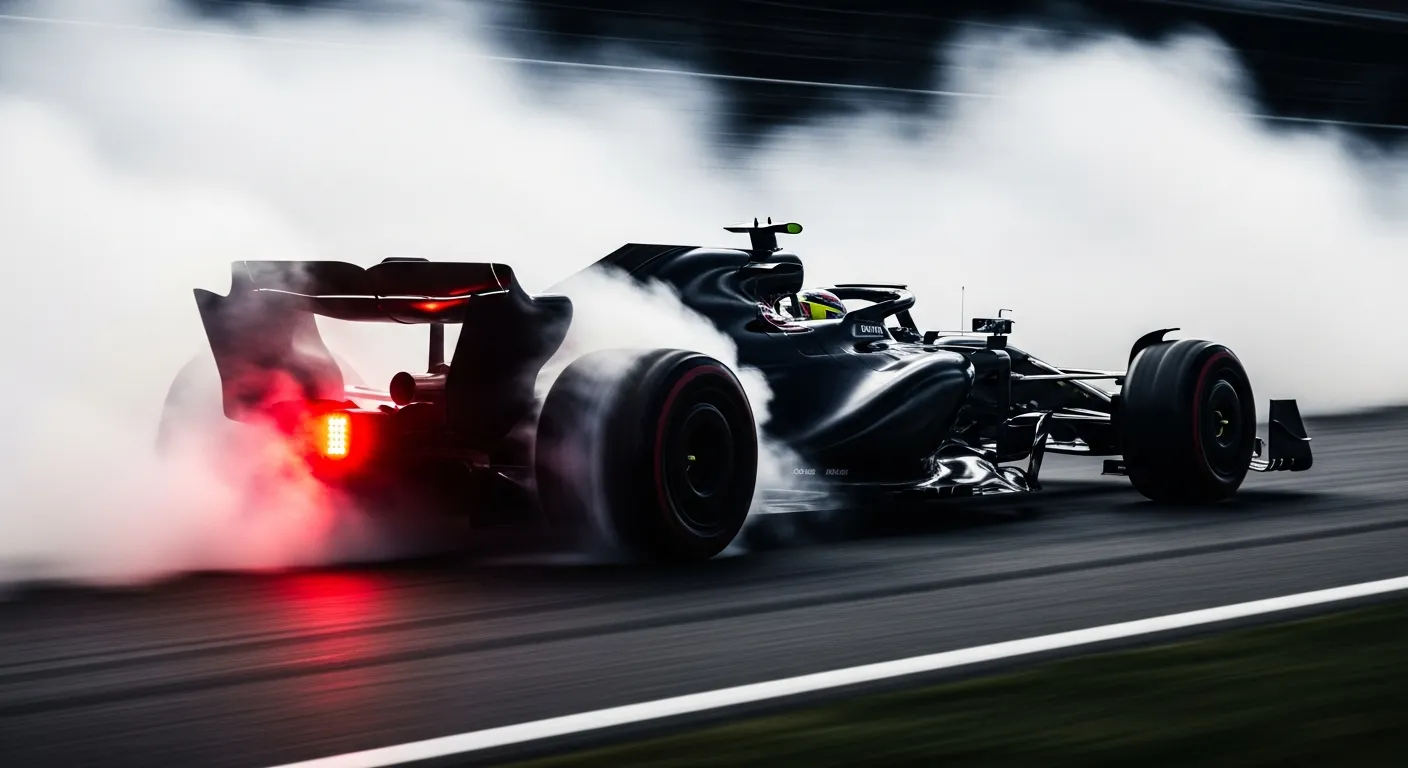
Liam Lawson's outing at the 2024 Mexican Grand Prix saw the New Zealander navigate a challenging race at the Autódromo Hermanos Rodríguez, ultimately crossing the line in 16th position for Racing Bulls, a four-place drop from his 12th place grid start. The high-altitude circuit, known for its demanding conditions on both power units and aerodynamics, presented a complex strategic picture for all teams, as detailed on the [Formula 1 — official site](https://www.formula1.com/en). Lawson completed 70 laps, finishing one lap down from the race winner, Carlos Sainz Jr., who secured victory for Ferrari.
Despite the final classification outside the points, Lawson demonstrated flashes of pace, notably recording the third fastest lap of the race on lap 67 with a time of 1:19.502. This performance underscores the potential within the Racing Bulls package, even as the team grapples with consistent top-ten finishes. In contrast, his teammate Yuki Tsunoda retired early from the event due to a collision on lap 0, highlighting the unpredictable nature of the Mexico City circuit, a characteristic that has historically challenged drivers from [Max Verstappen at the 2016 Mexico City Grand Prix](/results/2016-mexico-city-max-verstappen) to [Lewis Hamilton at the 2016 Mexico City Grand Prix](/results/2016-mexico-city-lewis-hamilton). The race, part of the broader [FIA — F1 World Championship](https://www.fia.com/events/fia-formula-one-world-championship), saw Lawson battling in the midfield, a segment of the grid where strategic decisions and tire management are paramount. Understanding the intricacies of these battles often requires deep dives into [Formula One's history and technical evolution](https://en.wikipedia.org/wiki/Formula_One). The data from such events is meticulously cataloged, providing valuable insights for future seasons and car development, a process that can be explored through resources like [Jolpica/Ergast's F1 data archives](https://api.jolpi.ca/ergast/f1/2026.json). Analyzing individual lap times, such as Lawson's impressive 1:19.502, helps teams and analysts understand where performance gains are made or lost, a crucial aspect of the [official F1 website's race summary](https://www.formula1.com/en/racing/2024/Mexico.html). The Autódromo Hermanos Rodríguez itself, with its unique characteristics, often produces unexpected results, a factor that drivers like [Carlos Sainz at the 2016 United States Grand Prix](/results/2016-cota-carlos-sainz) have had to adapt to in their careers. For a deeper understanding of circuit design and its impact on racing, the [Wikipedia page on the Autódromo Hermanos Rodríguez](https://en.wikipedia.org/wiki/Aut%C3%B3dromo_Hermanos_Rodr%C3%ADguez) offers comprehensive details. This granular data, including fastest laps and overall race pace, is critical for evaluating driver and constructor performance throughout a championship, forming the backbone of statistical analysis found in [F1 season data](https://api.jolpi.ca/ergast/f1/2026.json).
Verified race record · Ergast
Grid
P12
Finish
P16
Points
0
Laps
70
Constructor
Racing Bulls
Status
+1 Lap
Teammate that weekend
Yuki Tsunoda
Grid P11 · Collision · 0 pts
Championship · before vs after
Before round 20
P202 pts
After round 20
P202 pts