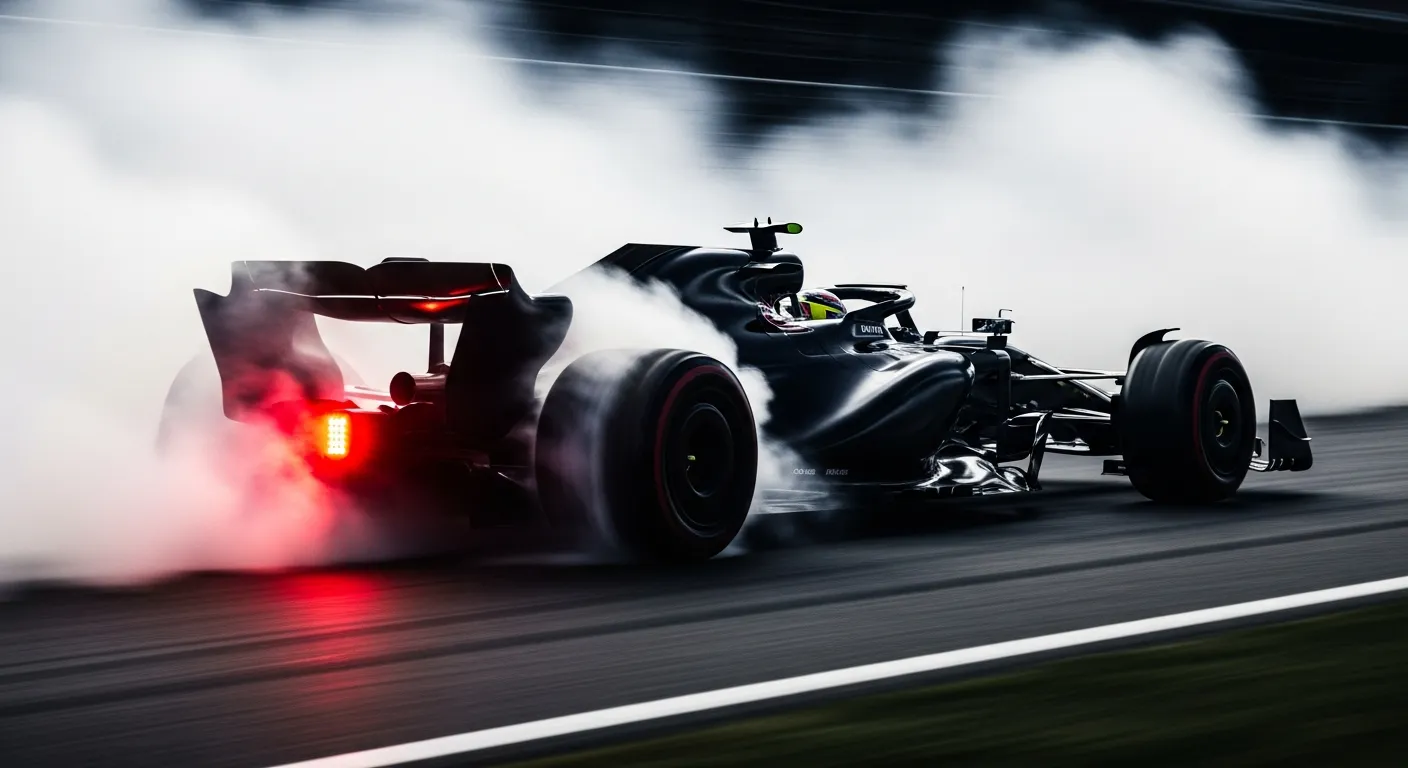
The 2024 Mexico City Grand Prix at the Autódromo Hermanos Rodríguez delivered a nuanced strategic contest, with Carlos Sainz converting pole position into a commanding victory for Ferrari, a performance that showcased both driver skill and effective team execution in the unique high-altitude environment.
Qualifying
Qualifying for the Mexico City Grand Prix is always a delicate balance, with teams grappling with the thin air's impact on aerodynamics and engine performance. Sainz secured pole position, demonstrating Ferrari's pace on a circuit where straight-line speed is often a premium, but downforce generation remains critical. Max Verstappen lined up alongside him in second, with Lando Norris starting third and Charles Leclerc fourth. The grid promised a close fight at the front, with the high-altitude conditions often leading to unexpected tyre degradation and strategic complexities. For a deeper dive into how F1 cars are designed for such tracks, the Wikipedia: Formula One page offers extensive technical context.
Race
From the moment the lights went out, Sainz managed to hold his lead, settling into a rhythm that proved unassailable. Lando Norris, starting third, drove a strong race to climb to second, demonstrating McLaren's consistent performance trajectory in the ground-effect era. His teammate, Oscar Piastri, delivered one of the drives of the day, making up nine positions from his P17 start to finish eighth, a testament to both car performance and aggressive race craft. Charles Leclerc secured third place, also for Ferrari, and notably claimed the fastest lap of the race on the final tour, adding a crucial bonus point to his tally. Meanwhile, Max Verstappen, starting second, found himself unable to maintain the front-running pace, eventually finishing sixth. This result contrasts sharply with previous dominant performances, such as those seen in the 2020 Abu Dhabi Grand Prix, indicating the specific challenges of this circuit for Red Bull on this particular weekend.
Strategic Story
The strategic narrative in Mexico City often revolves around tyre management and the optimal pit stop windows, exacerbated by the reduced cooling efficiency at altitude. Ferrari's strategy for Sainz was executed with precision, allowing him to control the race from the front. McLaren's approach for Norris was equally effective, enabling his climb to second. The retirements of Fernando Alonso, Alexander Albon, and Yuki Tsunoda, particularly early in the race for Albon and Tsunoda, further shaped the field dynamics, though without a safety car period to fully reset strategies for the leaders. Haas F1 Team had a strong showing, with Kevin Magnussen finishing seventh and Nico Hülkenberg ninth, securing valuable double points. This kind of consistent midfield performance can be crucial for constructor standings, as discussed in various F1 news coverage throughout the season.
Championship Impact
Sainz's victory injected significant points into Ferrari's constructor's championship campaign, tightening the battle with McLaren. Red Bull's relatively subdued performance, particularly for Verstappen, meant a smaller points haul than they might typically expect, keeping the championship narratives fluid as the season progresses. The FIA provides official standings and regulations for the F1 World Championship, which helps track these shifts. The points gained by Mercedes with Lewis Hamilton and George Russell in fourth and fifth also solidified their position, highlighting the competitive nature of the top teams. For a look at how data informs future season planning, one might examine resources like Jolpica/Ergast — 2026 season data.
This race, much like the strategic complexities often seen at the 2020 United States Grand Prix, underscored the importance of adapting car setup and race strategy to unique circuit characteristics. The Formula 1 — official site provides comprehensive race reports and analysis for every round, including the nuances of the Mexico City event, which often presents a distinct challenge on the calendar, as it did in the 2020 Mexico City Grand Prix as well.
Full classified results
Every driver's verified grid-to-flag result from the 2024 Mexico City Grand Prix — grid, finish, points, teammate H2H, and championship swing.
- P1Carlos SainzFerrari25 pts
- P2Lando NorrisMcLaren18 pts
- P3Charles LeclercFerrari16 pts
- P4Lewis HamiltonMercedes12 pts
- P5George RussellMercedes10 pts
- P6Max VerstappenRed Bull8 pts
- P8Oscar PiastriMcLaren4 pts
- P9Nico HülkenbergHaas F1 Team2 pts
- P10Pierre GaslyAlpine F1 Team1 pts
- P11Lance StrollAston Martin0 pts
- P13Esteban OconAlpine F1 Team0 pts
- P14Valtteri BottasSauber0 pts
- P16Liam LawsonRB F1 Team0 pts
- P17Sergio PérezRed Bull0 pts
- —Fernando AlonsoAston MartinRetired
- —Alexander AlbonWilliamsRetired
- —Yuki TsunodaRB F1 TeamRetired