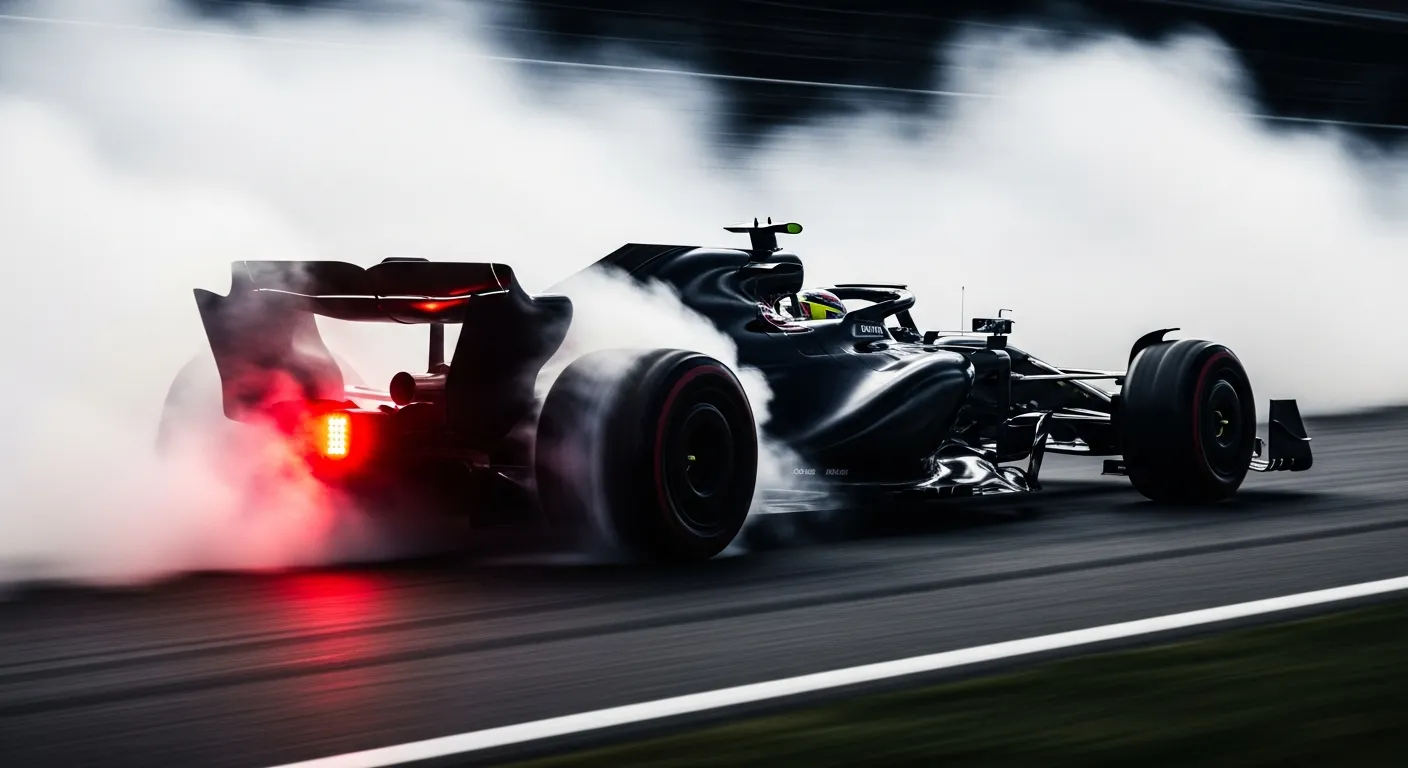
Lance Stroll's performance at the 2025 Azerbaijan Grand Prix was characterized by a consistent but ultimately unrewarding run from his 14th grid position, culminating in a 17th-place finish for the Aston Martin team. The Baku City Circuit, with its unique blend of high-speed straights and intricate castle section, often presents a dynamic challenge, yet for Stroll, the race on September 21, 2025, proved to be an exercise in maintaining position rather than making significant inroads. Starting three places behind his Aston Martin teammate Fernando Alonso, who began from 11th, Stroll navigated the 51-lap event with a measured approach. Despite completing all laps, his pace was not sufficient to break into the points-scoring positions, ultimately finishing 17th with a total race time of 1:35:02.800.
The Canadian driver's fastest lap of 1:45.083, recorded on lap 50, placed him 16th among all competitors for that metric. This data point offers insight into the AMR25's relative performance envelope on the day, suggesting that while the car could deliver competitive single-lap pace late in a stint, sustained race performance to challenge the midfield leaders remained elusive. This situation is not uncommon on circuits like Baku, where track position and early race momentum can dictate the entire afternoon. Similar scenarios have been observed in past seasons, where drivers like [Alexander Albon at the 2020 Hungarian Grand Prix](/results/2020-hungaroring-alex-albon) demonstrated resilience but struggled to convert it into points from a challenging grid slot. The Aston Martin team's collective effort saw both cars finish outside the top 10, with Alonso crossing the line in 15th. This outcome highlights the intense competition within the 2025 constructors' battle, where even minor performance deficits can have significant consequences for championship aspirations, a challenge also faced by drivers like [Esteban Ocon at the 2020 Hungarian Grand Prix](/results/2020-hungaroring-esteban-ocon) when trying to maximize results from the midfield. For a comprehensive understanding of Formula 1's technical and sporting regulations, the [FIA — F1 World Championship](https://www.fia.com/events/fia-formula-one-world-championship) website serves as a primary resource.
The strategic element of the Azerbaijan Grand Prix, particularly concerning tire degradation and pit stop windows, is always a critical factor. Stroll's race trajectory saw him manage his tires across various stints, aiming to optimize for track position in a tightly packed midfield. However, without a significant safety car intervention or a clear pace advantage, advancing through the field proved difficult. The narrative of a race weekend often hinges on these fine margins, as seen with [Carlos Sainz at the 2020 Hungarian Grand Prix](/results/2020-hungaroring-carlos-sainz), where a strong qualifying can sometimes lead to a frustrating race result if strategic calls or race pace don't align. The broader context of Formula 1's history and evolution is well-documented on [Wikipedia: Formula One](https://en.wikipedia.org/wiki/Formula_One), providing valuable background for understanding the sport's competitive landscape. While the Aston Martin team will undoubtedly analyze the data from Baku to identify areas for improvement, this particular round did not contribute to Stroll's championship tally. Further detailed statistics and historical race results can be found on data archives like [Jolpica/Ergast — 2026 season data](https://api.jolpi.ca/ergast/f1/2026.json), offering a deep dive into individual driver and team performances.
Verified race record · Ergast
Grid
P14
Finish
P17
Points
0
Laps
51
Constructor
Aston Martin
Status
Finished
Teammate that weekend
Fernando Alonso
Grid P11 · Finish P15 · 0 pts
Championship · before vs after
Before round 17
P1132 pts
After round 17
P1132 pts