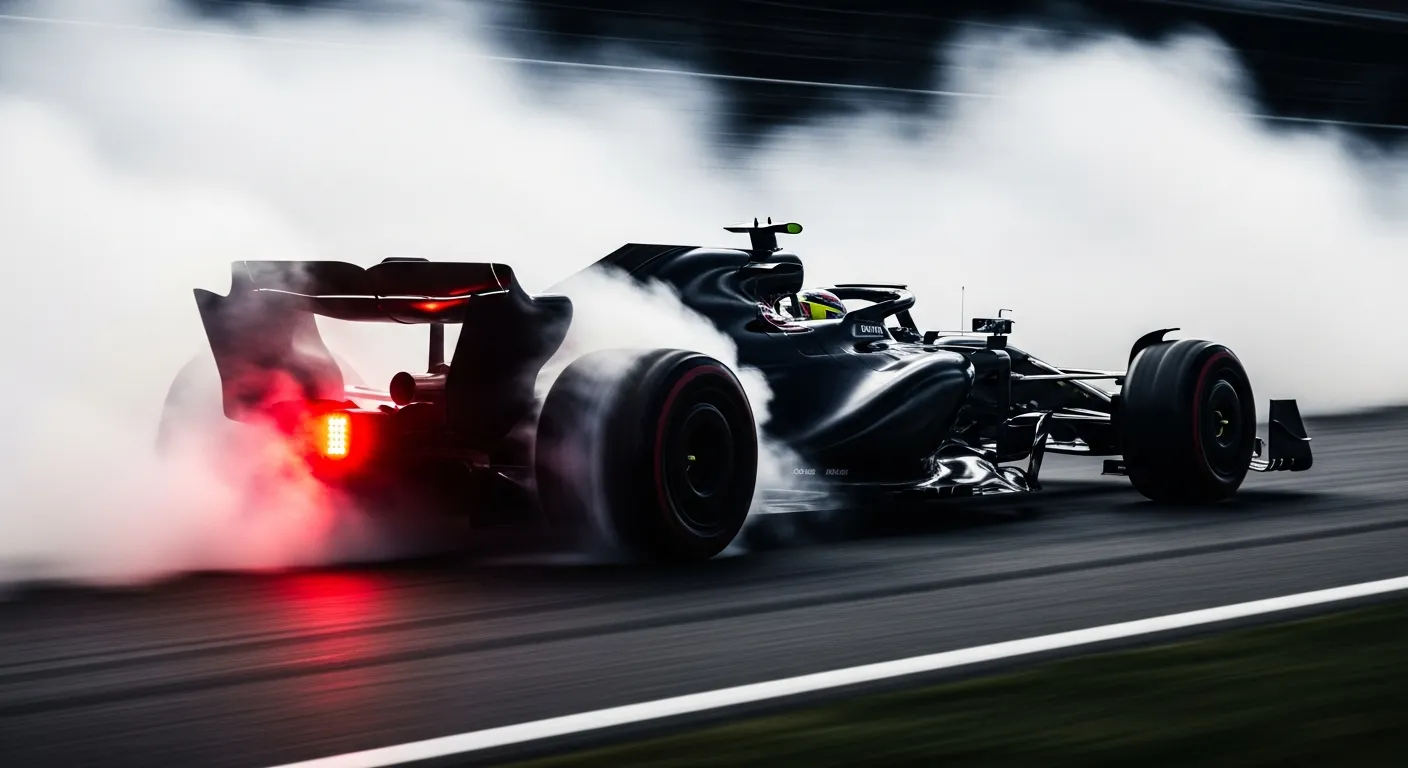
Gabriel Bortoleto's return to his home circuit, Autódromo José Carlos Pace, for the 2025 São Paulo Grand Prix was cut short on the very first lap due to an accident, marking a disappointing end to his weekend for the Kick Sauber F1 Team. Starting from 18th on the grid, the Brazilian driver's race participation concluded before he could register a single lap, a stark contrast to the eventual victory by Lando Norris for McLaren. This early exit resulted in a "Did Not Finish" status for Bortoleto, accumulating no points, a scenario that can significantly impact a team's championship aspirations over a long season, as detailed on the [Formula 1 — official site](https://www.formula1.com/en). The São Paulo circuit, known for its challenging layout and often unpredictable conditions, frequently sees incidents in the opening stages, particularly in the congested midfield. Such early race incidents are not uncommon, recalling similar first-lap dramas at circuits like Suzuka, where drivers such as [Pierre Gasly at the 2019 Japanese Grand Prix](/results/2019-suzuka-pierre-gasly) and [Alexander Albon at the 2019 Japanese Grand Prix](/results/2019-suzuka-alex-albon) have also faced immediate setbacks, highlighting the inherent risks of competitive starts. The official [Formula 1 race calendar](https://www.formula1.com/en/racing/2025.html) shows São Paulo as a late-season fixture, where every point becomes crucial.
The immediate retirement meant Bortoleto was one of three drivers who did not complete the full 71 laps, alongside Charles Leclerc, who retired after 5 laps due to a collision, and Lewis Hamilton, whose race ended after 37 laps with collision damage. While his teammate Nico Hülkenberg navigated the race to a respectable 9th position, securing 2 points for Kick Sauber F1 Team, Bortoleto's incident underscored the fine margins in Formula 1, where a single misjudgment or external factor can erase an entire weekend's preparation. Such early race exits are a critical area of analysis for teams, often prompting detailed investigations into car setup, driver feedback, and track conditions, aspects governed by the [FIA — F1 World Championship regulations](https://www.fia.com/events/fia-formula-one-world-championship). Understanding the dynamics of such incidents is crucial for future race strategies, as explored in various [Wikipedia: Formula One](https://en.wikipedia.org/wiki/Formula_One) articles on race incidents and safety protocols. The comprehensive data from such events is meticulously recorded and analyzed, providing a foundation for understanding performance trends across seasons, visible through resources like [Jolpica/Ergast — 2026 season data](https://api.jolpi.ca/ergast/f1/2026.json). This continuous feedback loop is vital for development, just as it was for drivers like [Nico Hülkenberg at the 2019 Japanese Grand Prix](/results/2019-suzuka-nico-hulkenberg), who also faced challenges in competitive midfield battles. Further details on historical F1 race results can be found in the [Ergast Developer API documentation](https://api.jolpi.ca/ergast/f1/2025.json), providing a rich dataset for analysis. The challenge for Bortoleto and Kick Sauber F1 Team will be to regroup and analyze the incident to prevent recurrence, particularly as the 2025 season progresses towards its conclusion.
Verified race record · Ergast
Grid
P18
Finish
Accident
Points
0
Laps
0
Constructor
Kick Sauber F1 Team
Status
Accident
Teammate that weekend
Nico Hülkenberg
Grid P10 · Finish P9 · 2 pts
Championship · before vs after
Before round 21
P1919 pts
After round 21
P1919 pts