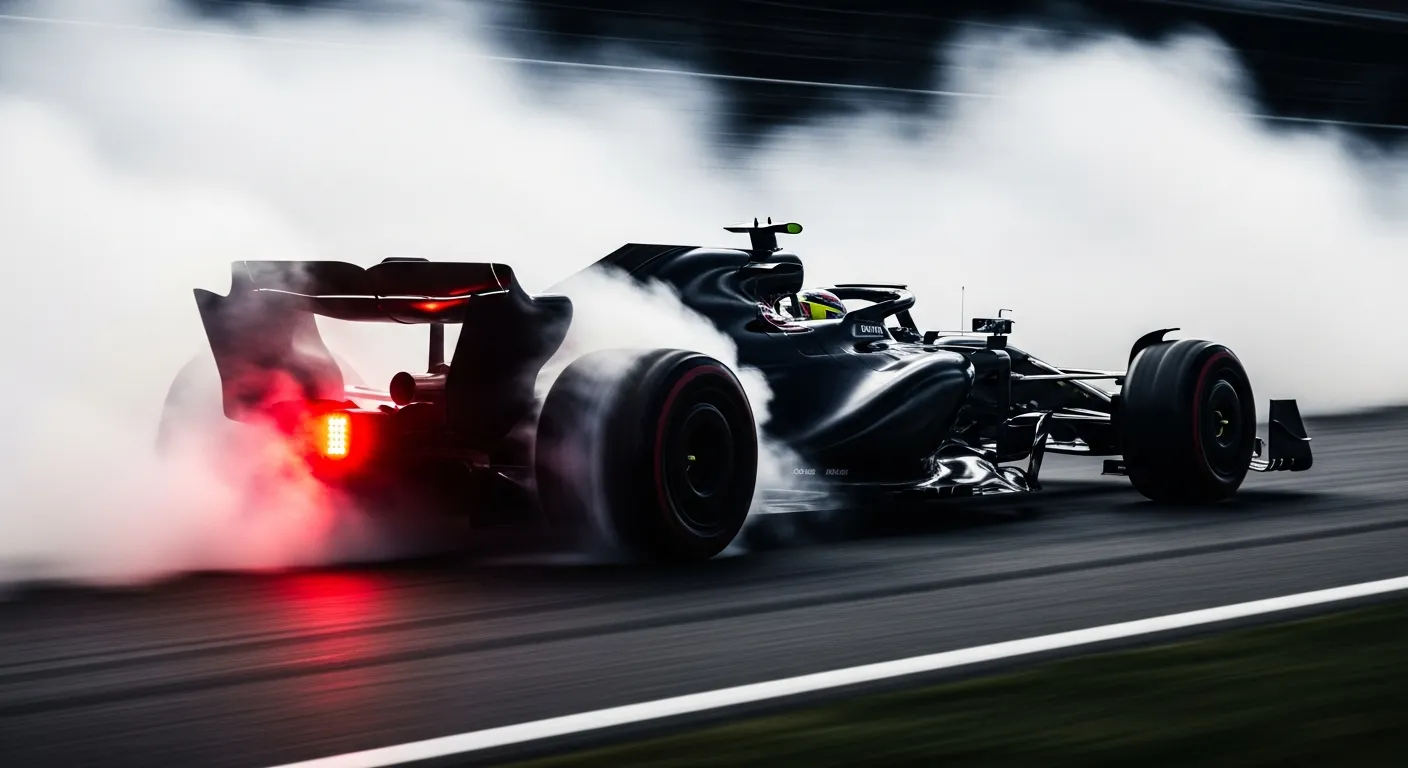
Gabriel Bortoleto's campaign at the 2025 Miami Grand Prix concluded prematurely, a significant setback for the Kick Sauber F1 Team driver. Starting from 13th position on the grid, Bortoleto's race was cut short on lap 30 when an engine failure forced his retirement from the Miami International Autodrome. This DNF meant no points were scored, interrupting any momentum the Brazilian rookie might have been building. The mechanical issue highlights the relentless technical demands placed on modern Formula 1 power units, where reliability is as crucial as outright pace. For an aspiring driver, such technical retirements can be particularly frustrating, disrupting race rhythm and denying valuable track experience in competitive conditions. Understanding the complex engineering behind these machines is key to appreciating the sport, as explored on the [Formula 1 — official site](https://www.formula1.com/en).
Before his retirement, Bortoleto demonstrated a glimpse of his potential, setting a fastest lap of 1:32.328 on lap 21, which positioned him 18th among all competitors for that metric. While this pace didn't translate into a sustained challenge for points, it indicated the car's capability to perform in certain phases of the race. His teammate, Nico Hülkenberg, managed to bring his Kick Sauber C45 home, completing 56 laps and finishing 14th, albeit one lap down. This contrasting outcome within the same garage underscores the fine margins and individual car nuances that can define a Grand Prix weekend. The early exit for Bortoleto meant he completed 27 fewer laps than his teammate, a deficit in valuable data collection and race craft development. Such incidents are a stark reminder of the unpredictable nature of top-tier motorsport, where even the most meticulous preparation can be undone by unforeseen mechanical issues. The broader dynamics of the sport, including driver development pathways, are often discussed on the [Formula 1 — official site](https://www.formula1.com/en/latest/all-news).
The Miami Grand Prix saw several drivers face difficulties, with Bortoleto's engine issue echoing the challenges faced by others like Liam Lawson, who retired after 36 laps due to "Collision damage." These retirements collectively paint a picture of a demanding race on the Miami International Autodrome, testing both machinery and driver resilience. More details on the circuit itself can be found on [Wikipedia: Miami International Autodrome](https://en.wikipedia.org/wiki/Miami_International_Autodrome). For Bortoleto, maintaining a positive outlook and learning from such experiences is crucial for his development in Formula 1. His performance trajectory throughout the 2025 season, and looking ahead to events like [Gabriel Bortoleto at the 2026 British Grand Prix](/results/2026-silverstone-gabriel-bortoleto), will be influenced by how Kick Sauber addresses these reliability concerns. The FIA's role in regulating these technical aspects is paramount, and further information can be found on the [FIA — F1 World Championship](https://www.fia.com/events/fia-formula-one-world-championship) website. Comprehensive historical and current F1 data, including detailed race results and driver statistics, is available from sources like [Jolpica/Ergast — 2026 season data](https://api.jolpi.ca/ergast/f1/2026.json). The collective experience of drivers facing similar race-ending issues, such as [Liam Lawson at the 2026 Belgian Grand Prix](/results/2026-spa-francorchamps-liam-lawson), often forms part of the ongoing narrative of a season. The broader history and evolution of the sport itself provide context for these technical battles, as documented on [Wikipedia: Formula One](https://en.wikipedia.org/wiki/Formula_One).
Verified race record · Ergast
Grid
P13
Finish
Engine
Points
0
Laps
30
Constructor
Kick Sauber F1 Team
Status
Engine
Teammate that weekend
Nico Hülkenberg
Grid P16 · Finish P14 · 0 pts
Championship · before vs after
Before round 6
P200 pts
After round 6
P200 pts