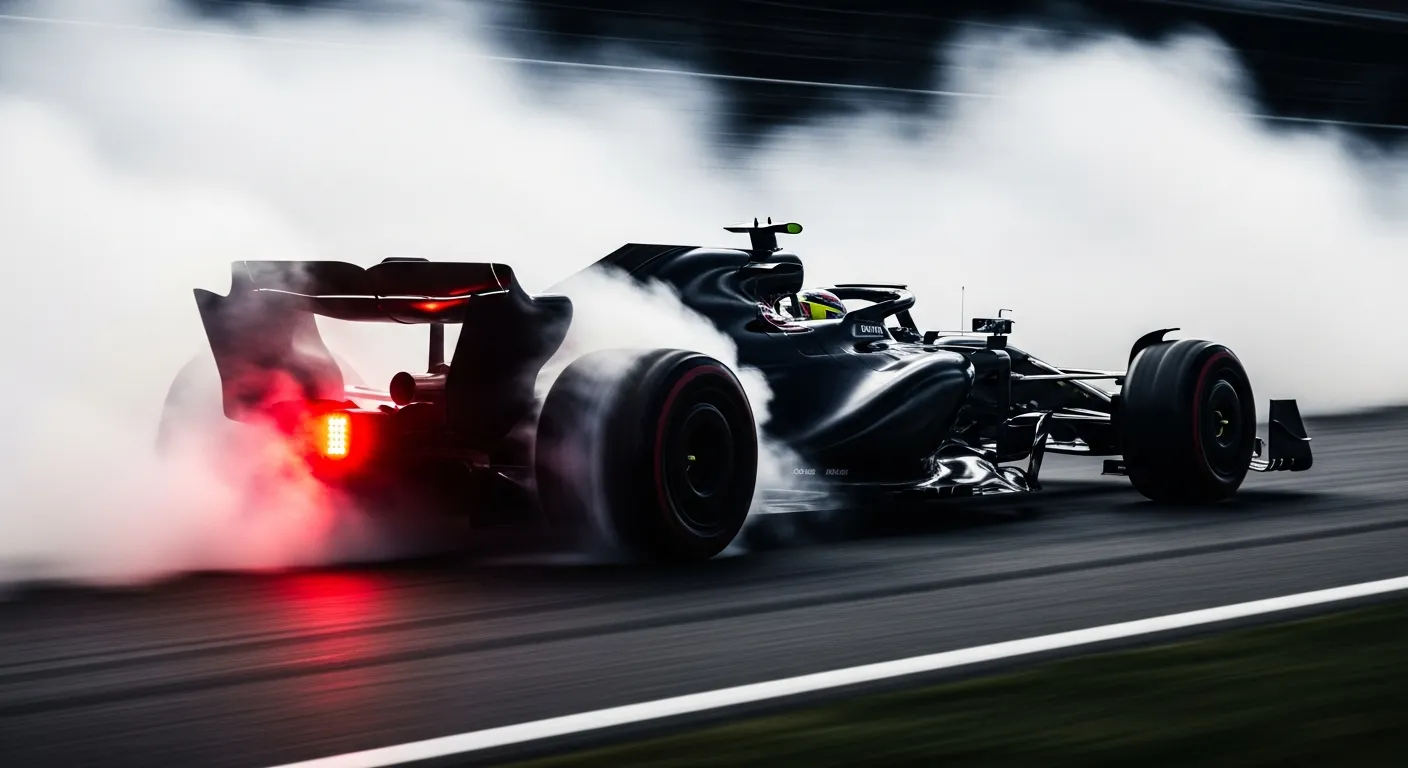
Max Verstappen's campaign at the 2025 Saudi Arabian Grand Prix saw him convert a pole position start into a second-place finish, completing all 50 laps of the challenging Jeddah Corniche Circuit. Starting from pole position, Max Verstappen in his Red Bull Racing challenger aimed to control the pace from the outset. The Jeddah Corniche Circuit, known for its high-speed sections and unforgiving walls, demands precision, and Verstappen navigated its 50 laps in 1:21:09.601. Despite his strong qualifying performance, the race saw a determined challenge from Oscar Piastri, who ultimately crossed the line first for McLaren Racing with a time of 1:21:06.758. This result marked a significant moment in the immediate race narrative, with McLaren demonstrating robust pace throughout the Grand Prix weekend, particularly in race trim. Verstappen's P2 finish secured 18 points for the Dutch driver, contributing to Red Bull's constructor tally. The early stages of the race were a tactical battle, with Verstappen initially holding the lead, but the McLaren's consistent performance on the medium and hard compounds proved difficult to counter over a full race distance. This dynamic often defines races on circuits like Jeddah, where tire degradation and strategic pit stops are paramount to securing a podium position, as seen in many [Formula 1 — official site](https://www.formula1.com/en) events. The pressure to maintain a lead on such a high-speed street circuit is immense, and while Verstappen executed a clean race, the ultimate pace advantage shifted. For a deeper understanding of how race results are officially ratified, the [FIA — F1 World Championship](https://www.fia.com/events/fia-formula-one-world-championship) provides comprehensive documentation. The strategic nuances of pit stops and tire management are frequently discussed in official [Formula 1 race reports](https://www.formula1.com/en/latest/all.html).
The race itself was not without incident, impacting the Red Bull garage directly. Verstappen's teammate, Yuki Tsunoda, suffered an early retirement after just one lap due to collision damage, highlighting the circuit's inherent risks from the very start. This early exit for the second Red Bull car put additional pressure on Verstappen to deliver a strong points haul, especially given the competitive field. While Verstappen recorded his fastest lap on lap 49 with a time of 1:32.280, placing him fourth overall in the fastest lap rankings, it was Lando Norris who ultimately claimed the fastest lap of the race on lap 41 with a 1:31.778, further underscoring McLaren's strong weekend. Charles Leclerc of Scuderia Ferrari secured the third podium spot, finishing with a fastest lap of 1:32.192 on lap 49, indicating the competitive pace across the front-running teams. The strategic battle for track position and tire management played a critical role on the demanding Jeddah layout. For a broader understanding of Formula 1's technical regulations and historical context, one might consult the [Wikipedia: Formula One](https://en.wikipedia.org/wiki/Formula_One) page, which details the evolution of the sport. The full race results and detailed statistics for this season can be explored via [Jolpica/Ergast — 2026 season data](https://api.jolpi.ca/ergast/f1/2026.json), which provides comprehensive historical F1 data. The complexities of race control decisions and penalties are often clarified by the [FIA's sporting regulations](https://www.fia.com/sports/fia-formula-one-world-championship/regulations/2025-formula-1-sporting-regulations). The performance of other drivers in similar high-pressure scenarios, such as [George Russell at the 2020 United States Grand Prix](/results/2020-cota-george-russell) or [Fernando Alonso at the 2020 United States Grand Prix](/results/2020-cota-fernando-alonso), often provides comparative context for how different eras and car packages perform under pressure. Reflecting on past events, even a driver like [Lando Norris at the 2020 United States Grand Prix](/results/2020-cota-lando-norris) faced unique challenges that shaped his race outcome. The 2025 Saudi Arabian Grand Prix underscored the intense competition at the pinnacle of motorsport, where even a pole sitter must fight for every position.
Verified race record · Ergast
Grid
P1
Finish
P2
Points
18
Laps
50
Constructor
Red Bull Racing
Status
Finished
Teammate that weekend
Yuki Tsunoda
Grid P8 · Collision damage · 0 pts
Championship · before vs after
Before round 5
P369 pts
After round 5
P387 pts