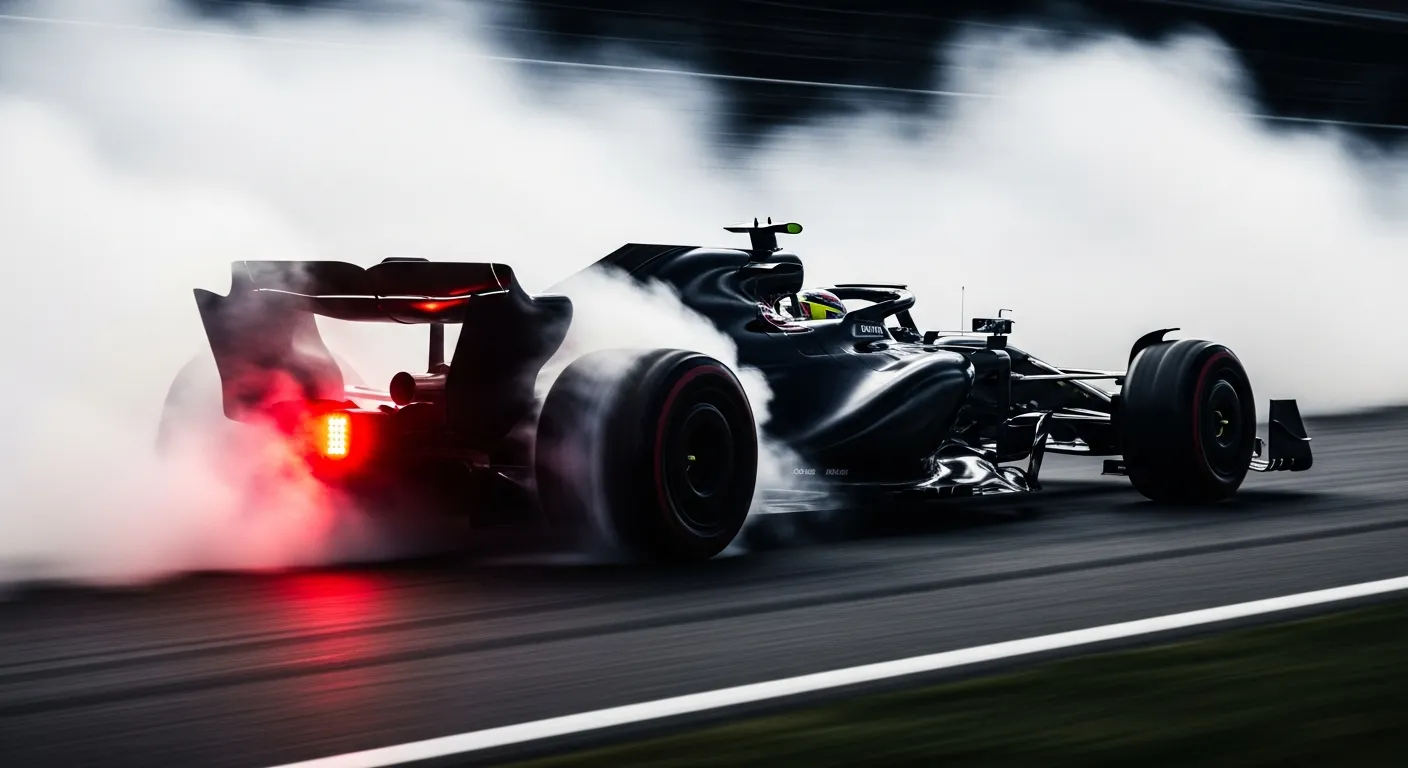
Lando Norris's 2025 Las Vegas Grand Prix was defined not by his on-track performance, but by a post-race technical infringement that ultimately nullified his efforts. After securing pole position for the event, the McLaren Racing driver's official race outcome was a classification of "Illegal skid block wear" and zero laps completed. This status, a significant setback for Norris and the team, also affected his teammate Oscar Piastri, who started from grid position five and received an identical ruling. The dual disqualification meant a complete loss of championship points for McLaren at a pivotal point in the season. Despite the non-classification, Norris did demonstrate pace during the race, recording a fastest lap time of 1:33.965 on lap 41, which stood as the second quickest overall. However, this individual performance metric could not translate into championship points given the car's non-compliance with technical regulations. The stringent rules enforced by the [FIA — F1 World Championship](https://www.fia.com/events/fia-formula-one-world-championship) mandate precise specifications for all components, and the skid block is a particularly sensitive area for scrutiny. The "Illegal skid block wear" indicates that the plank, a mandatory component fitted to the underside of the car to prevent it from running excessively low, had worn beyond the permissible 1mm tolerance. Such wear suggests the car may have been operating at an aerodynamic advantage by running closer to the track surface than allowed. This type of technical breach, while not a direct on-track incident like the collision damage that impacted [Alexander Albon at the 2026 British Grand Prix](/results/2026-silverstone-alex-albon), carries equally severe consequences. The incident underscores the relentless engineering challenge in Formula 1: maximizing performance while remaining strictly within the bounds of the rulebook. For teams, the margin between a compliant and non-compliant car can be minuscule, yet the impact on results is absolute. The double disqualification for McLaren Racing, particularly after Norris's strong qualifying, highlights the unforgiving nature of technical checks. It serves as a stark reminder that even a driver who demonstrates competitive pace, such as [Carlos Sainz at the 2026 British Grand Prix](/results/2026-silverstone-carlos-sainz) in his P5 finish, must have a fully compliant machine to secure points. The detailed race results and technical statuses, including those for drivers like [Oliver Bearman at the 2026 British Grand Prix](/results/2026-silverstone-oliver-bearman) who scored points from a lower grid, are meticulously documented in official data archives like [Jolpica/Ergast — 2026 season data](https://api.jolpi.ca/ergast/f1/2026.json). The broader context of Formula 1's technical and sporting regulations is extensively covered by resources such as [Wikipedia: Formula One](https://en.wikipedia.org/wiki/Formula_One).
Verified race record · Ergast
Grid
P1
Finish
Illegal skid block wear
Points
0
Laps
0
Constructor
McLaren Racing
Status
Illegal skid block wear
Teammate that weekend
Oscar Piastri
Grid P5 · Illegal skid block wear · 0 pts
Championship · before vs after
Before round 22
P1390 pts
After round 22
P1390 pts