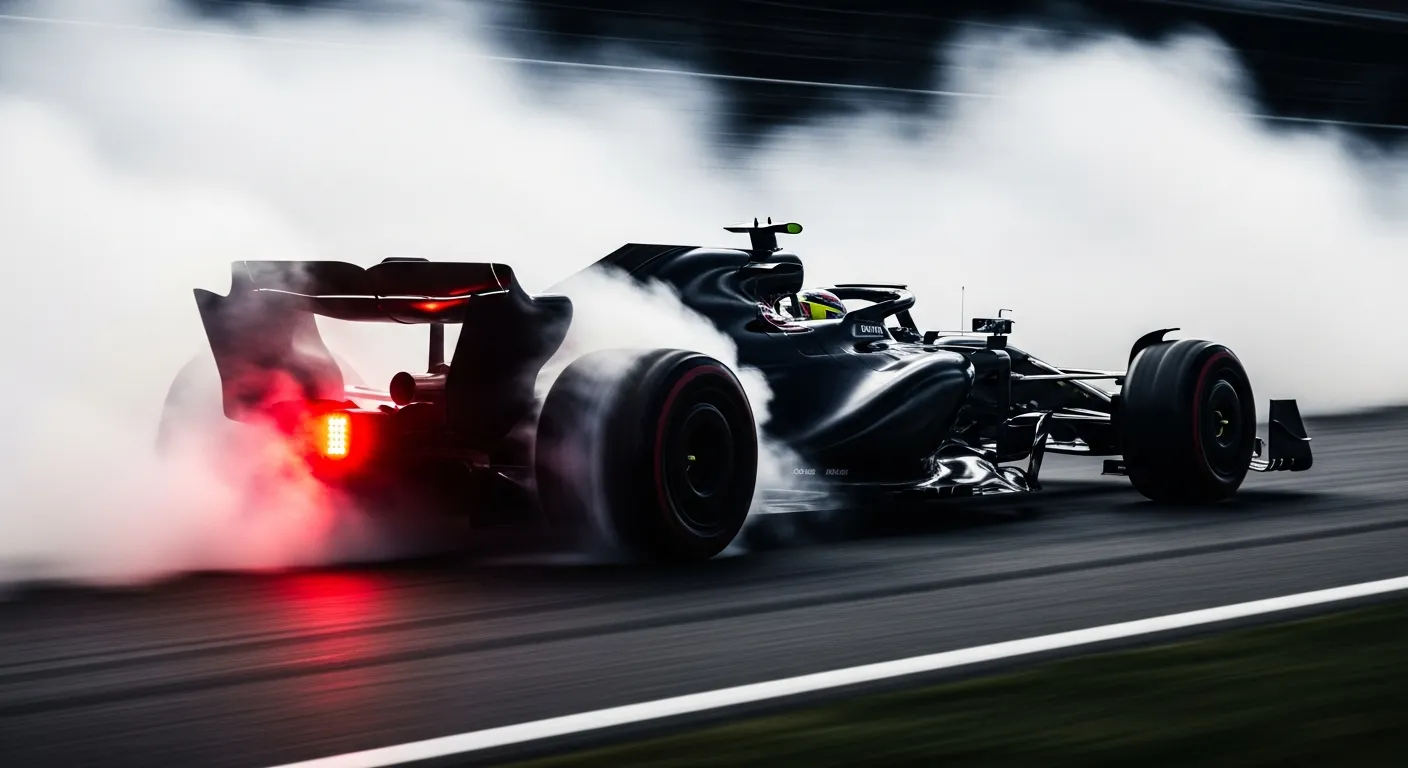
Oliver Bearman's performance at the 2025 Monaco Grand Prix was a demonstration of consistent driving on a circuit notorious for its unforgiving nature, as he brought his Haas F1 Team car home in 12th position after starting from the very back of the grid.
Starting P20, Bearman faced the immediate challenge of the Monaco circuit's tight confines, where overtaking is notoriously difficult. Despite the grid disadvantage, he maintained a steady pace throughout the 78-lap race, completing 76 laps and finishing two laps down from race winner Lando Norris. His fastest lap, a 1:14.855 on lap 6, placed him 10th fastest overall, indicating moments of strong pace early in the race. This result, while not yielding points, showcased his ability to manage a full race distance under pressure, a critical aspect of [Formula 1 racing](https://www.formula1.com/en). For context, his teammate [Esteban Ocon at the 2018 Azerbaijan Grand Prix](/results/2018-baku-esteban-ocon) also displayed resilience in a challenging event. The strategic nuances of Monaco often dictate that a clean race is a successful one for those starting deep in the field, a principle well understood within the [FIA F1 World Championship](https://www.fia.com/events/fia-formula-one-world-championship) framework, which governs all [Grand Prix events](https://www.formula1.com/en/racing/f1-championship/Grand_Prix_races.html).
Compared to his Haas teammate Esteban Ocon, who started P8 and finished P7, one lap ahead, Bearman's P12 finish highlights the inherent difficulties of making significant progress on the Monte Carlo streets from the last row. Ocon's points finish underscores the team's potential, but also the chasm that can exist in race outcomes based on qualifying performance at Monaco. Bearman's consistent run, avoiding incidents, allowed him to climb from his initial grid slot, surpassing several drivers who faced issues or slower pace. This kind of race management is a foundational skill in [Formula One](https://en.wikipedia.org/wiki/Formula_One), often proving more valuable than raw speed in the Principality. Drivers like [Carlos Sainz at the 2018 Azerbaijan Grand Prix](/results/2018-baku-carlos-sainz) have similarly demonstrated the importance of race craft in tight street circuits. While the 2025 season data is still unfolding, this result will be part of the broader picture for Haas as they look towards future races, with comprehensive [2026 season data](https://api.jolpi.ca/ergast/f1/2026.json) already being compiled by data providers. Even seasoned drivers, such as [Lewis Hamilton at the 2018 Azerbaijan Grand Prix](/results/2018-baku-lewis-hamilton), have experienced the unpredictable nature of street circuits and the detailed [race results](https://www.formula1.com/en/results.html) are always closely scrutinized.
Verified race record · Ergast
Grid
P20
Finish
P12
Points
0
Laps
76
Constructor
Haas F1 Team
Status
+2 Laps
Teammate that weekend
Esteban Ocon
Grid P8 · Finish P7 · 6 pts
Championship · before vs after
Before round 8
P166 pts
After round 8
P166 pts