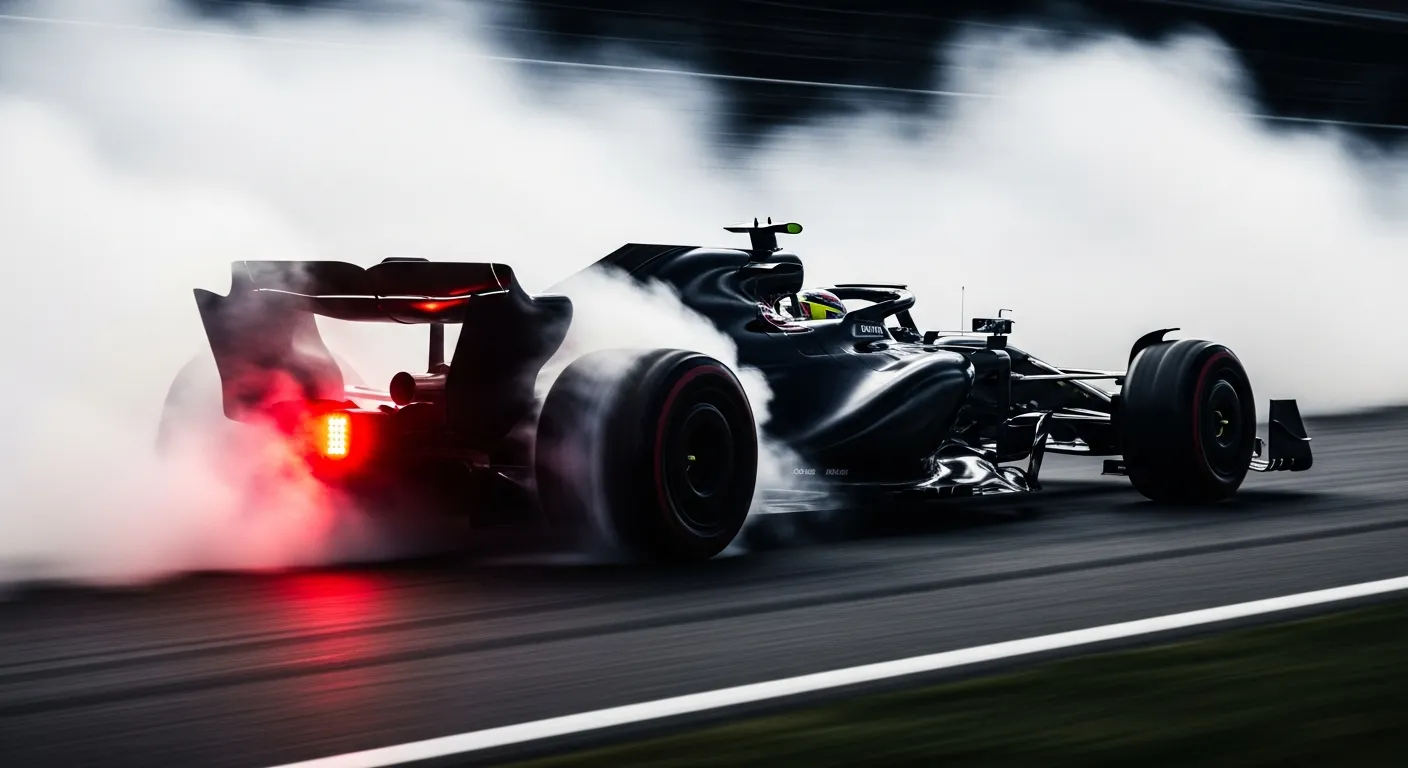
Lewis Hamilton's drive at the 2025 Canadian Grand Prix saw him navigate the challenging Circuit Gilles Villeneuve to secure a sixth-place finish for Scuderia Ferrari, a result that maintained his championship standing despite a fiercely competitive field. Starting from fifth on the grid, Hamilton completed all 70 laps of the race, demonstrating the reliability and consistent pace expected from a seasoned competitor. His race time of 1:32:03.401 positioned him just over ten seconds behind the dominant race winner, George Russell, who clinched victory from pole position for Mercedes. This performance for Ferrari secured Hamilton 8 championship points, adding to his season tally and reinforcing his position in the drivers' standings. The strategic nuances of the race were particularly evident within the Ferrari garage, as Hamilton's teammate, Charles Leclerc, starting three positions further back in eighth, ultimately managed to climb to finish fifth, ahead of Hamilton. This intra-team dynamic often highlights the fine margins in Formula 1, where tire management, pit stop timing, and on-track opportunities can significantly shift outcomes, a constant consideration for any team operating under the comprehensive regulations set by the [official Formula 1 site](https://www.formula1.com/en).
The Circuit Gilles Villeneuve, with its unique blend of high-speed straights and demanding chicanes, is a track that rewards both raw pace and precise car placement, often leading to dramatic racing. Hamilton's fastest lap, a 1:14.805 recorded on lap 64, placed him ninth overall among the field's quickest laps, indicating a concerted late-race push for performance as fuel loads lightened and tires reached optimal temperature. While a sixth-place finish is a solid points haul, the gap to the frontrunners, including Max Verstappen and Kimi Antonelli who secured podium finishes, underscores the intense competitive landscape of the 2025 season. This particular race saw several drivers pushing the limits, including Lando Norris, whose strong run ended prematurely on lap 66 due to a collision, highlighting the inherent risks and unforgiving nature of the sport, as governed by the [FIA's F1 World Championship rules](https://www.fia.com/events/fia-formula-one-world-championship). Hamilton's ability to bring the Ferrari home in a points-scoring position, while not a podium, was crucial for the constructor's championship efforts and for his individual campaign. For context on how top drivers manage such demanding races under pressure, one might look at performances like [Lewis Hamilton at the 2023 Emilia Romagna Grand Prix](/results/2023-imola-lewis-hamilton), where similar pressures were faced on a different challenging circuit. The detailed statistical breakdowns available from sources like [Jolpica/Ergast — 2026 season data](https://api.jolpi.ca/ergast/f1/2026.json) offer further insight into driver and constructor performance trends across seasons. The rich history of F1, as chronicled on [Wikipedia: Formula One](https://en.wikipedia.org/wiki/Formula_One), is replete with examples of drivers demonstrating resilience and strategic acumen in challenging conditions. Comparing this result to other strong midfield or points-scoring drives, such as [Oscar Piastri at the 2023 Emilia Romagna Grand Prix](/results/2023-imola-oscar-piastri) or even [George Russell at the 2023 Emilia Romagna Grand Prix](/results/2023-imola-george-russell), provides a broader perspective on how different drivers approach similar race scenarios at iconic venues, always seeking to maximize their car's potential. The competitive landscape demands constant adaptation and strategic acumen from both drivers and their teams throughout a Grand Prix weekend, as seen on the [Formula 1 — official site](https://www.formula1.com/en) and in detailed [FIA F1 World Championship information](https://www.fia.com/events/fia-formula-one-world-championship).
Verified race record · Ergast
Grid
P5
Finish
P6
Points
8
Laps
70
Constructor
Scuderia Ferrari
Status
Finished
Teammate that weekend
Charles Leclerc
Grid P8 · Finish P5 · 10 pts
Championship · before vs after
Before round 10
P671 pts
After round 10
P679 pts