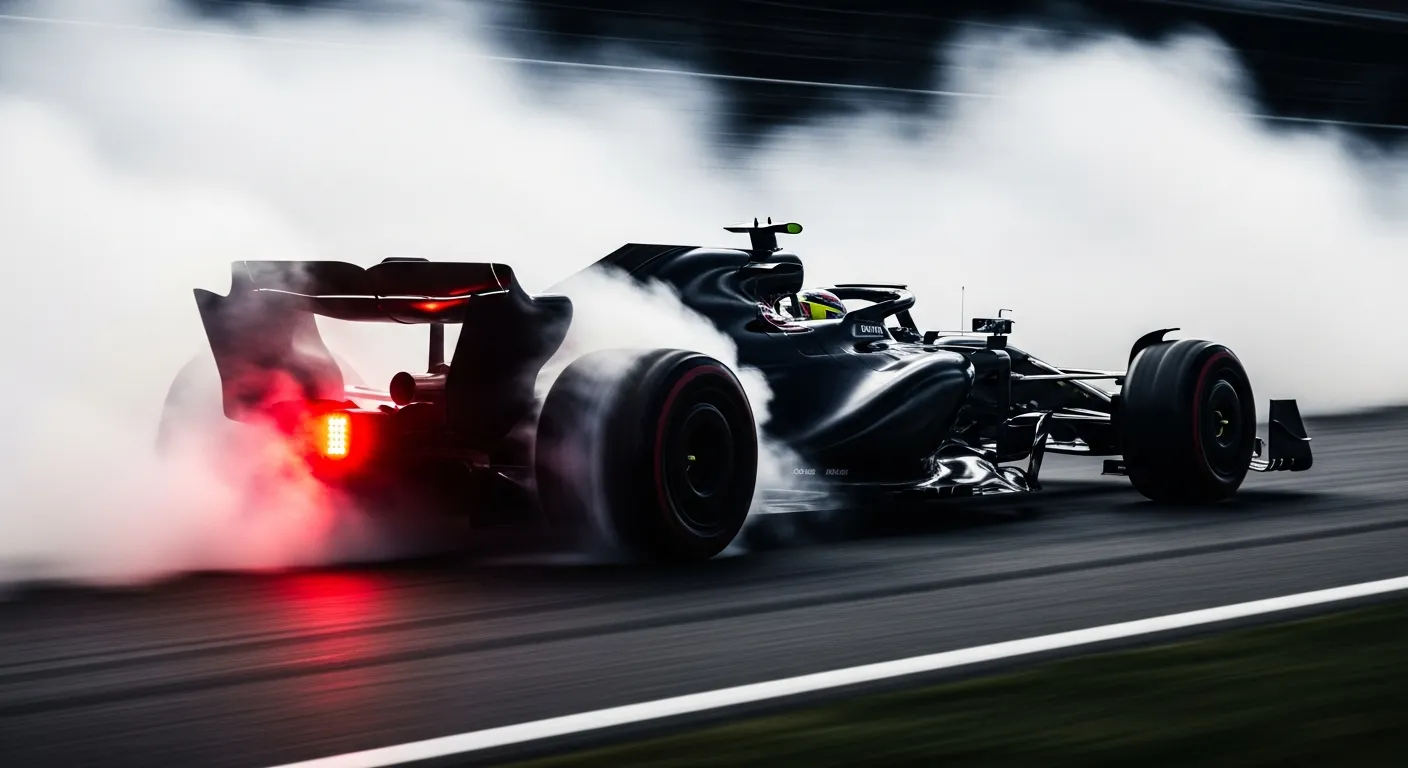
Lewis Hamilton's 2026 Japanese Grand Prix campaign saw him convert a sixth-place grid start into a sixth-place finish, securing eight points for Scuderia Ferrari in a race that underscored the tight competition within the upper midfield. Starting from the third row at the iconic Suzuka Circuit, Hamilton navigated the 53-lap event with a race time of 1:28:28.440, demonstrating a measured approach to maintain his position against a challenging field. While his teammate, Charles Leclerc, managed to climb from fourth on the grid to secure a podium finish in third, Hamilton’s performance reflected a solid, if not spectacular, points haul for the Italian constructor. The gap to Leclerc, who finished approximately ten seconds ahead, illustrates the differing race trajectories within the same team, a common occurrence in the demanding environment of Formula 1. This outcome contrasts with some of Hamilton's prior races, such as his outing at the [Lewis Hamilton at the 2016 Emilia Romagna Grand Prix](/results/2016-imola-lewis-hamilton), where strategic decisions and race incidents often dictated a more volatile result.
The race pace for the #44 Ferrari was evident in Hamilton's fastest lap, a 1:32.777 recorded on lap 48, which placed him fourth overall in the fastest lap rankings for the Grand Prix. This late-race surge suggests that the Ferrari package had underlying performance, even if the overall result didn't see Hamilton advance through the order. This lap time was notably quicker than Oscar Piastri's fastest lap (1:32.996) but slightly behind his teammate Leclerc's (1:32.634), indicating a consistent, if not leading, pace in the final stages. The broader context of the 2026 season, as detailed in the comprehensive [Jolpica/Ergast — 2026 season data](https://api.jolpi.ca/ergast/f1/2026.json), shows how crucial every point is in the constructors' championship, especially when battling against resurgent teams like Mercedes, whose Kimi Antonelli claimed victory. For comparison, drivers like [Max Verstappen at the 2016 Emilia Romagna Grand Prix](/results/2016-imola-max-verstappen) have often demonstrated the capacity to make significant gains from similar grid positions, highlighting the fine margins that define modern Formula 1.
The strategic nuances of racing at Suzuka, a circuit renowned for its high-speed corners and demanding layout, are always a test for both driver and machine. Hamilton's ability to hold his ground and deliver points consistently, despite not improving on his starting position, is a testament to his enduring skill. This characteristic defines many veteran drivers in the sport, including figures like [Fernando Alonso at the 2016 Emilia Romagna Grand Prix](/results/2016-imola-fernando-alonso), who continue to adapt to evolving technical regulations, as outlined by the [Wikipedia: Formula One](https://en.wikipedia.org/wiki/Formula_One) entry on the sport's history. The competitive field saw Lando Norris in the McLaren finish just ahead of Hamilton in fifth, while Pierre Gasly in the Alpine followed in seventh, illustrating the tight grouping of cars. This steady performance ensured Ferrari strengthened its position in the constructors' standings, even as Mercedes' Kimi Antonelli took the victory, showcasing the intense competition at the forefront of the [Formula 1 — official site](https://www.formula1.com/en) calendar. Hamilton's experience was key in extracting the maximum possible from a race where outright pace to challenge the leaders proved elusive, securing valuable championship points for his team.
Verified race record · Ergast
Grid
P6
Finish
P6
Points
8
Laps
53
Constructor
Scuderia Ferrari
Status
Finished
Teammate that weekend
Charles Leclerc
Grid P4 · Finish P3 · 15 pts
Championship · before vs after
Before round 3
P433 pts
After round 3
P441 pts