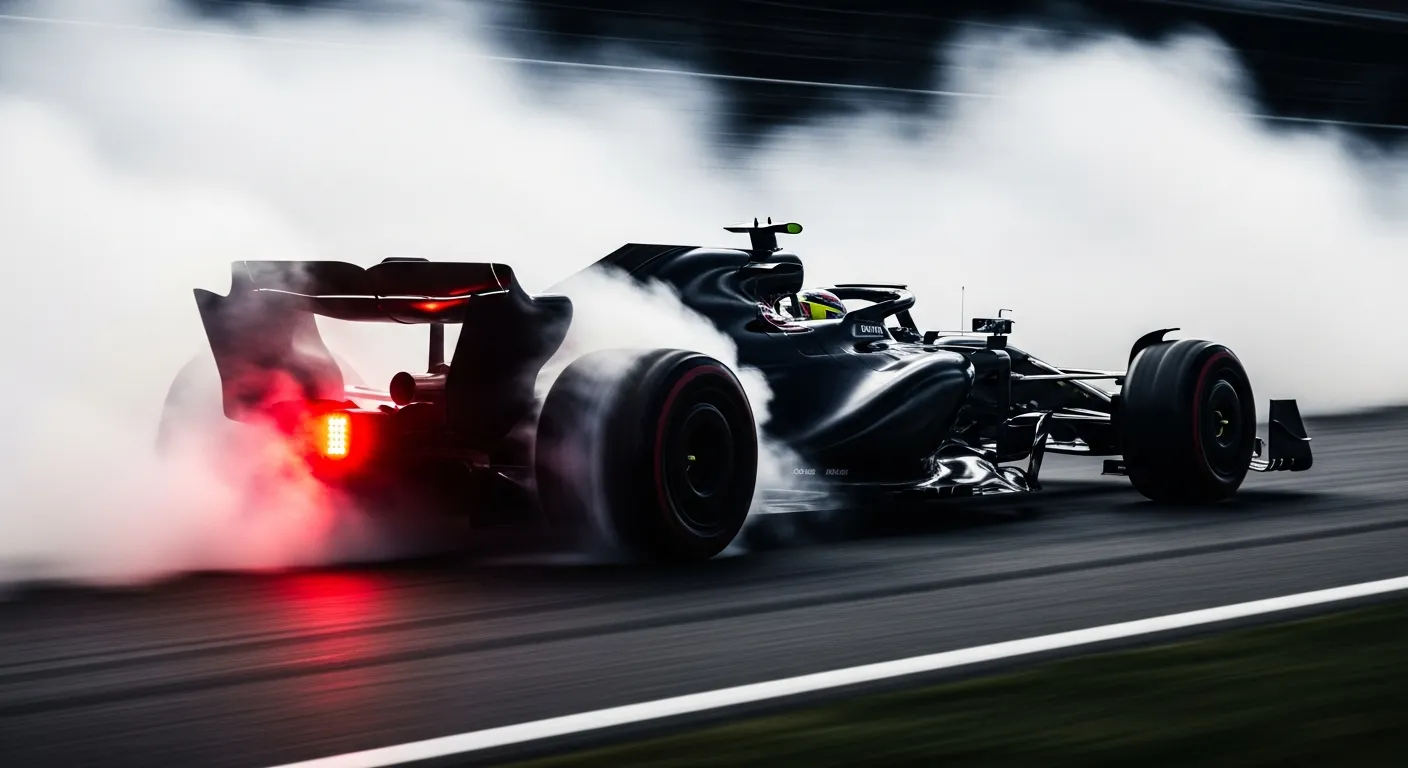
Carlos Sainz’s 2025 Austrian Grand Prix at the Red Bull Ring was characterized by an unfortunate technical failure that prevented him from participating in the race itself. The Spanish driver, competing for Williams Grand Prix Engineering, was unable to take his place on the starting grid for round 11 of the season, held on June 29th, 2025. The official status recorded for Sainz was "Brakes", indicating a fundamental mechanical issue that rendered his car unfit to race, leading to a DNF with zero laps completed and, consequently, zero points scored.
This non-start for Sainz was a significant blow for Williams, particularly as his teammate, Alexander Albon, also faced a retirement from the race, albeit later, due to an "Engine" issue after 15 laps. Such a double technical retirement underscores a challenging weekend for the British constructor at the Spielberg circuit, a venue known for its demanding braking zones and elevation changes. The absence of Sainz from the contest meant he watched from the sidelines as Lando Norris secured victory for McLaren, followed by his teammate Oscar Piastri, with Charles Leclerc completing the podium for Ferrari. For a deeper dive into the broader context of Formula 1 racing and its regulations, the [FIA — F1 World Championship](https://www.fia.com/events/fia-formula-one-world-championship) site offers comprehensive information.
The incident at the Red Bull Ring draws parallels to other challenging moments in Sainz's career, such as his early days where mechanical issues could derail a weekend. One might recall instances like [Carlos Sainz at the 2015 Singapore Grand Prix](/results/2015-marina-bay-carlos-sainz), where reliability also played a role in his race outcome. While the specific nature of the brake failure would be subject to internal investigation by Williams, it highlights the intricate engineering demands of modern Formula 1 cars, where a single component malfunction can halt an entire race effort. Fans interested in the technical side of the sport can explore general information on [Wikipedia: Formula One](https://en.wikipedia.org/wiki/Formula_One).
This DNF also impacted Sainz's standing in the Drivers' Championship. Entering the Austrian Grand Prix, he held 13th position with 13 points. Failing to score any points meant he slipped to 14th in the standings, as other drivers moved ahead. The competitive nature of the 2025 season, as detailed in various [Formula 1 — official site](https://www.formula1.com/en) reports, means every point is crucial. Such an outcome contrasts sharply with drivers who managed to convert strong qualifying into race results, like [Fernando Alonso at the 2015 Singapore Grand Prix](/results/2015-marina-bay-fernando-alonso), who finished in the points despite a challenging car. The full data for the 2025 season and beyond can be explored via resources like [Jolpica/Ergast — 2026 season data](https://api.jolpi.ca/ergast/f1/2026.json), providing a statistical overview of driver and constructor performances. Even a driver of Max Verstappen's calibre has faced unexpected retirements, as seen in his early career at events such as [Max Verstappen at the 2015 Singapore Grand Prix](/results/2015-marina-bay-max-verstappen). The unpredictable nature of mechanical reliability remains a constant factor in F1, a point often emphasized by analysis on the [Formula 1 — official site](https://www.formula1.com/en). The detailed race results, including status codes, are meticulously recorded, offering a clear picture of each competitor's weekend on the [Jolpica/Ergast — 2026 season data](https://api.jolpi.ca/ergast/f1/2026.json) platform.
Verified race record · Ergast
Grid
Pit
Finish
Brakes
Points
0
Laps
0
Constructor
Williams Grand Prix Engineering
Status
Brakes
Teammate that weekend
Alexander Albon
Grid P12 · Engine · 0 pts
Championship · before vs after
Before round 11
P1313 pts
After round 11
P1413 pts