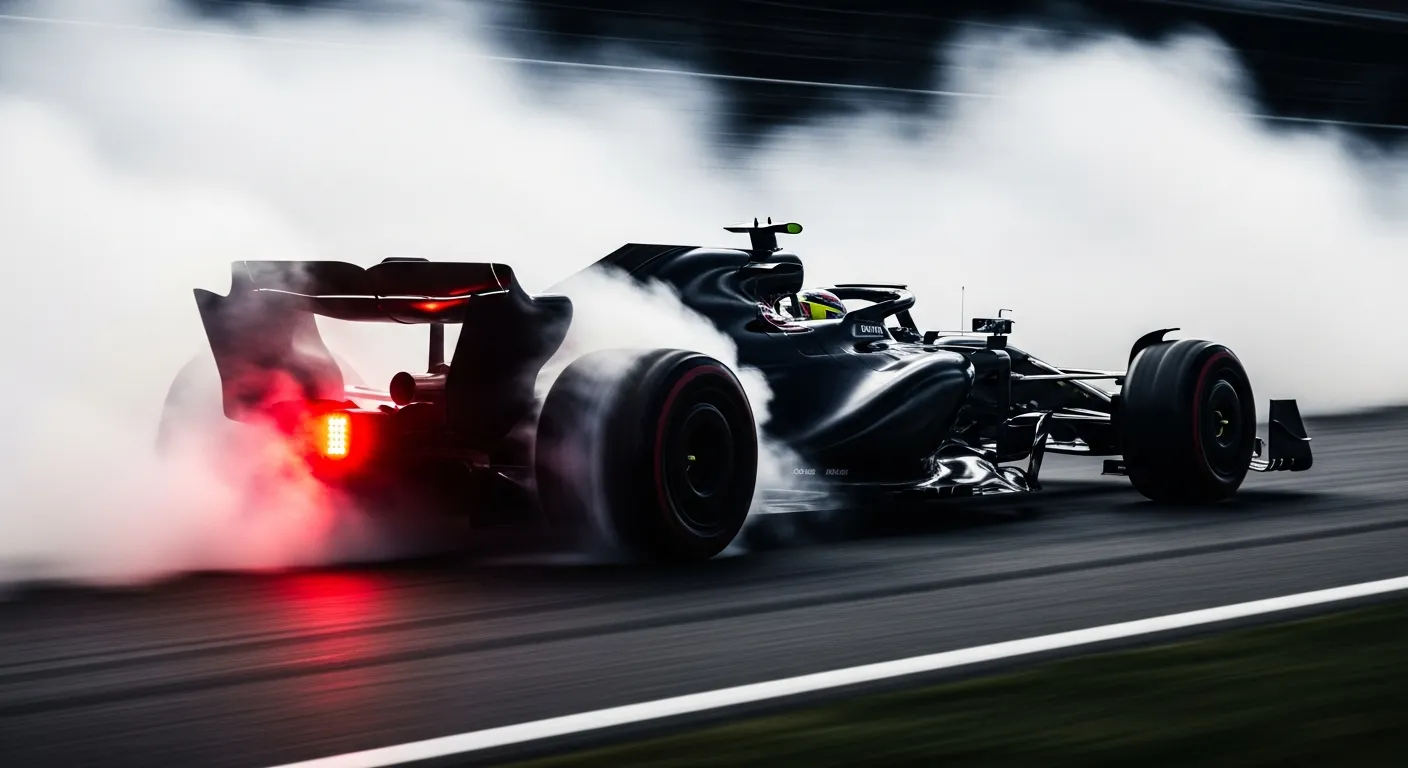
Constructor snapshot
Source: Jolpica F1 API- F1 debut
- 2016 · Australian Grand Prix
- Most recent race
- 2026 · Canadian Grand Prix
- Seasons contested
- 11
- Total points
- 384
The MoneyGram Haas F1 Team, unique as Formula 1's only American-headquartered constructor, has carved out a distinct niche since its debut in 2016 by leveraging a strategic partnership model and a pragmatic approach to the sport.
History
Founded by American industrialist Gene Haas, the team made its Formula 1 debut at the 2016 Australian Grand Prix, marking the first American-led entry into the championship in three decades. Headquartered in Kannapolis, North Carolina, with a significant operational base in Banbury, UK, Haas F1 Team quickly established a reputation for efficiency. Rather than designing every component in-house, the team opted for a close technical partnership with Ferrari, purchasing as many non-listed parts as regulations allow. This model, a departure from the traditional constructor approach, allowed Haas to enter the sport with a competitive package from the outset. Over its 11 seasons contested, Haas has participated in 219 races, accumulating a total of 384 points. While the team has yet to secure a win, a podium, or a one-two finish, its early seasons demonstrated the potential of its operational philosophy, often punching above its weight. More details on their journey can be found on the MoneyGram Haas F1 Team — official site.
Driving DNA
Haas's driving DNA has historically been characterized by a blend of experienced hands and promising talent. The team has often sought drivers capable of maximizing the car's potential and providing clear feedback, crucial for a smaller outfit. This approach has seen a variety of driver pairings over the years, aiming for consistency and development. The team's reliance on a customer power unit, provided by Ferrari, means that optimizing integration and extracting performance from the engine has always been a core focus. Unlike teams such as Mercedes or Alpine, who develop their own power units, Haas's engineering challenge lies in seamlessly integrating the Ferrari package with their chassis, a strategy that requires a different kind of technical prowess. This model has allowed Haas to focus resources on aerodynamics and chassis development, aiming for a robust and consistent platform. For a comprehensive overview of the team's history and structure, Wikipedia: Haas F1 Team offers valuable insights.
The 2026 lineup
Looking ahead to the 2026 season, the MoneyGram Haas F1 Team is set to field an intriguing driver lineup. Esteban Ocon, a proven race winner, brings a wealth of experience and a reputation for consistent performance and strong race craft. His arrival is expected to provide a clear benchmark and leadership within the team. Alongside Ocon, Oliver Bearman will step up to a full-time seat, having already demonstrated his raw speed and composure in limited F1 outings. Bearman's promotion, following his impressive performances, signals the team's commitment to nurturing talent. This blend of experience and youth reflects a strategic move by Team Principal Ayao Komatsu to build a formidable pairing for the new regulatory era. The dynamics between Ocon's established presence and Bearman's burgeoning talent will be a key narrative to follow, as the team aims to capitalize on the significant rule changes.
What's at stake
The 2026 season represents a pivotal moment for Haas, as it does for all teams, with the introduction of new technical regulations, particularly concerning power units and aerodynamics. Haas will continue its long-standing partnership with Ferrari for its power units, a relationship that will be crucial as all engine manufacturers adapt to the new hybrid formulas. The challenge for Haas will be to leverage this continuity while adapting its chassis and aerodynamic philosophy to the new rules. The team's ability to maximize its technical partnership and integrate the new Ferrari power unit effectively will be paramount. For a smaller team, navigating such significant changes successfully can either provide an opportunity to leapfrog competitors or risk falling behind. The performance of teams like Racing Bulls, another outfit with a close technical alliance to a larger constructor, often highlights the potential and pitfalls of such models. The ongoing development and competitive landscape for Haas are regularly covered by outlets like The Race — Haas coverage, offering insights into their strategic direction. The title partnership with MoneyGram — title partner also underscores the team's commercial stability as it enters this critical period of transformation.
Our analysis
Latest analysis on Haas

Camara Tipped for Haas F1 Seat in 2027: Latest F1 News Round-up
The latest F1 news is buzzing with speculation: Gabriel Bortoleto's manager, Fernando Alonso, is reportedly tipping Caio Camara for a Haas F1 seat in 2027. Dive into this and more breaking F1 news.
Explore Haas
2026 lineup
Common questions
- Where is the MoneyGram Haas F1 Team based?
- The MoneyGram Haas F1 Team operates from two main headquarters: Kannapolis, North Carolina, in the United States, which handles administrative and design functions, and Banbury, UK, which serves as its primary European operational base for race team logistics and car development.
- Who is the team principal for Haas F1 Team?
- Ayao Komatsu is the current Team Principal for the MoneyGram Haas F1 Team. He assumed the role in 2024, bringing a wealth of engineering and operational experience to the leadership position.
- What is Haas F1 Team's best result in Formula 1?
- While the MoneyGram Haas F1 Team has not yet achieved a win, podium, or one-two finish, its best individual race result is a fourth-place finish, achieved by Romain Grosjean at the 2018 Austrian Grand Prix.