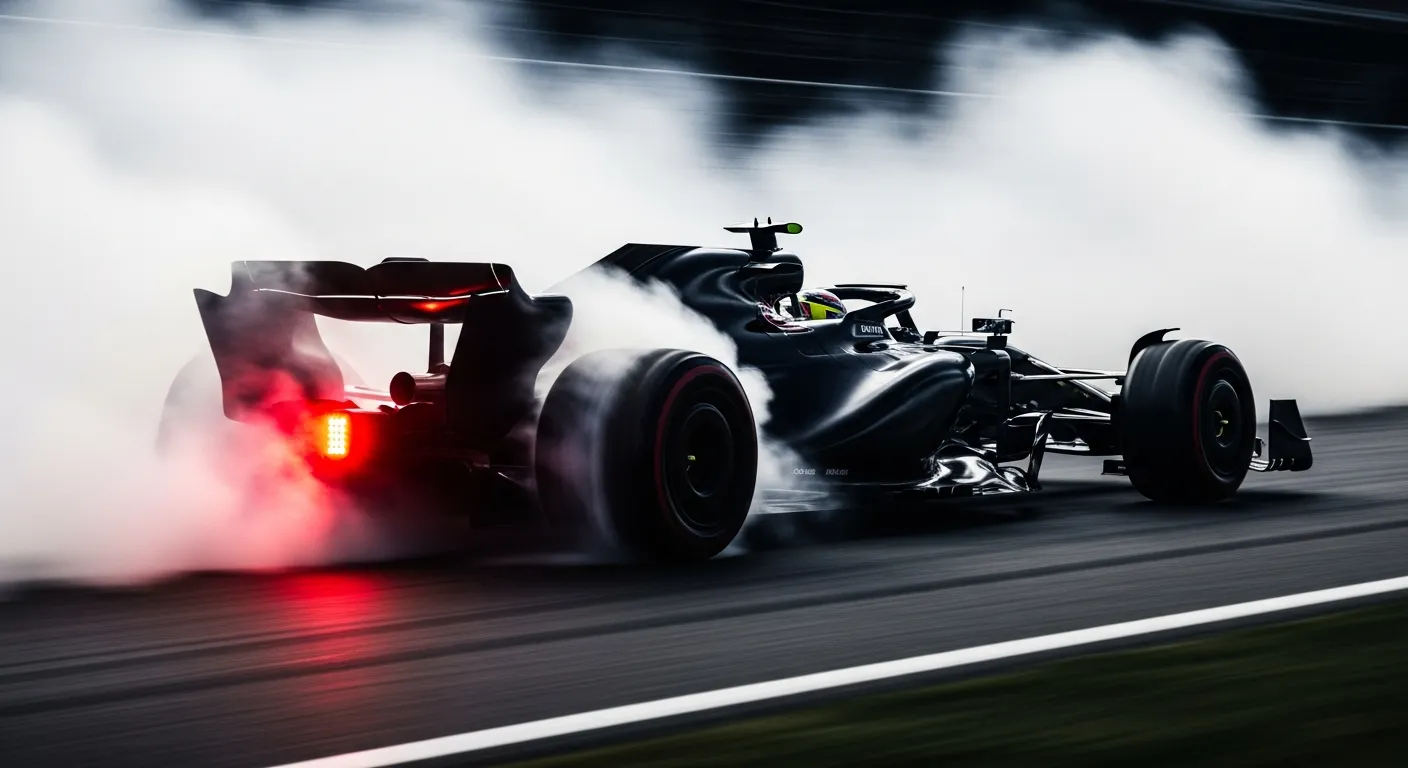
Carlos Sainz's journey through the hybrid era of Formula 1, spanning 2014 to 2021, was defined by a remarkable adaptability and consistent performance across four different teams, progressively elevating his standing in the sport.
The era's character
The hybrid era, inaugurated in 2014, fundamentally reshaped Formula 1 with its V6 turbo-hybrid power units. This period emphasized not only raw engine power but also energy recovery systems, fuel efficiency, and complex technical integration. Teams with superior power unit development, notably Mercedes, often held a significant advantage, pushing drivers and engineers alike to master a new generation of sophisticated machinery. For a comprehensive understanding of these regulations, one might consult the FIA — F1 World Championship technical specifications. This era demanded a nuanced driving style and a deep understanding of energy management, a far cry from the preceding V8 era, as seen in the career trajectory of drivers like Fernando Alonso in the V8 era.
What it asked of him
Sainz entered Formula 1 in 2015 with Toro Rosso, part of the Red Bull junior program. His early years were characterized by strong, if sometimes overshadowed, performances against teammates like Max Verstappen. The constant pressure of the Red Bull system, coupled with the need to extract performance from a midfield car, honed his race craft. His subsequent moves to Renault mid-2017 and then McLaren in 2019 required significant adaptation. At Renault, he was part of a factory team's rebuilding phase, contributing to its development. His two years at McLaren, alongside Lando Norris in the hybrid era, were particularly formative, as he helped steer the team back towards competitiveness after challenging years. This period demanded not just speed, but also leadership in car development and the ability to integrate quickly into new team environments and power unit philosophies (Renault, Honda, Ferrari).
Signature moments
While wins eluded him in this period, Sainz delivered several standout performances. His first career podium came at the chaotic 2019 Brazilian Grand Prix with McLaren, a significant milestone for both driver and team, marking McLaren's first podium since 2014. This result underscored his consistency and ability to capitalize on opportunities, a testament to his growth. The 2020 Italian Grand Prix saw him finish a close second, just fractions behind Pierre Gasly, showcasing his potential for victory. His consistent points finishes and mature approach at McLaren ultimately paved the way for his move to Ferrari for the 2021 season, a testament to his rising stock in the paddock. F1 news analysis often highlighted his steady progression through these years, solidifying his reputation as a top-tier talent, as covered by various Motorsport news outlets.
How this era shaped what came next
The hybrid era was crucial in establishing Carlos Sainz as a highly respected, adaptable, and consistent driver. His journey through four different teams – Toro Rosso, Renault, McLaren, and Ferrari – demonstrated his capacity to perform under varying pressures and technical demands. This progression, marked by his instrumental role in McLaren's resurgence and his consistent points scoring, built the foundation for his coveted move to Scuderia Ferrari. His ability to integrate quickly and deliver results, even in a new environment like Ferrari in 2021, confirmed the reputation he forged across these demanding seasons. His performance in this era set the stage for his continued career at the pinnacle of motorsport, much like how other drivers, such as Fernando Alonso in the hybrid era, navigated the evolving landscape of F1.