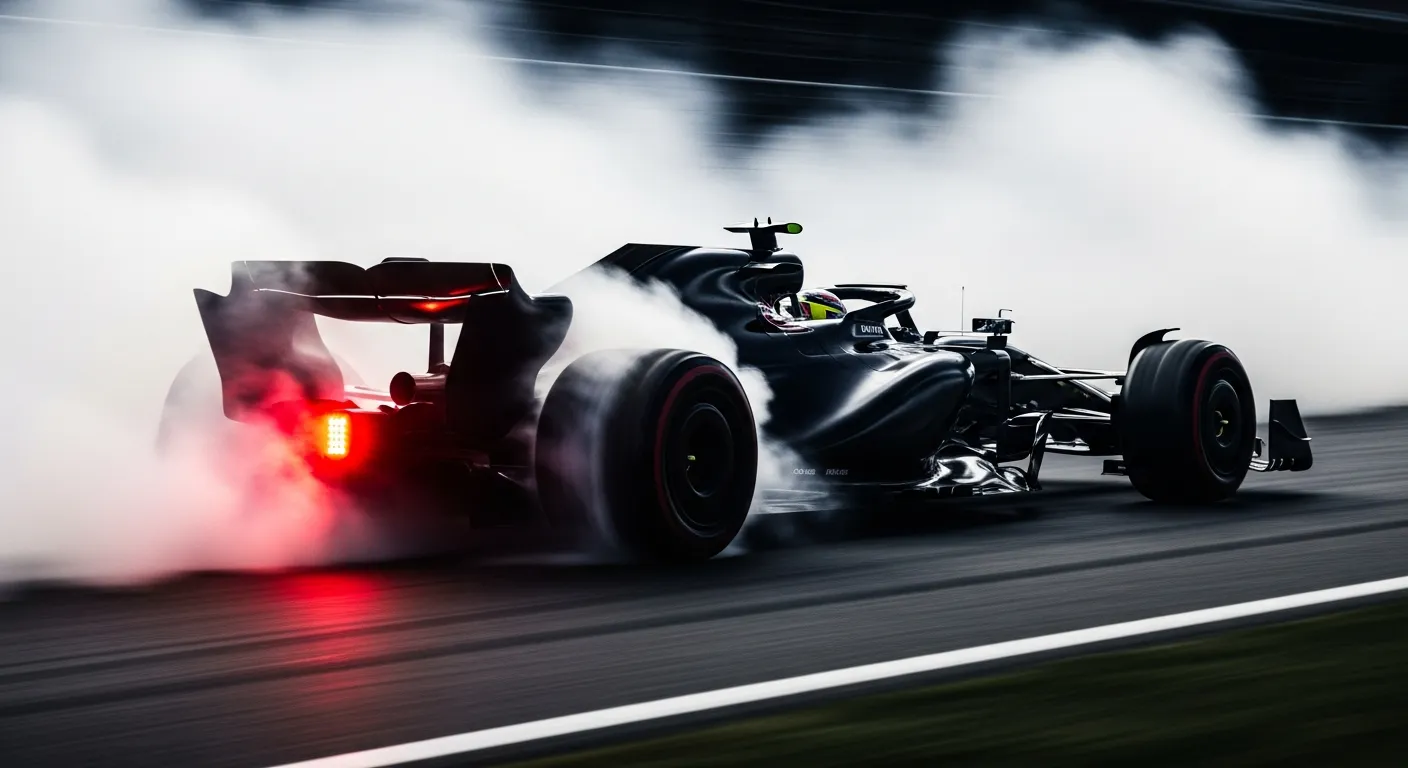
Lewis Hamilton's tenure in Formula 1's ground-effect era, spanning 2022 to 2025, represented a profound shift from the consistent dominance he experienced in the preceding hybrid era, challenging his adaptability and resilience against a backdrop of evolving technical regulations. The introduction of new aerodynamic rules in 2022, designed to promote closer racing, ushered in a period of significant technical challenge for Mercedes. The W13 and subsequent W14 and W15 cars struggled to consistently extract performance, particularly grappling with the phenomenon of porpoising in the initial season, which dramatically impacted driver comfort and car stability. This period stood in stark contrast to his earlier career, such as his formidable run during Lewis Hamilton in the hybrid era, where Mercedes often set the benchmark.
The era's character
The ground-effect era, commencing in 2022, marked a significant reset for Formula 1's technical regulations, emphasizing underfloor aerodynamics to generate downforce. This shift was intended to reduce turbulent air for following cars, theoretically improving overtaking opportunities. However, it also led to unforeseen challenges like porpoising, where cars bounced violently at high speeds. While some teams, notably Red Bull Racing with Max Verstappen in the ground-effect era, quickly mastered these new regulations, Mercedes found themselves on a steeper learning curve. The initial years saw a clear hierarchy emerge, with Mercedes often playing catch-up, a dynamic meticulously documented by the Formula 1 — official site.
What it asked of him
This era demanded a different kind of resilience from Hamilton. Gone were the years of fighting for championships from the front; instead, he was often engaged in battles for podiums, or even just points, requiring him to extract every ounce of performance from a challenging car. His role evolved to include extensive development feedback, working closely with Mercedes engineers to understand and mitigate the W13's inherent issues, and later, to guide the team's recovery efforts. This period tested his patience and leadership, as he navigated seasons without a race win in 2022 and 2023, a stark departure from his career norm. His ability to maintain motivation and drive, even when the machinery wasn't championship-contending, underscored his deep commitment to the sport and his team.
Signature moments
Despite the team's struggles, Hamilton delivered several memorable performances. The 2022 season saw him consistently finish in the points, often overcoming the W13's porpoising issues to secure podiums, demonstrating his enduring skill. In 2023, he continued to be a consistent front-runner for Mercedes, securing multiple podium finishes and finishing third in the drivers' championship, a testament to his unwavering performance. A particular highlight arrived at the 2024 Chinese Grand Prix, where he secured a Sprint Race victory, his first and only win of this ground-effect period, showcasing his undiminished racing prowess. The most significant moment defining his presence in this era, however, came off-track: the unprecedented announcement in early 2024 of his move to Scuderia Ferrari for the 2025 season. This decision, a seismic shift in the sport, will see him replace Carlos Sainz in the ground-effect era and marks a new chapter, as widely reported by major motorsport news outlets like BBC Sport F1 News.
How this era shaped what came next
The ground-effect era, particularly the challenges it presented, undoubtedly influenced Hamilton's decision to seek a new challenge at Ferrari. His years with Mercedes during this period, characterized by a relentless pursuit of performance and a desire to return to championship contention, highlighted his enduring competitive spirit. The experience of working through difficult car development cycles provided a unique perspective, distinct from his earlier, more dominant years. This era, therefore, serves as a crucial bridge, showcasing his adaptability and setting the stage for what many anticipate will be a thrilling final chapter of his career with Ferrari, a move that will be overseen by the FIA — F1 World Championship regulations.