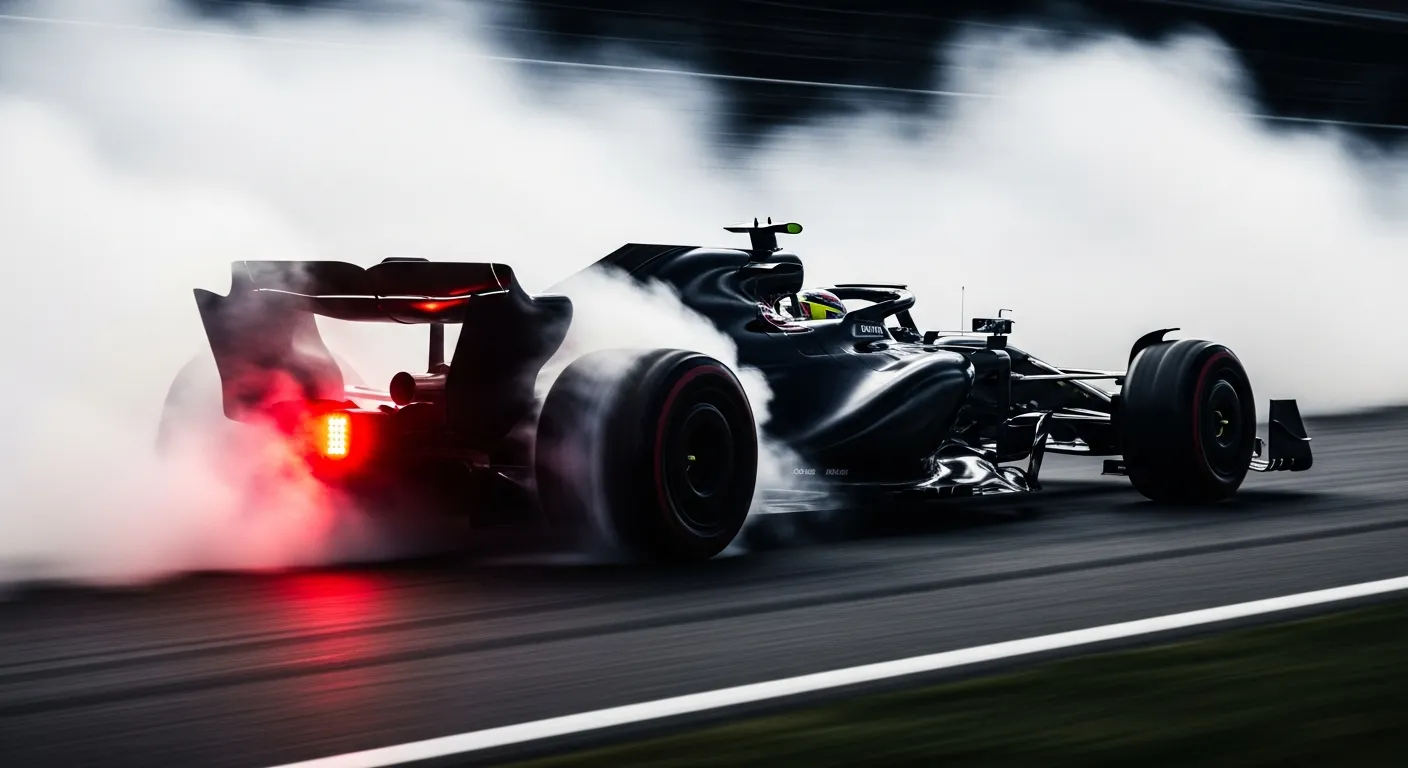
Graining is a specific form of tire degradation in Formula 1 where small pieces of rubber tear away from the tire's surface and then re-attach to the hot tire, forming a texture akin to a cheese grater. This phenomenon primarily occurs when the tire is sliding across the track surface rather than rolling cleanly, often due to excessive slip angles, particularly during cornering or heavy braking. The outer layer of the tire cools down more rapidly than the inner layers, making it brittle, while the internal heat keeps the main body of the tire pliable. This temperature differential, combined with the lateral forces exerted on the tire, causes the surface rubber to shear off. It's a delicate balance; if a tire isn't generating enough heat to keep its entire contact patch at optimal temperature, yet is subjected to significant lateral loads, graining becomes a real risk.
The Impact on Race Performance and Strategy
When graining sets in, a driver's immediate concern is a significant loss of grip. The uneven surface created by the re-attached rubber reduces the tire's effective contact patch with the asphalt, leading to less effective downforce transfer and compromised cornering speeds. This can force a driver to manage their pace, potentially losing crucial tenths per lap, or even necessitate an earlier-than-planned pit stop. For teams, managing graining is a critical strategic element, especially on circuits known for its prevalence, such as those with low-speed corners and abrasive surfaces, or in colder ambient conditions where tires struggle to maintain optimal operating temperature. The choice of tire compound, as supplied by Pirelli, Formula 1's official tire supplier, plays a significant role, with softer compounds generally more susceptible to graining due to their greater flexibility, yet paradoxically, they can also warm up faster, potentially avoiding graining if driven correctly. Conversely, harder compounds might be more resistant to graining once up to temperature, but if they struggle to reach that temperature, they can grain severely.
Real-World Examples and Common Confusions
Graining became a prominent talking point during the 2022 and 2023 seasons, particularly for teams struggling with tire warm-up or those running a stiff car setup that limited tire compliance. For instance, at circuits like the Circuit de Barcelona-Catalunya or Suzuka, teams often found themselves battling front-axle graining in the early stages of a stint, especially after a safety car period when tire temperatures dropped significantly. This was often exacerbated by cars running very low ride height to maximize aerodynamic performance, which could sometimes lead to inconsistent tire loading and increased slip. While often confused with blistering – where hot gases trapped within the tire cause chunks of rubber to explode off – graining is distinct. Blistering is typically a heat-related issue, often from overheating, whereas graining is more about surface tearing due to slip and temperature differentials, particularly when the surface is too cold relative to the core. Another related but distinct phenomenon is porpoising, which, by causing the car to oscillate violently, could indirectly lead to inconsistent tire loading and exacerbate graining. Understanding these nuances helps in appreciating the complex dance between car setup, driver input, and tire management, all governed by the strict FIA Formula One regulations regarding tire usage and safety. The challenge for engineers is to find a setup that generates sufficient heat to avoid graining without overheating the tire and causing other forms of degradation, a task made even harder by the limited testing permitted under current regulations. For a deeper dive into the mechanics, the graining — Wikipedia glossary entry offers further technical detail.
Common questions
- Is graining the same as blistering?
- No. Graining is rubber tearing and re-attaching due to surface cooling and slip. Blistering is caused by overheating, where trapped gases explode rubber off the tire.
- What causes graining?
- Graining is typically caused by excessive tire slip, low track temperatures, and aggressive driving that prevents the tire from reaching or maintaining optimal operating temperature across its surface.