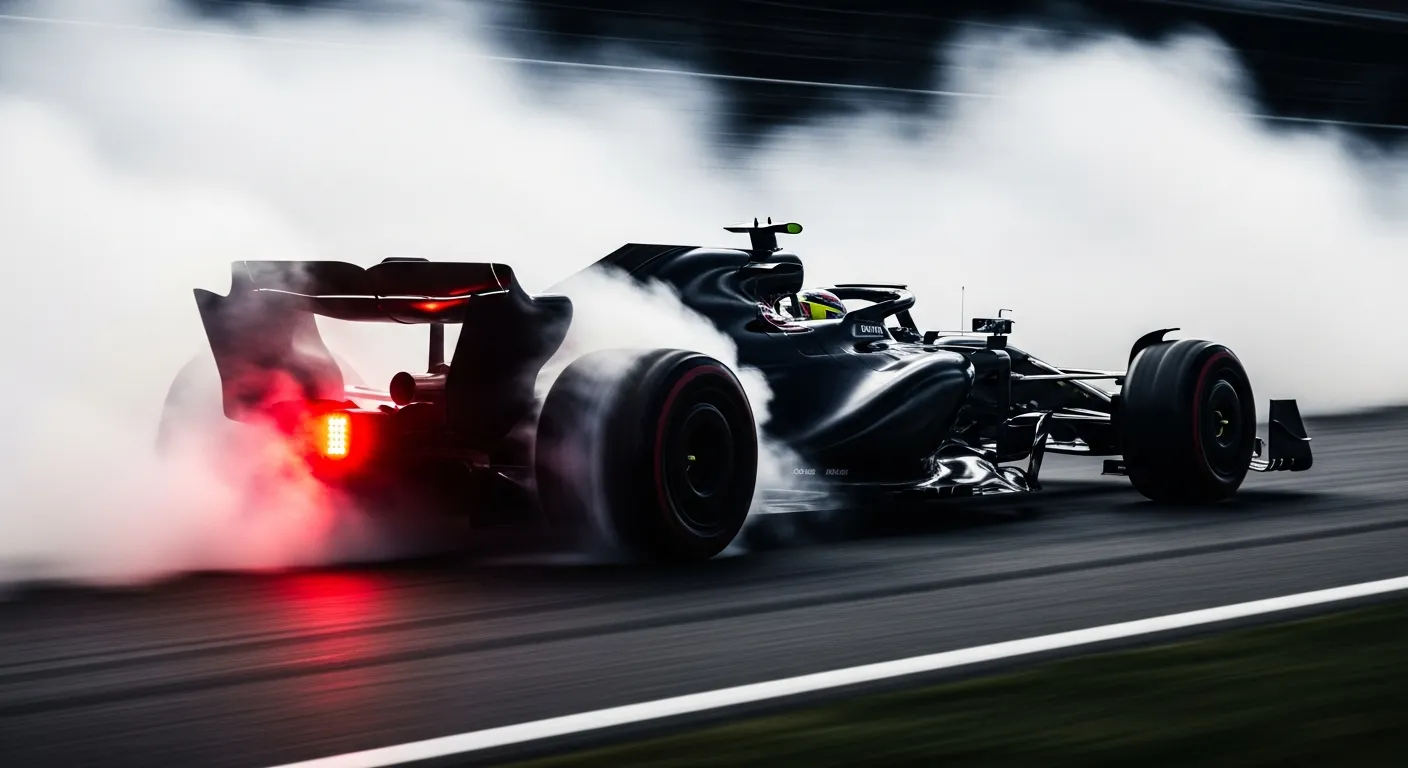
Thermal [degradation](/glossary/thermal-degradation) is the critical phenomenon in Formula 1 where a tire's optimal performance window is exceeded by excessive heat, leading to a rapid decline in grip and increased wear.
Understanding the Heat
Formula 1 tires generate immense heat through friction with the track surface and constant internal flexing as the car navigates corners and straights. Each tire compound, developed by suppliers like Pirelli (whose involvement and the context of tire regulations are detailed on their Pirelli — tire compound + regulation context page), is designed to operate within a specific, relatively narrow temperature range. When temperatures rise too high, the rubber compound's chemical structure begins to break down. It becomes softer and less consistent, significantly reducing its ability to generate the necessary friction for grip. This isn't just about the overall temperature; how heat is distributed across the tire's surface and through its carcass is equally vital. Signs like blistering or graining are often visual indicators that the tire is undergoing severe thermal stress.
Race Impact and Strategy
This phenomenon is particularly crucial during long stints, especially in hot conditions or on circuits known for their high-energy corners that put immense stress on the tires. Drivers must meticulously manage their pace, often instructed by their race engineers, to keep the tires within this optimal operating window. Pushing too aggressively too early in a stint can "burn up" the tires, leading to a precipitous drop-off in lap times and forcing an earlier-than-planned pit stop. Thermal degradation fundamentally shapes race strategy, influencing pit stop windows, compound choices, and even when a driver might deploy systems like DRS or manage their ERS to cool tires on straights. A car with superior tire management can often close a significant gap to a competitor as the latter's tires degrade, creating crucial overtaking opportunities.
Notable Examples and Common Misconceptions
The 2020 70th Anniversary Grand Prix at Silverstone offers a stark illustration. Mercedes, typically dominant, struggled profoundly with tire blistering due to high track temperatures and the circuit's demanding layout, allowing Max Verstappen to secure a surprising victory. Their W11 chassis, while incredibly fast, proved particularly harsh on the tires that weekend. Similarly, the 2021 French Grand Prix saw Red Bull's strategic brilliance and superior tire management towards the race's end enable Verstappen to overtake Lewis Hamilton, who had been leading but experienced higher degradation. Teams constantly monitor tire performance, using sophisticated telemetry to understand and predict degradation rates, which are also influenced by the overarching FIA Formula One regulations governing car design and tire usage.
Viewers often confuse thermal degradation with simple "tire wear." While related, wear refers to the physical loss of rubber, whereas degradation is primarily about the performance loss due to heat, even if significant rubber hasn't been worn away yet. High degradation often leads to accelerated wear, but they are distinct concepts. A tire might appear visually sound but be thermally degraded, having lost its critical grip. For further clarification, the thermal degradation — Wikipedia glossary entry provides additional context.
Common questions
- Is thermal degradation the same as tire wear?
- No, they're distinct. Thermal degradation is a performance loss due to overheating, making the tire less effective. Tire wear is the physical loss of rubber. High degradation often accelerates wear, but a tire can degrade thermally without significant physical wear.
- What causes thermal degradation?
- It's primarily caused by excessive heat build-up in the tires from friction with the track and internal flexing. Pushing too hard, high ambient temperatures, and aggressive car setups can all contribute to tires exceeding their optimal operating window.