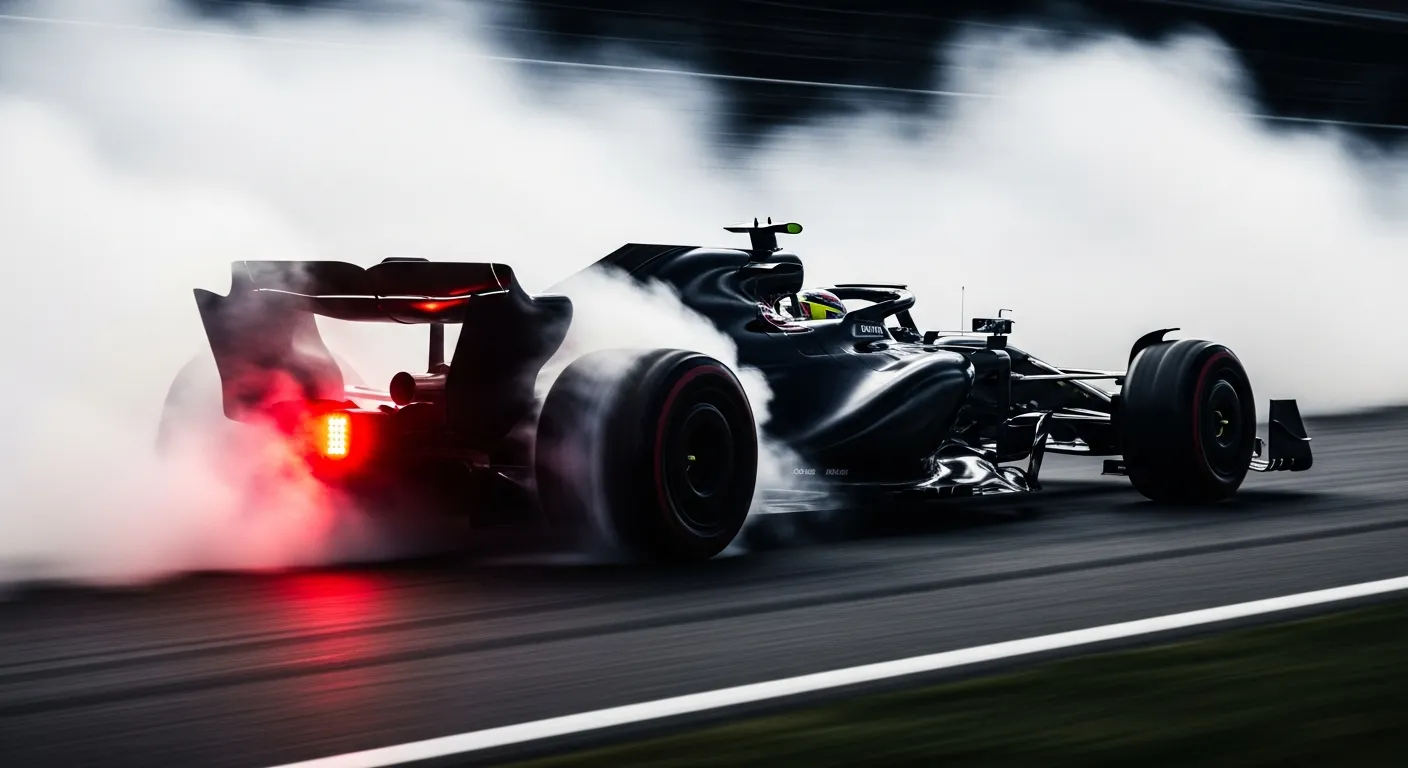
The soft tire compound in Formula 1 is engineered for peak grip and outright speed, making it the preferred choice for qualifying and aggressive race stints, albeit at the cost of rapid degradation. As one of the three dry weather compounds selected by Pirelli for each Grand Prix weekend, the soft tire is visually identified by its red sidewall, signaling its position as the fastest but least durable option among the chosen set. For a broader understanding of various motorsport terms, including soft tires, a helpful resource is the soft tires — Wikipedia glossary entry.
The Role of Soft Tires in Strategy
Soft tires are fundamental to Formula 1 strategy, particularly in qualifying. Drivers frequently opt for them during the final qualifying sessions (Q3) to extract every possible millisecond, aiming for pole position. Their superior grip allows for faster cornering speeds and quicker acceleration, translating directly into lower lap times. In a race, a common strategy involves starting on softs to gain track position early, leveraging their initial pace before switching to a more durable compound like the medium or hard tire. This aggressive approach can be particularly effective on tracks that are less abrasive or during sprint races where overall distance is shorter, reducing the impact of their faster wear rate. The immense grip offered by soft tires also allows drivers to push their cars to the absolute edge, often testing the boundaries of Track Limits in pursuit of a faster lap.
Compound Identification and Strategic Nuances
Pirelli, as the sole tire supplier for Formula 1, produces a range of five dry weather compounds, designated C1 through C5, with C1 being the hardest and C5 the softest. For each event, the FIA and Pirelli select three specific compounds from this range to be the hard, medium, and soft options for that particular weekend. The red sidewall always denotes the softest of these three chosen compounds, not necessarily the C5 itself. For instance, at a track known for high tire degradation, the 'soft' tire might be a C3, while at a smoother circuit, it could be a C5. This system can sometimes lead to viewer confusion, as the 'red' tire isn't always the absolute softest compound in Pirelli's entire range, but rather the softest available for that specific race. Understanding the full context of tire compounds and regulations is crucial, as detailed by Pirelli — tire compound + regulation context.
Managing soft tire degradation is a critical skill for drivers and a key element of team strategy. Pushing too hard too early can lead to 'thermal degradation,' where the tires overheat and lose performance rapidly. Conversely, careful management can extend their life, allowing for longer stints than anticipated. Strategic decisions around tire usage can sometimes influence component wear, indirectly leading to situations where a team might incur a Grid Penalty for power unit changes later in the season if they've pushed components harder to maximize performance on softs. Furthermore, a driver struggling significantly on degraded soft tires might lose so much pace that they impede others, potentially risking a Time Penalty from the stewards. The FIA Formula One regulations provide comprehensive details on tire usage rules and penalties.
Common questions
- Why are they called C1-C5 if only three are used?
- Pirelli manufactures five dry compounds (C1-C5), with C5 being the softest. For each race, Formula 1's governing body, the FIA, selects three compounds from this range. The softest of these three is always designated with a red sidewall, regardless of its specific C-number. This ensures consistent visual identification for fans.
- Do drivers always use soft tires in qualifying?
- Not always, but typically in the final qualifying sessions (Q3) for maximum performance. In earlier sessions (Q1, Q2), teams might use medium tires to save softs for Q3 or the race, or to meet specific race tire mandates.
- How long do soft tires last?
- Their lifespan varies significantly based on track characteristics, ambient temperature, car setup, and driving style. On some tracks, they might last only 8-10 laps before significant degradation, while on others, they could stretch to 20 laps or more if managed carefully. They are designed for shorter, high-performance stints.