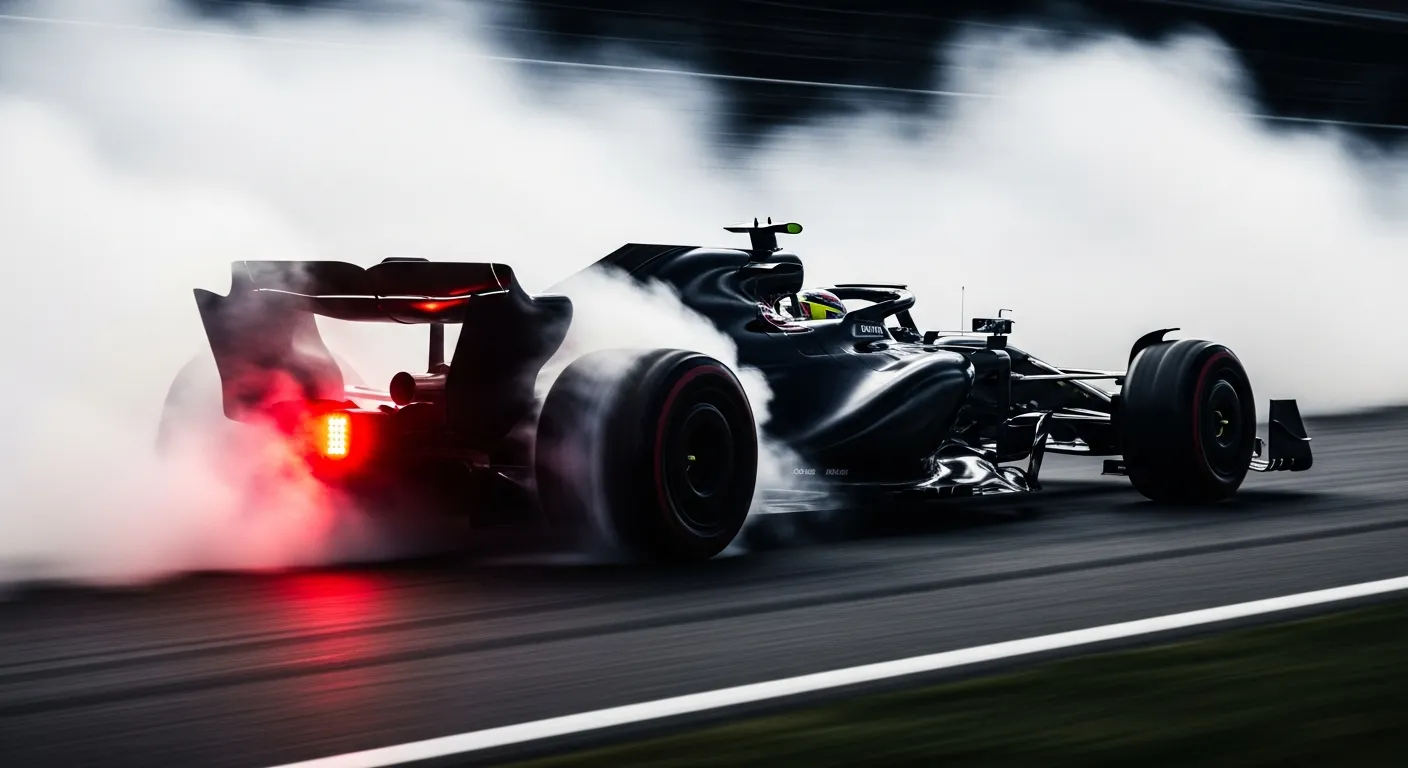
The hard tire compound in Formula 1, often denoted as C1 or C2 depending on the race weekend's specific allocation, represents the most durable option available to teams, prioritizing longevity and consistent performance over outright peak grip. These tires are engineered with a more robust rubber compound, making them resistant to wear and degradation, particularly on abrasive tracks or in demanding conditions. While they offer the longest potential stint length, their narrower operating temperature window and lower grip levels mean drivers must work harder to extract pace, especially during the initial laps.
Strategic Importance and Race Scenarios
Hard tires are a cornerstone of race strategy, particularly on circuits known for high tire degradation or when teams aim for longer stints. Their durability allows drivers to stay out on track for extended periods, potentially enabling a one-stop strategy or providing a crucial buffer in a two-stop race. For instance, in races like the Spanish Grand Prix, with its high-speed corners and abrasive surface, the hard compound often becomes essential for managing tire wear over a full race distance. Drivers might opt for hards early to get rid of them, or save them for a long final stint, relying on their consistency to maintain track position or even make up ground as competitors on softer compounds fade. The FIA Formula One regulations strictly govern tire usage, dictating that drivers must use at least two different dry compounds during a dry race, one of which is typically the hard or medium.
Their resilience also makes them valuable in scenarios where maintaining a precise Racing Line is paramount, or when managing the effects of Dirty Air from a preceding car. While softer compounds might offer immediate lap time advantage, the hard tire's ability to resist thermal degradation can be a significant asset in a strategic battle. For drivers who might prefer a more stable platform to mitigate Understeer, the hard compound can offer predictable handling, albeit with less ultimate cornering speed.
Common Misconceptions and Performance Nuances
A frequent point of confusion for new viewers is the relationship between the 'hard' designation and the specific C-number (C1, C2, C3, C4, C5). While C1 is the hardest compound overall and C5 the softest, the 'hard' tire for any given weekend is simply the hardest of the three compounds selected by Pirelli for that event. This means a 'hard' tire at one race might be a C3, while at another, it could be a C1. Regardless of its specific C-number, the hard tire is always visually identified by its white sidewall marking. More details on this system can be found in the hard tires — Wikipedia glossary entry and on the Pirelli website, the sport's sole tire supplier. The perception that hard tires are simply 'slow' is overly simplistic; they are a strategic tool, trading outright pace for endurance and consistency, which can be the difference between victory and defeat on race day.
Common questions
- What is the difference between C1, C2, and the 'hard' tire?
- C1 is the absolute hardest compound, C2 is the second hardest, and so on. For each race weekend, Pirelli selects three compounds, and the hardest of those three is designated the 'hard' tire, marked with a white sidewall, regardless of its specific C-number.
- When do F1 teams typically use hard tires?
- Teams typically use hard tires for longer stints, on circuits with high tire degradation, or when aiming for a one-stop strategy. They prioritize durability and consistent performance over peak grip, making them crucial for managing race distance.