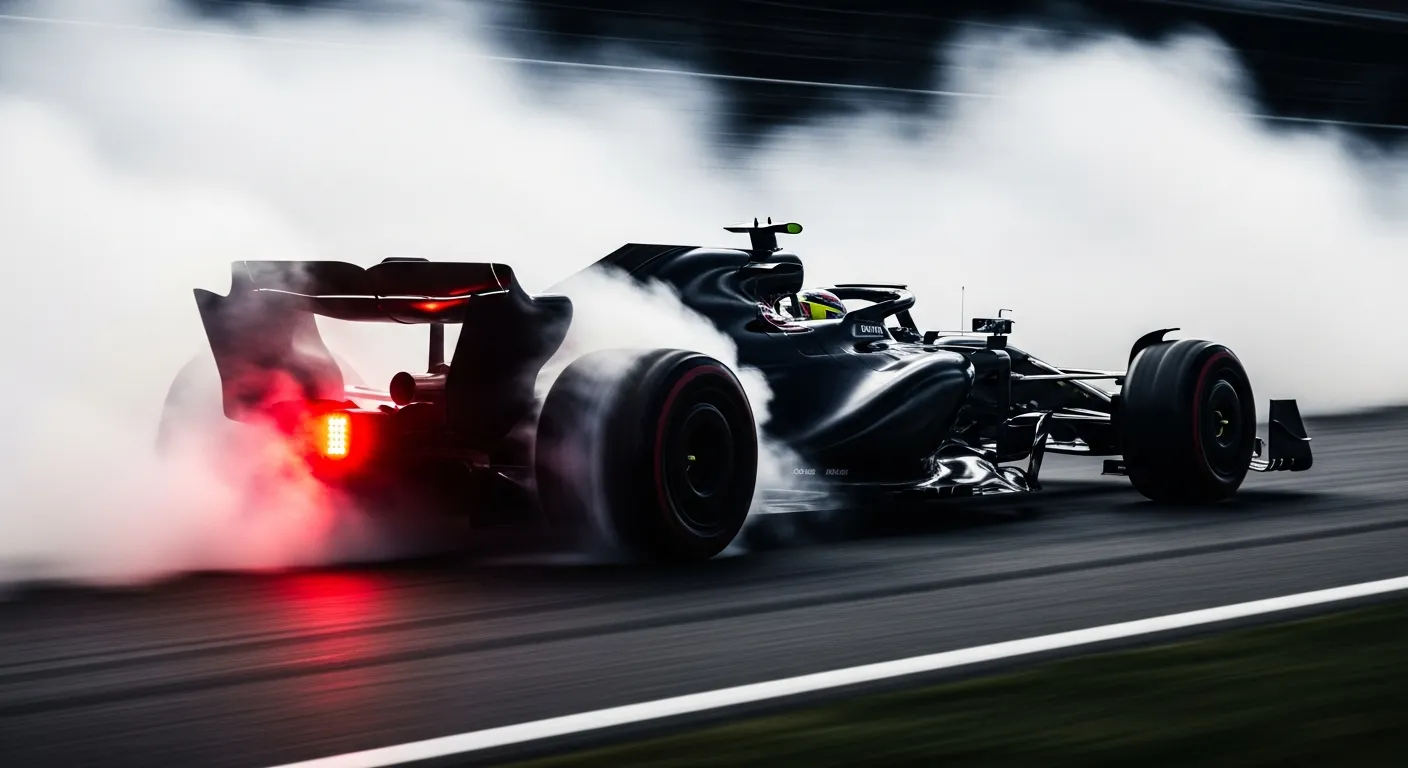
The Medium tire compound, instantly recognizable by its yellow sidewall markings, stands as Formula 1's most versatile dry-weather option, meticulously engineered to deliver a balanced performance across diverse track conditions.
This compound occupies the middle ground in Pirelli's three-tier dry weather selection for each Grand Prix weekend, positioned between the faster, but less durable, Soft compound and the slower, more resilient Hard compound. Pirelli, as the sole tire supplier for Formula 1, selects three specific compounds from its broader range of five (C1 to C5, with C1 being the hardest and C5 the softest) for each race. These are then designated as Soft (red), Medium (yellow), and Hard (white) for that particular event. The selection process considers factors like track abrasiveness, expected temperatures, and circuit characteristics to ensure a strategic challenge. For a deeper understanding of these selections, the Pirelli website offers detailed context on tire compounds and their application in F1.
Strategically, the Medium tire is often the workhorse of a Grand Prix. Its optimal blend of grip and longevity makes it a popular choice for longer stints, particularly after the initial phase of a race. Teams frequently opt for Mediums to extend their time on track, managing tire degradation more effectively than with Softs, while still maintaining a competitive pace that outstrips the Hard compound. This balance is crucial for executing effective multi-Pit Stop strategies, allowing drivers to push without excessive concern for premature wear.
Under the FIA Formula One regulations, drivers are mandated to use at least two different dry-weather tire compounds during a dry race, making the Medium a frequent and often indispensable component of a team's strategy. For instance, a common approach might see a driver start on the Softs to gain initial advantage, then switch to Mediums for the longest part of the race. Conversely, starting on Mediums can set up a strategy to run deep into the race, potentially avoiding traffic or capitalizing on safety car periods. The decision-making process is complex, influenced by everything from track temperature on the Formation Lap to rival strategies in the Pit Lane.
However, the Medium tire is not without its nuances. Its performance can be highly sensitive to specific track conditions and car setups. On extremely hot or abrasive circuits, even the Mediums can degrade rapidly, forcing teams to reconsider their strategy. Conversely, on cooler tracks, the Medium might struggle to reach its optimal operating temperature, impacting grip. Understanding these variables is key to unlocking the full potential of this crucial compound, as detailed in various motorsport glossaries including the medium tires — Wikipedia glossary entry. Its adaptability, however, ensures it remains a central figure in the strategic chess match that defines Formula 1 racing.
Common questions
- Why are Medium tires yellow?
- Pirelli uses yellow sidewall markings to visually distinguish the Medium compound from the Soft (red) and Hard (white) tires during a Grand Prix weekend, aiding quick identification for fans and teams alike.
- Is the Medium tire compound always the same?
- No. Pirelli selects three specific compounds (from C1 to C5) for each race, labeling them Soft, Medium, and Hard. So, the "Medium" at one race might be a C3, while at another, it could be a C2 or C4.
- When are Medium tires mandatory in a race?
- While not mandatory in isolation, drivers must use at least two different dry-weather compounds during a dry race. The Medium tire frequently forms one of these two mandatory choices due to its balanced performance characteristics.