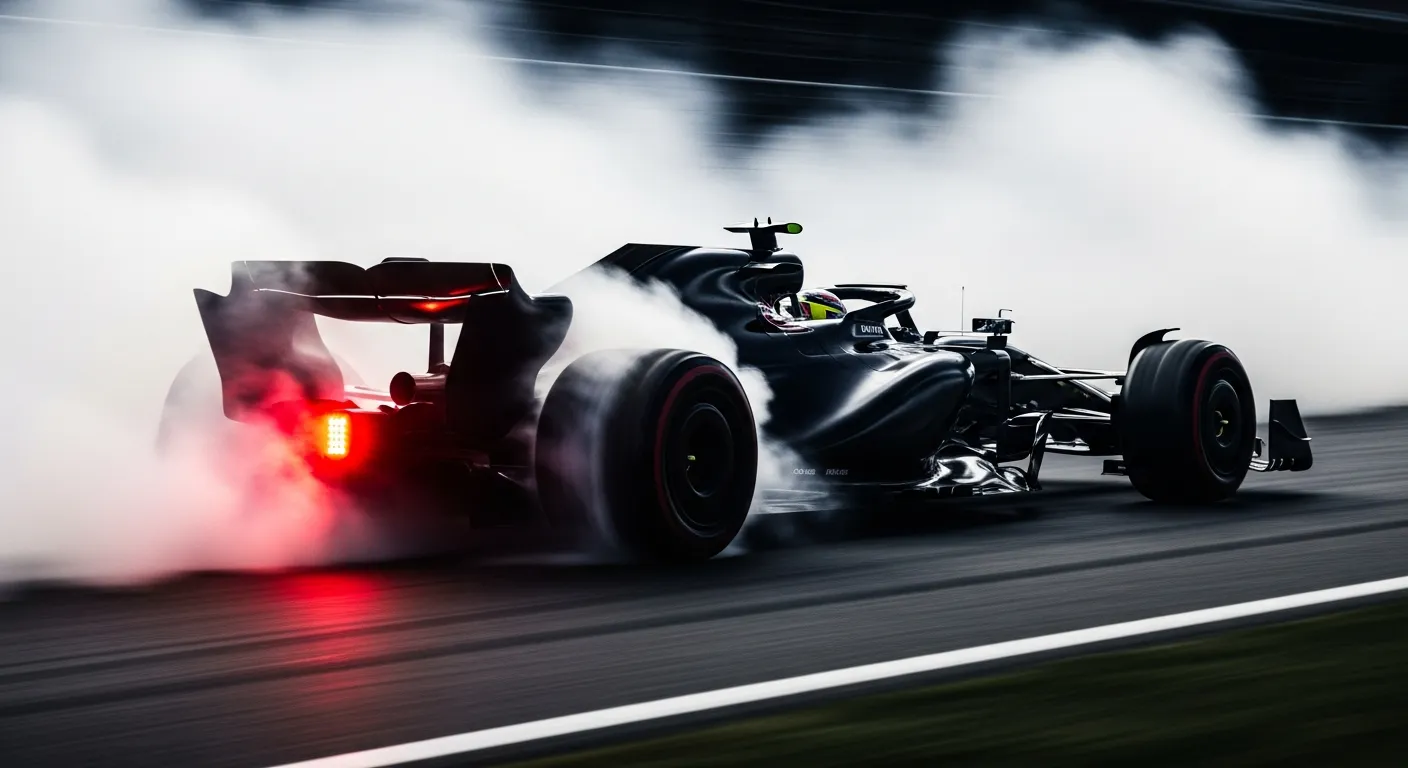
The 2014 Abu Dhabi Grand Prix, the final round of the season at the Yas Marina Circuit, stands as a distinct chapter in Formula 1 history, not only for its championship decider but also for the controversial double points system that amplified its stakes. This race saw Lewis Hamilton secure his second World Championship in the inaugural year of the turbo-hybrid era, a season marked by the dominant Mercedes W05.
Qualifying
Qualifying at Yas Marina set the stage for a tense finale. Nico Rosberg, Hamilton's championship rival, claimed pole position, demonstrating the Mercedes team's raw pace. Lewis Hamilton started alongside him in P2, ensuring a direct confrontation into Turn 1. Behind the dominant Silver Arrows, the Williams team showed impressive form, with Valtteri Bottas qualifying P3 and Felipe Massa P4, positioning them well to challenge the front. A notable story from qualifying was the Red Bull duo of Daniel Ricciardo and Sebastian Vettel, who were disqualified from the session due to illegal front wing dimensions. This relegated them to the back of the grid, starting P20 and P19 respectively, setting up a challenging Sunday for both drivers and their team. The technical regulations surrounding car design, as overseen by the FIA — F1 World Championship, often lead to such scrutineering decisions.
Race
The race itself began with immediate drama. Lewis Hamilton executed a superb start from P2, quickly overtaking Rosberg to seize the lead, a move that immediately shifted the championship momentum in his favor. Rosberg, now running P2, faced increasing pressure. However, his race took a critical turn when his Mercedes W05 developed an ERS (Energy Recovery System) failure. This issue severely compromised his car's performance, causing a significant loss of power and pace. Despite valiant efforts to manage the ailing car, Rosberg steadily dropped down the order, eventually finishing P14, a lap down. This mechanical setback effectively ended his championship aspirations for the season. Meanwhile, the Williams drivers, Felipe Massa and Valtteri Bottas, maintained strong performances throughout, ultimately securing P2 and P3 respectively, a testament to their consistent pace and strategic execution. For a broader overview of F1 races, the Formula 1 — official site provides extensive archives.
Strategic Story
The strategic narrative of this Grand Prix was heavily influenced by both the championship battle and unexpected mechanical issues. Hamilton's early lead allowed him to control the race from the front, executing his pit stops efficiently and managing his tires. For Rosberg, the ERS failure forced a complete shift in strategy, focusing on simply bringing the car home, a stark reminder of how quickly fortunes can change in Formula 1. The Williams team's double podium was a result of strong qualifying pace translating into solid race execution, demonstrating their capability to capitalize when front-runners faced issues. The recovery drives by Daniel Ricciardo and Sebastian Vettel from the back of the grid were particularly impressive. Ricciardo, in particular, showcased exceptional overtaking and tire management, climbing from P20 to P4 and setting the fastest lap of the race on lap 50 (1:44.496). Such drives often involve aggressive yet calculated strategies, much like some of the memorable performances seen at the 2019 Canadian Grand Prix. Understanding the intricacies of race strategy can be complex; resources like Wikipedia: Formula One offer detailed explanations of F1's technical and sporting regulations.
Championship Impact
The 2014 Abu Dhabi Grand Prix was designed to be a championship decider, amplified by the controversial double points rule. While Nico Rosberg started on pole, his ERS failure meant he could not challenge Lewis Hamilton for the victory, nor for the title. Hamilton's victory secured him his second World Drivers' Championship, a significant milestone in his career and for the Mercedes team in the inaugural turbo-hybrid season. The double points system, which meant the winner received 50 points instead of the usual 25, added an unprecedented layer of tension, though Hamilton's dominant performance ultimately made the extra points academic for his title win. This scenario highlights how technical reliability can be as crucial as raw pace in a championship fight, a theme sometimes echoed in races where qualifying is paramount, such as the 2019 Monaco Grand Prix. Race data analysis, like that available from Jolpica/Ergast — 2026 season data (for general F1 data trends), helps illustrate these performance shifts. The outcome at Yas Marina firmly established Mercedes' early dominance in this new era of F1, a trend that continued for several seasons. Further analysis of such championship-deciding races can be found on various Motorsport.com F1 News platforms, offering retrospective views on these pivotal moments. The strategic decisions made by teams under pressure are always a key focus for Autosport F1 Analysis and similar outlets. The race also showcased how a strong recovery drive, even from the pit lane, can yield valuable points, a characteristic shared with challenging urban circuits like the 2019 Miami Grand Prix.
Full classified results
Every driver's verified grid-to-flag result from the 2014 Abu Dhabi Grand Prix — grid, finish, points, teammate H2H, and championship swing.