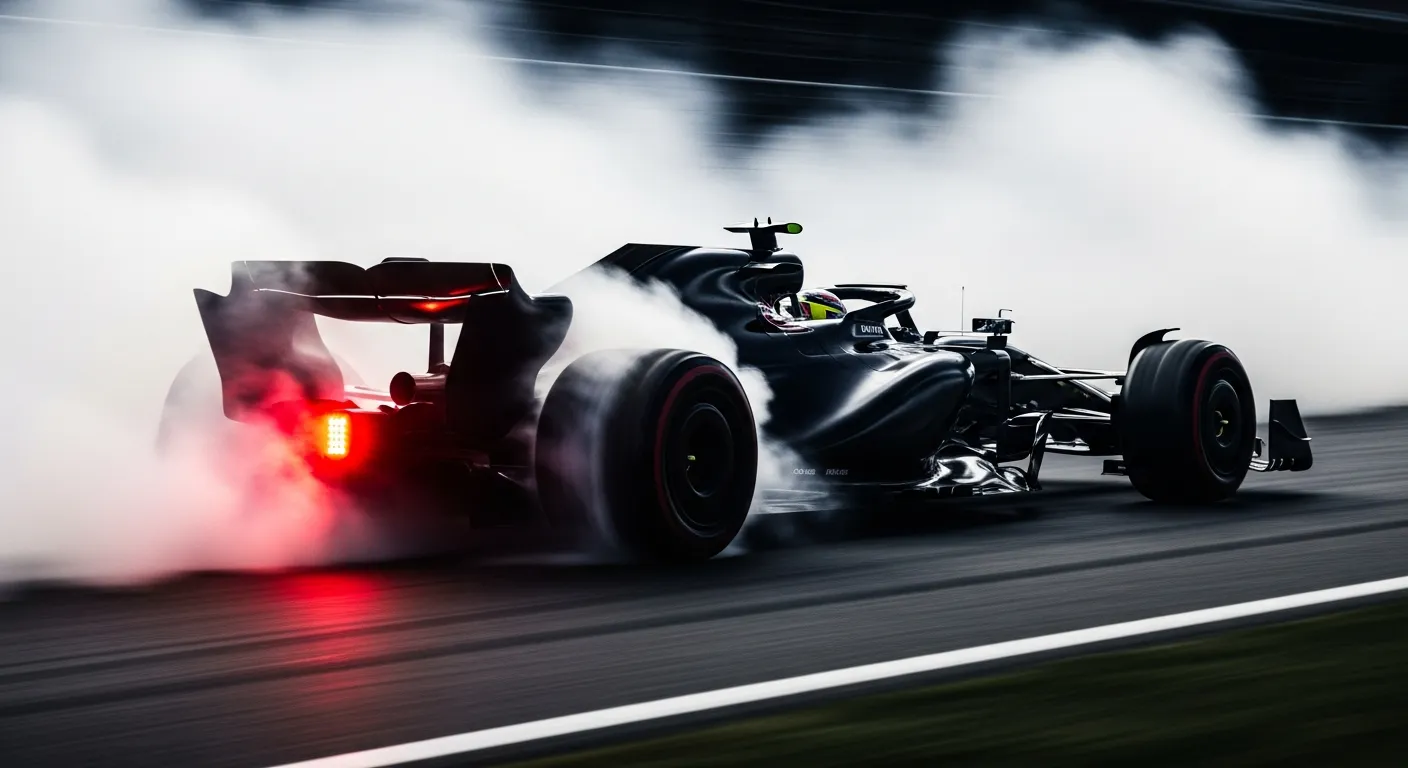
The 2017 Belgian Grand Prix at the iconic Circuit de Spa-Francorchamps delivered a masterclass in strategic execution and raw pace, particularly in the lead battle between Mercedes and Ferrari. This race, the twelfth round of the season, was a crucial juncture in a championship defined by tight margins.
Qualifying
Saturday's qualifying session set the stage for a direct confrontation. Lewis Hamilton, celebrating his 200th Grand Prix start, secured pole position for Mercedes, demonstrating the W08's formidable single-lap pace around the demanding Spa circuit. Sebastian Vettel, in the Ferrari, was a close second on the grid, ensuring the front row was perfectly poised for a championship battle. Valtteri Bottas started P3 for Mercedes, with Kimi Räikkönen P4 for Ferrari, setting up a manufacturer-level contest from the outset. Daniel Ricciardo qualified P6, positioning his Red Bull to potentially capitalize on any early race developments.
Race Narrative
From lights out, Hamilton maintained his lead, but Vettel was immediately in his slipstream, applying consistent pressure through the high-speed sectors. The Mercedes and Ferrari ran in close proximity for much of the 44-lap race, a testament to the competitive balance of the 2017 season. Further back, Daniel Ricciardo executed a strong drive, steadily advancing from his P6 starting position. Max Verstappen, starting P5, unfortunately saw his race end early on lap 7 due to an engine issue, a recurring theme for Red Bull in this period. Fernando Alonso also retired with an engine issue on lap 25, highlighting McLaren's ongoing power unit struggles. Sergio Pérez, after starting P8, retired late in the race on lap 42 due to a gearbox issue.
Strategic Battle
The core of the race's strategic story revolved around tire management and pit stop timing. Both Hamilton and Vettel started on the ultrasoft compound. Hamilton made his single pit stop on lap 30, switching to the soft compound tires. Vettel responded by pitting on the same lap, but opted for another set of ultrasofts, signaling Ferrari's intent to push hard in the final stint. This created a fascinating dynamic: Hamilton on the more durable, but potentially slower, softs versus Vettel on the faster, but less resilient, ultrasofts. Hamilton managed his tires expertly, fending off Vettel's late-race charge. Despite Vettel setting the fastest lap of the race on lap 41 with his fresher ultrasofts, Hamilton held on to secure the victory by a margin of 2.358 seconds.
Championship Impact
This result had significant ramifications for the 2017 World Championship. Hamilton's victory narrowed the points gap to Sebastian Vettel in the Drivers' Championship, intensifying their season-long duel. The consistent performance of Mercedes, coupled with Bottas's P5 finish, also bolstered their position in the Constructors' Championship. This race followed a strong showing at the 2017 British Grand Prix for Mercedes, and preceded the 2017 Italian Grand Prix, another high-speed circuit where power unit performance would be critical. The FIA — F1 World Championship standings reflected this ongoing battle, with every point proving vital as the season progressed. For a deeper dive into Formula 1's history and regulations, the Wikipedia: Formula One page offers comprehensive background. Race data, including detailed lap times and speeds, can be explored via resources like Jolpica/Ergast — 2026 season data (note: this is a generic data link, specific 2017 data would be found on a similar endpoint). For official news and race reports, the Formula 1 — official site remains the primary source.
Read the full editorial
Full classified results
Every driver's verified grid-to-flag result from the 2017 Belgian Grand Prix — grid, finish, points, teammate H2H, and championship swing.
- P1Lewis HamiltonMercedes25 pts
- P2Sebastian VettelFerrari18 pts
- P3Daniel RicciardoRed Bull15 pts
- P4Kimi RäikkönenFerrari12 pts
- P5Valtteri BottasMercedes10 pts
- P6Nico HülkenbergRenault8 pts
- P9Esteban OconForce India2 pts
- P10Carlos SainzToro Rosso1 pts
- P11Lance StrollWilliams0 pts
- P17Sergio PérezForce India0 pts
- —Fernando AlonsoMcLarenEngine
- —Max VerstappenRed BullEngine