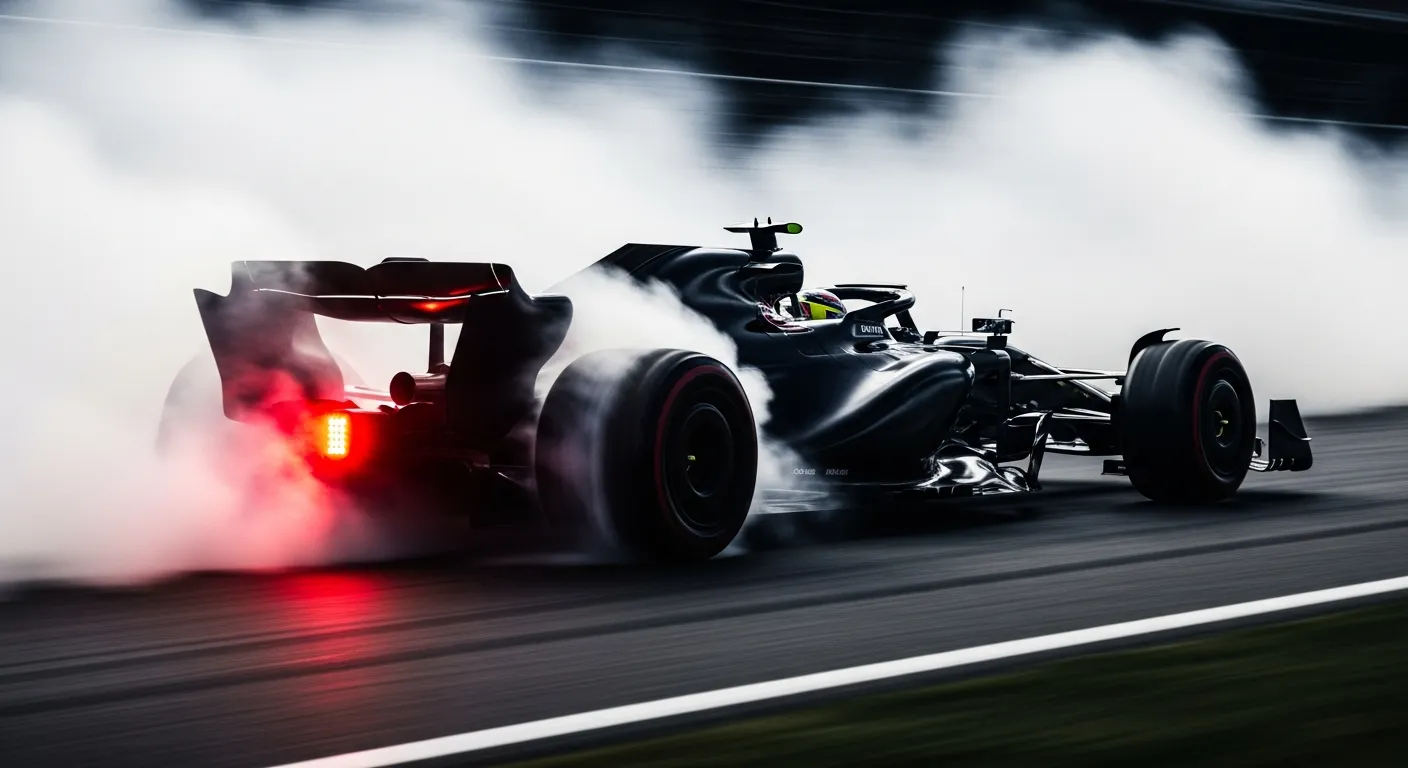
The 2020 Belgian Grand Prix at the iconic Circuit de Spa-Francorchamps underscored the strategic depth required in the turbo-hybrid era, even in seemingly straightforward races. This event, held without spectators due to global circumstances, still delivered a masterclass in controlled performance and tactical execution.
Qualifying
Qualifying for the 2020 Belgian Grand Prix saw a familiar sight at the front, with Lewis Hamilton delivering a dominant performance to secure pole position. His lap time was a testament to the Mercedes W11's raw pace and his ability to extract its maximum potential around the challenging Spa circuit. The margin to the rest of the field highlighted the team's strong package, setting the stage for a race where track position would be paramount. The grid's composition suggested a clear hierarchy, but Spa's unpredictable nature always leaves room for strategic shifts, a lesson sometimes learned the hard way, as seen in the 2016 Australian Grand Prix where early incidents reshaped the field.
Race
The race itself was largely a controlled affair from the front, but not without its moments of tension. A significant incident involving Antonio Giovinazzi's Alfa Romeo and George Russell's Williams brought out the Safety Car, a pivotal moment that often reshapes strategic considerations. This mid-race intervention provided a crucial opportunity for teams to pit for fresh tires, effectively granting a 'free' stop to those who hadn't yet made their mandatory change or allowing others to switch to a more aggressive compound. The restart, always a high-pressure scenario at Spa, saw the leaders maintain their positions, demonstrating robust car performance and driver composure under pressure. The ability to manage these restarts is often the difference between holding position and losing crucial ground, a factor that also played a significant role in the tight battles witnessed at the 2016 Chinese Grand Prix.
Strategic story
The strategic narrative of the 2020 Belgian Grand Prix revolved primarily around tire management and the timing of the Safety Car. Most teams opted for a one-stop strategy, moving from the softer medium compound to the harder prime tire. The Safety Car deployment, however, forced a re-evaluation for many. Teams that had already pitted found themselves at a slight disadvantage, having to complete a longer stint on their second set of tires, while those yet to stop could capitalize. The Mercedes team, however, executed their strategy flawlessly, ensuring both cars were well-placed to manage their tires through the long stints. Daniel Ricciardo's fastest lap late in the race, on fresher tires after a strategic gamble, highlighted the potential rewards of aggressive tire calls, even if it didn't alter the podium positions. Understanding the nuances of these tire compounds and their performance windows is critical for any team aiming for success in Formula 1, as detailed by the FIA's technical regulations.
Championship impact
The result of the 2020 Belgian Grand Prix further cemented Lewis Hamilton's lead in the Drivers' Championship, extending his advantage over his closest competitors. For Mercedes, it was another significant points haul, bolstering their position at the top of the Constructors' Championship. This consistent performance throughout the season, characterized by strong qualifying and flawless race execution, mirrored the team's relentless pursuit of perfection, a characteristic that has defined their turbo-hybrid era dominance, much like their early season form in the 2016 Bahrain Grand Prix. The race provided valuable data for teams to analyze their car's performance at a high-speed, low-downforce circuit, contributing to the broader understanding of the season's competitive landscape, which can be further explored through historical Formula 1 race data archives. For a broader overview of the sport's history and evolution, the Wikipedia page on Formula One offers extensive context, while the official Formula 1 website provides up-to-date news and analysis.
Full classified results
Every driver's verified grid-to-flag result from the 2020 Belgian Grand Prix — grid, finish, points, teammate H2H, and championship swing.
- P1Lewis HamiltonMercedes25 pts
- P2Valtteri BottasMercedes18 pts
- P3Max VerstappenRed Bull15 pts
- P4Daniel RicciardoRenault13 pts
- P5Esteban OconRenault10 pts
- P6Alexander AlbonRed Bull8 pts
- P7Lando NorrisMcLaren6 pts
- P8Pierre GaslyAlphaTauri4 pts
- P9Lance StrollRacing Point2 pts
- P10Sergio PérezRacing Point1 pts
- P12Kimi RäikkönenAlfa Romeo0 pts
- P13Sebastian VettelFerrari0 pts
- P14Charles LeclercFerrari0 pts
- —George RussellWilliamsDebris
- —Carlos SainzMcLarenExhaust