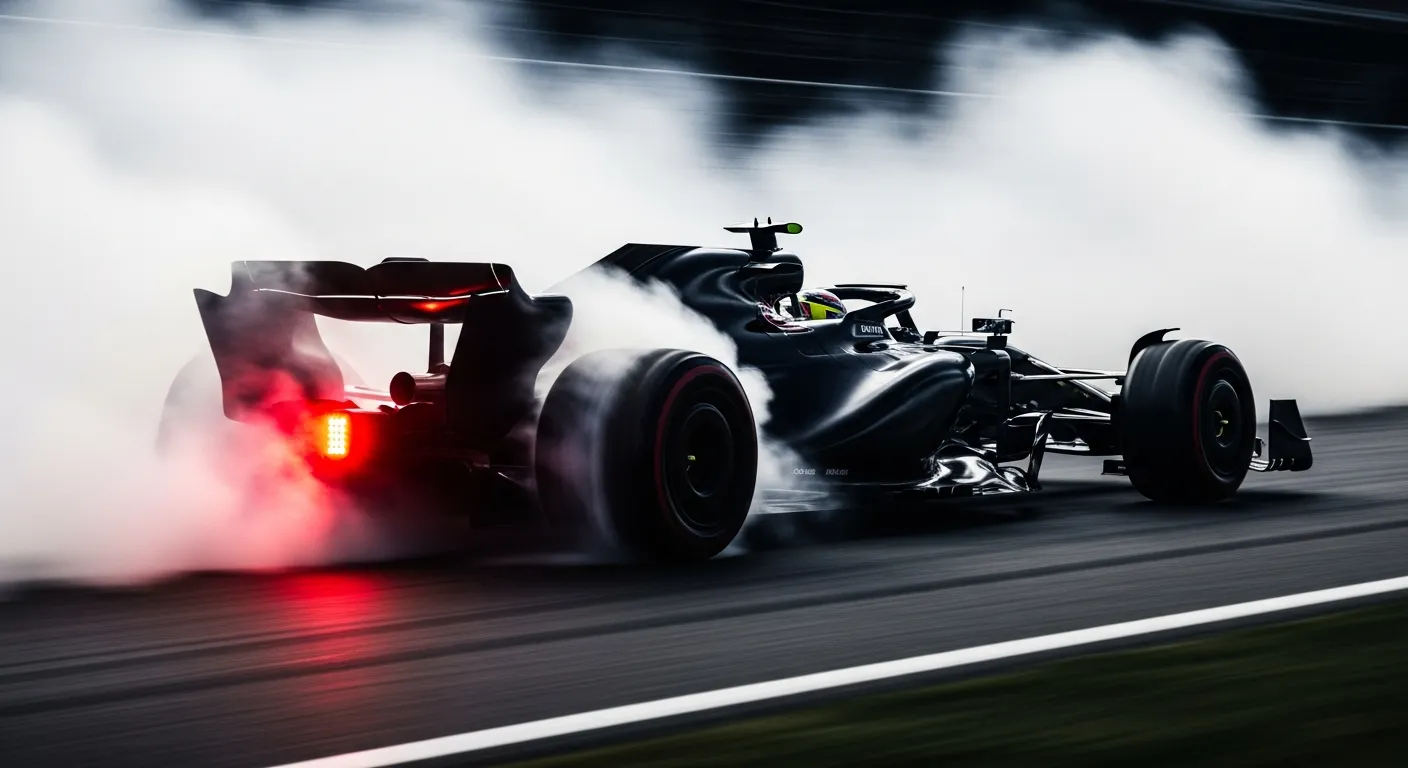
The 2020 Emilia Romagna Grand Prix at Imola was a pivotal moment in Mercedes' historic season, where strategic agility and a series of mid-race incidents allowed Lewis Hamilton to secure victory and clinch the Constructors' Championship.
Qualifying
Valtteri Bottas's pole position underscored Mercedes' raw pace, with Lewis Hamilton right alongside him for a dominant front-row lockout. Max Verstappen, consistently the closest challenger, secured third on the grid, setting the stage for a potential three-way battle at the Autodromo Enzo e Dino Ferrari.
Race
The race began with Bottas holding his lead, but the narrative quickly shifted. Hamilton, after an early pit stop, found himself perfectly positioned when a Virtual Safety Car, followed by a full Safety Car, was deployed. These neutralisation periods, triggered by incidents including Max Verstappen's retirement from second place due to a tyre failure, dramatically altered the race trajectory. George Russell's subsequent crash under the Safety Car further extended the caution period, creating a strategic conundrum for many teams. Hamilton capitalized on these events, taking the lead and managing the remainder of the race to secure the win.
Strategic Story
The strategic calls made during the Emilia Romagna Grand Prix were as critical as raw pace. Hamilton's early stop, initially appearing to be a gamble, became a masterstroke when the Safety Car periods aligned perfectly. This allowed him to gain track position without the usual time loss associated with a pit stop. Meanwhile, Valtteri Bottas, despite starting from pole, struggled with floor damage picked up early in the race, which compromised his pace and made him vulnerable. The late Safety Car, triggered by Russell's incident, presented a crucial decision point: pit for fresh tyres or stay out on older rubber. Daniel Ricciardo's decision to remain on track proved astute, securing him a podium finish. This kind of high-stakes, safety car-influenced strategy often defines races, much like the tactical decisions seen during the 2021 British Grand Prix or the unpredictable outcomes at the 2021 Hungarian Grand Prix. Understanding these strategic nuances is key to appreciating Formula 1, as detailed by the FIA — F1 World Championship regulations. The detailed race data for such events can often be found through resources like Jolpica/Ergast — 2026 season data, which provides comprehensive historical F1 statistics.
Championship Impact
The victory at Imola was more than just another win for Hamilton; it was the race where Mercedes-AMG Petronas Formula One Team officially clinched their seventh consecutive Constructors' Championship. This unprecedented achievement solidified their position as the dominant force of the turbo-hybrid era, a period of Formula 1 history extensively covered on Wikipedia: Formula One. Hamilton further extended his lead in the Drivers' Championship, moving closer to his own record-equalling seventh world title. The consistent performance of the Mercedes team throughout the season, as highlighted in official race reports on the Formula 1 — official site, was a testament to their engineering prowess and strategic execution. This dominance was a recurring theme, even in races like the 2021 Austrian Grand Prix, where Mercedes often dictated the pace. The 2020 season, in particular, showcased a level of sustained excellence that set new benchmarks for the sport, a narrative frequently discussed in F1 news and analysis, such as that found on the Formula 1 — official site itself. The broader context of Formula 1's governing body and its championships can be explored further via the FIA — F1 World Championship.
Full classified results
Every driver's verified grid-to-flag result from the 2020 Emilia Romagna Grand Prix — grid, finish, points, teammate H2H, and championship swing.
- P1Lewis HamiltonMercedes26 pts
- P2Valtteri BottasMercedes18 pts
- P3Daniel RicciardoRenault15 pts
- P5Charles LeclercFerrari10 pts
- P6Sergio PérezRacing Point8 pts
- P7Carlos SainzMcLaren6 pts
- P8Lando NorrisMcLaren4 pts
- P9Kimi RäikkönenAlfa Romeo2 pts
- P12Sebastian VettelFerrari0 pts
- P13Lance StrollRacing Point0 pts
- P15Alexander AlbonRed Bull0 pts
- —George RussellWilliamsAccident
- —Max VerstappenRed BullPuncture
- —Esteban OconRenaultGearbox
- —Pierre GaslyAlphaTauriWater pressure