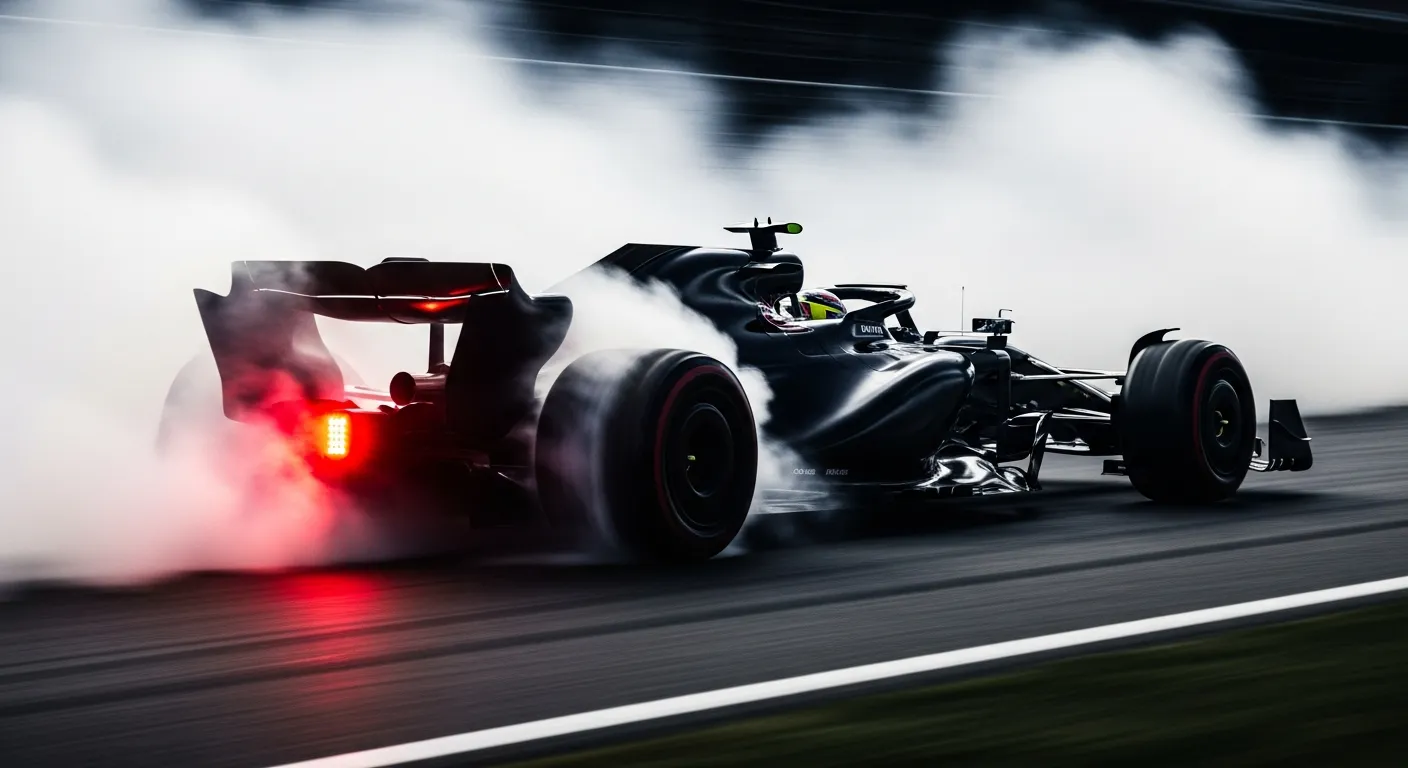
The 2022 Hungarian Grand Prix at the Hungaroring was a masterclass in strategic execution, with Max Verstappen converting a tenth-place grid start into a dominant victory, largely due to Red Bull's incisive pit calls and Ferrari's critical tire strategy misstep. This race underscored the nuanced interplay between raw pace and tactical foresight that defines success in the ground-effect era, a complexity that has evolved significantly since earlier seasons like the 2015 Hungarian Grand Prix where different regulations shaped race dynamics.
Qualifying
Qualifying delivered an unexpected twist, with George Russell securing his maiden pole position for Mercedes, a remarkable achievement given the team's struggles earlier in the 2022 season. Ferrari's Carlos Sainz qualified second, with Charles Leclerc in third, setting up what appeared to be a strong front-row challenge for the Scuderia. Crucially, Max Verstappen faced a power unit issue in Q3, relegating him to tenth on the grid. Sergio Pérez, his Red Bull teammate, also found himself further down in eleventh. This grid configuration promised an intriguing strategic battle, especially on a circuit known for its difficulty in overtaking.
Race
From the start, Russell defended his lead robustly, holding off the Ferraris through the opening laps. Verstappen, meanwhile, began his charge through the midfield with characteristic aggression and precision. The Hungaroring, often described as 'Monaco without the walls,' typically limits overtakes, yet Verstappen demonstrated the raw pace and aerodynamic efficiency of his RB18. By the mid-point of the race, he had carved his way into contention, a testament to both his driving and the car's performance envelope, which can be further explored via the Formula 1 — official site. The race saw a pivotal moment when Ferrari opted to put Charles Leclerc onto the hard compound tires during his second pit stop. This decision proved disastrous, as the hard tires lacked the necessary grip and temperature, causing Leclerc's pace to plummet and allowing Verstappen to extend his lead and the Mercedes drivers to gain ground.
Strategic Story
The strategic narrative of this Grand Prix was dominated by tire management and pit-stop timing. Red Bull executed a near-flawless two-stop strategy for Verstappen, adapting to the evolving track conditions and the competitive landscape. Their decision to pit Verstappen for soft tires at a critical juncture allowed him to unleash blistering pace and make decisive overtakes. In stark contrast, Ferrari's call to fit Leclerc with hard tires was a significant miscalculation, effectively derailing his race. This choice highlighted the fine margins in F1 strategy, where a single tire compound decision can dramatically alter a driver's fortunes, a principle evident in many high-stakes races, including the 2015 British Grand Prix where tire degradation played a significant role. Mercedes, on the other hand, capitalized on Ferrari's struggles, demonstrating strong race pace on the medium and soft compounds, securing a double podium finish. The intricacies of these strategic decisions are often analyzed by the FIA — F1 World Championship in post-race reports.
Championship Impact
Verstappen's victory from tenth on the grid further solidified his commanding lead in the Drivers' Championship, extending his advantage over Charles Leclerc. This result was a significant psychological blow to Ferrari, who had seen their championship aspirations diminish over the preceding races due to a combination of reliability issues and strategic errors. Red Bull also strengthened its position in the Constructors' Championship, showcasing the team's potent combination of car performance and strategic execution. For a broader view of how these points accumulate, historical F1 data resources like Jolpica/Ergast — 2026 season data provide extensive records. The Mercedes double podium, meanwhile, offered a strong indicator of their improving form, suggesting they were closing the gap to the front-runners as the season progressed, a positive development for a team that has historically been a dominant force in the sport, as detailed on Wikipedia: Formula One.
Full classified results
Every driver's verified grid-to-flag result from the 2022 Hungarian Grand Prix — grid, finish, points, teammate H2H, and championship swing.
- P1Max VerstappenRed Bull25 pts
- P2Lewis HamiltonMercedes19 pts
- P3George RussellMercedes15 pts
- P4Carlos SainzFerrari12 pts
- P5Sergio PérezRed Bull10 pts
- P6Charles LeclercFerrari8 pts
- P7Lando NorrisMcLaren6 pts
- P8Fernando AlonsoAlpine F1 Team4 pts
- P9Esteban OconAlpine F1 Team2 pts
- P10Sebastian VettelAston Martin1 pts
- P11Lance StrollAston Martin0 pts
- P12Pierre GaslyAlphaTauri0 pts
- P15Daniel RicciardoMcLaren0 pts
- P17Alexander AlbonWilliams0 pts
- P19Yuki TsunodaAlphaTauri0 pts
- P20Valtteri BottasAlfa Romeo0 pts