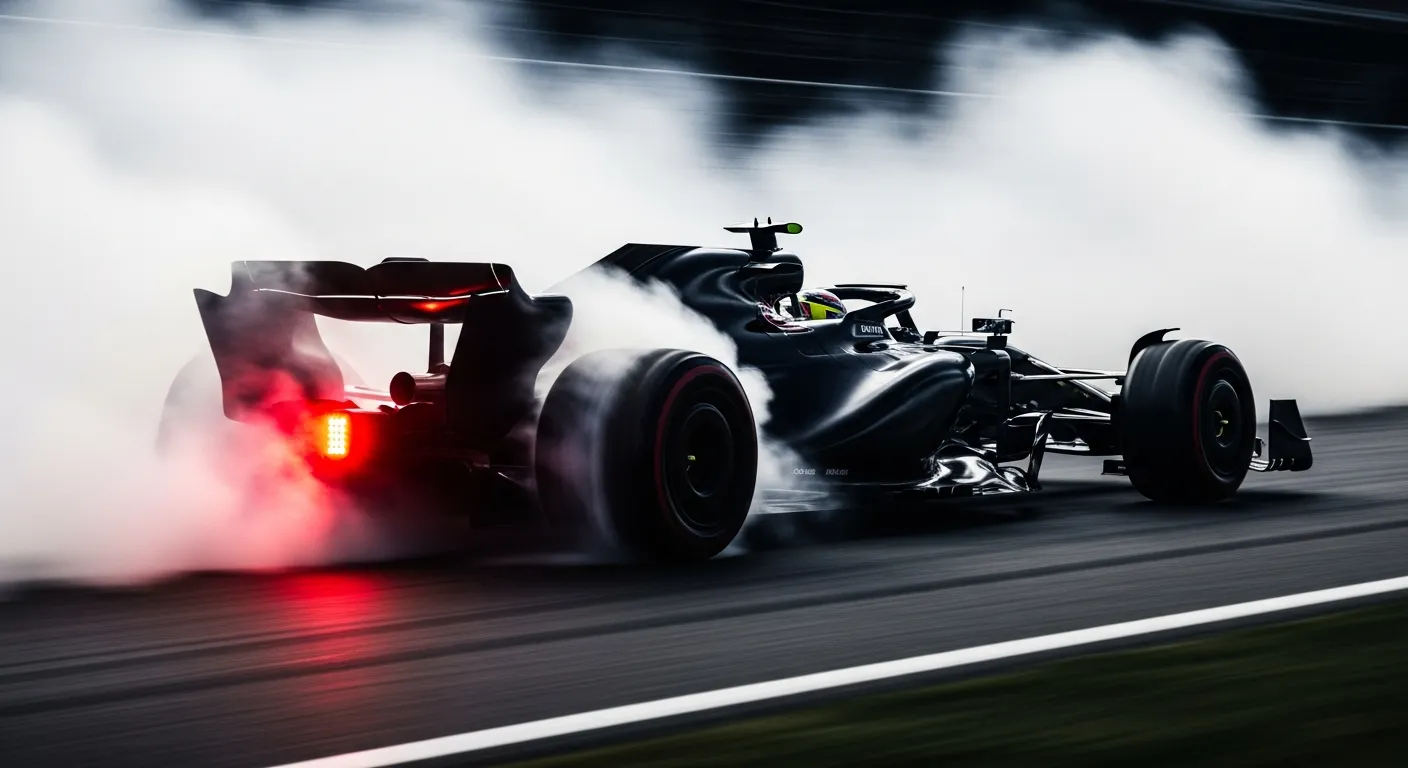
The 2022 Abu Dhabi Grand Prix at the Yas Marina Circuit provided a definitive capstone to Formula 1's inaugural ground-effect season, with Max Verstappen converting pole position into a commanding victory and Charles Leclerc securing second place in both the race and the Drivers' Championship.
Qualifying
The grid for the final race of the 2022 season saw Max Verstappen assert his dominance by claiming pole position, a familiar sight throughout his championship year. Alongside him on the front row was his Red Bull teammate, Sergio Pérez, setting up a strong strategic advantage for the Austrian outfit. Ferrari's Charles Leclerc qualified P3, with Carlos Sainz P4, positioning the Scuderia to challenge the Red Bulls. Mercedes drivers Lewis Hamilton and George Russell started P5 and P6 respectively, indicating their consistent presence in the top tier, though not quite at the pace of the front two teams. The qualifying session underscored the hierarchical pecking order that had largely defined the season, with Red Bull and Ferrari leading the charge.
Race
From the moment the lights went out at Yas Marina, Max Verstappen controlled the pace, executing a clean start and maintaining his lead throughout the 58 laps. The primary strategic battle unfolded behind him, a direct contest for P2 in the Drivers' Championship between Charles Leclerc and Sergio Pérez. Leclerc, starting P3, managed to hold his position, while Pérez, from P2, found himself in a tactical chess match with the Ferrari. The race saw various pit stop strategies play out, with teams attempting to optimize tyre life on the permanent circuit. Lando Norris delivered a notable performance for McLaren, securing P6 and the fastest lap of the race on lap 44, adding an extra point to his tally. Esteban Ocon brought his Alpine home in P7, ahead of Lance Stroll's Aston Martin. The race also marked Sebastian Vettel's final Formula 1 appearance, with the four-time world champion securing a point for Aston Martin by finishing P10, a fitting end to a storied career, a moment highlighted across the Formula 1 — official site coverage. Unfortunately, Lewis Hamilton's race concluded prematurely due to a hydraulics issue on lap 55, a rare DNF for the Mercedes driver in a season that presented its share of challenges.
Strategic Story
The strategic narrative of the 2022 Abu Dhabi Grand Prix was heavily influenced by the battle for P2 in the Drivers' Championship. Ferrari opted for a single-stop strategy for Charles Leclerc, managing his hard compound tyres through a long second stint. Red Bull, in response, initially tried a two-stop approach with Sergio Pérez, aiming to give him fresher rubber in the closing stages to overtake Leclerc. However, Ferrari's execution of their one-stop plan, coupled with Leclerc's consistent pace, proved effective. The decision to commit to a single stop for Leclerc was a calculated risk that paid off, demonstrating Ferrari's ability to adapt under pressure when the stakes were high. This strategic duel highlighted the intricate balance between tyre degradation, track position, and championship aspirations, a common theme in the ground-effect era. The Yas Marina Circuit's layout, while offering overtaking opportunities, also places a premium on tyre preservation, a factor teams like Mercedes will consider for future races, such as the 2026 Abu Dhabi Grand Prix. Understanding these dynamics is crucial for any team aiming for consistent performance, as detailed by the FIA's F1 World Championship regulations.
Championship Impact
With Max Verstappen having already secured the Drivers' Championship and Red Bull the Constructors' title, the ultimate prize still contested was P2 in the Drivers' standings. Charles Leclerc's P2 finish in Abu Dhabi solidified his position, ensuring he ended the season as the runner-up, ahead of Sergio Pérez. This result was crucial for Ferrari, validating their season-long efforts despite their mid-season struggles. Further down the grid, Sebastian Vettel's P10 finish for Aston Martin was significant, as his single point allowed the team to leapfrog AlphaTauri for P7 in the Constructors' Championship. This late-season swing underscored the importance of every point, even outside the podium places, and can be further explored through historical F1 data. The final race of the season reinforced Red Bull's dominant year, while also showcasing the competitive spirit across the entire grid, a characteristic of Formula 1 as a whole, as covered by Motorsport.com F1 news. Fans looking ahead to future seasons, perhaps even the 2026 Las Vegas Grand Prix, will remember the strategic depth shown here. For a broader understanding of the sport's history and evolution, consult Wikipedia's Formula One overview. The lessons learned from races like this often influence car design and race strategy for upcoming events like the 2026 Qatar Grand Prix.
Full classified results
Every driver's verified grid-to-flag result from the 2022 Abu Dhabi Grand Prix — grid, finish, points, teammate H2H, and championship swing.
- P1Max VerstappenRed Bull25 pts
- P2Charles LeclercFerrari18 pts
- P3Sergio PérezRed Bull15 pts
- P4Carlos SainzFerrari12 pts
- P5George RussellMercedes10 pts
- P6Lando NorrisMcLaren9 pts
- P7Esteban OconAlpine F1 Team6 pts
- P8Lance StrollAston Martin4 pts
- P9Daniel RicciardoMcLaren2 pts
- P10Sebastian VettelAston Martin1 pts
- P11Yuki TsunodaAlphaTauri0 pts
- P13Alexander AlbonWilliams0 pts
- P14Pierre GaslyAlphaTauri0 pts
- P15Valtteri BottasAlfa Romeo0 pts
- P18Lewis HamiltonMercedes0 pts
- —Fernando AlonsoAlpine F1 TeamWater leak