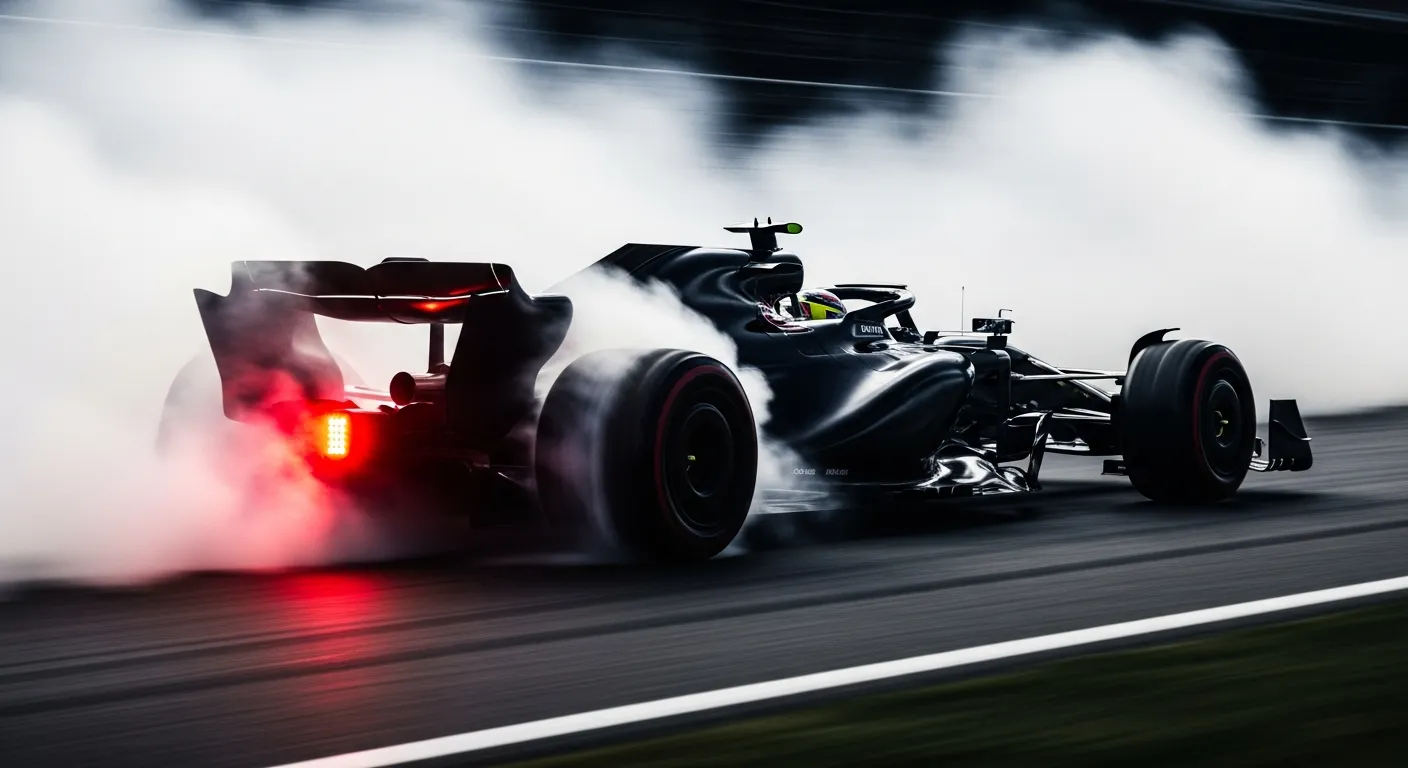
The 2024 Japanese Grand Prix at Suzuka was defined by Red Bull's swift recovery from an early race disruption, showcasing their operational precision and outright pace to secure a commanding one-two finish.
Qualifying
Saturday's qualifying session set the stage for a familiar front-row lockout for Red Bull, with Max Verstappen taking pole ahead of Sergio Pérez. Lando Norris, starting third for McLaren, demonstrated the team's single-lap potential on the challenging Suzuka Circuit. Ferrari's Carlos Sainz secured fourth, while his teammate Charles Leclerc found himself further back in eighth, a grid position that would necessitate a strategic race from the Monegasque driver. Fernando Alonso continued to extract strong performance from the Aston Martin, qualifying fifth, ahead of Oscar Piastri in the second McLaren. Mercedes drivers Lewis Hamilton and George Russell started seventh and ninth respectively, indicating a midfield battle was likely.
Race
The race began with immediate drama as Daniel Ricciardo and Alexander Albon made contact on the opening lap, triggering a red flag. Both drivers retired, necessitating a standing restart. This early incident reset the field and offered teams a chance to re-evaluate tyre strategy. Upon the restart, Verstappen quickly re-established his lead, managing tyre degradation effectively throughout the 53 laps. Pérez maintained a comfortable second, ensuring a dominant Red Bull performance. Ferrari executed a split strategy, with Leclerc opting for a bold one-stop plan from his P8 start, which saw him climb to fourth by the flag. Sainz, on a more conventional two-stop, secured the final podium position. Yuki Tsunoda delivered a strong home performance for RB F1 Team, converting his tenth-place grid slot into a crucial point, delighting the Japanese crowd. The early retirement of Guanyu Zhou on lap 12 also marked a difficult outing for Sauber.
Strategic Story
The early red flag at Suzuka fundamentally reshaped the strategic landscape. Teams had to adapt quickly, with many opting for a two-stop strategy on the high-energy demands of the circuit. Red Bull's ability to manage their tyres and maintain pace after the restart was critical to their success, a testament to their car's inherent balance and the drivers' execution. Ferrari's decision to put Charles Leclerc on a single-stop strategy proved effective, allowing him to gain track position and manage his tyres to the finish, a stark contrast to the multi-stop approaches seen in races like the 2021 Bahrain Grand Prix. Carlos Sainz's two-stop run, featuring strong overtakes in the latter half of the race, underscored Ferrari's improved race pace. McLaren, despite strong qualifying, found themselves battling in the midfield, with Lando Norris finishing fifth and Oscar Piastri eighth, suggesting their race pace relative to Ferrari was not quite on par. For a deeper dive into F1 race strategy, the Formula 1 — official site provides extensive analysis.
Championship Impact
This result significantly bolstered Red Bull's position in both the Constructors' and Drivers' Championships. Max Verstappen's victory, coupled with Sergio Pérez's second place, reaffirmed their status as the benchmark in the FIA — F1 World Championship. Ferrari's strong points haul, particularly with Carlos Sainz on the podium and Charles Leclerc's recovery drive, solidified their hold on second place in the Constructors' standings, demonstrating consistent performance across different circuit types. For a broader historical context of the ground-effect era, Wikipedia: Formula One offers detailed insights. The early season dynamics, including incidents like the one at the 2021 Japanese Grand Prix, often shape championship narratives. Race statistics and historical data, like those found on Jolpica/Ergast — 2026 season data, often show how early season dominance can set the tone. For more immediate race reactions and expert commentary, a review of the Japanese GP race report from a leading motorsport news authority can offer further perspective. The consistent performance of top teams is a recurring theme, as seen in the 2021 Chinese Grand Prix where strategic calls were also paramount. Teams are continuously refining their approaches, as detailed in technical discussions on the Formula 1 official site's technical regulations.
Full classified results
Every driver's verified grid-to-flag result from the 2024 Japanese Grand Prix — grid, finish, points, teammate H2H, and championship swing.
- P1Max VerstappenRed Bull26 pts
- P2Sergio PérezRed Bull18 pts
- P3Carlos SainzFerrari15 pts
- P4Charles LeclercFerrari12 pts
- P5Lando NorrisMcLaren10 pts
- P6Fernando AlonsoAston Martin8 pts
- P7George RussellMercedes6 pts
- P8Oscar PiastriMcLaren4 pts
- P9Lewis HamiltonMercedes2 pts
- P10Yuki TsunodaRB F1 Team1 pts
- P11Nico HülkenbergHaas F1 Team0 pts
- P12Lance StrollAston Martin0 pts
- P14Valtteri BottasSauber0 pts
- P15Esteban OconAlpine F1 Team0 pts
- P16Pierre GaslyAlpine F1 Team0 pts
- —Daniel RicciardoRB F1 TeamRetired
- —Alexander AlbonWilliamsRetired