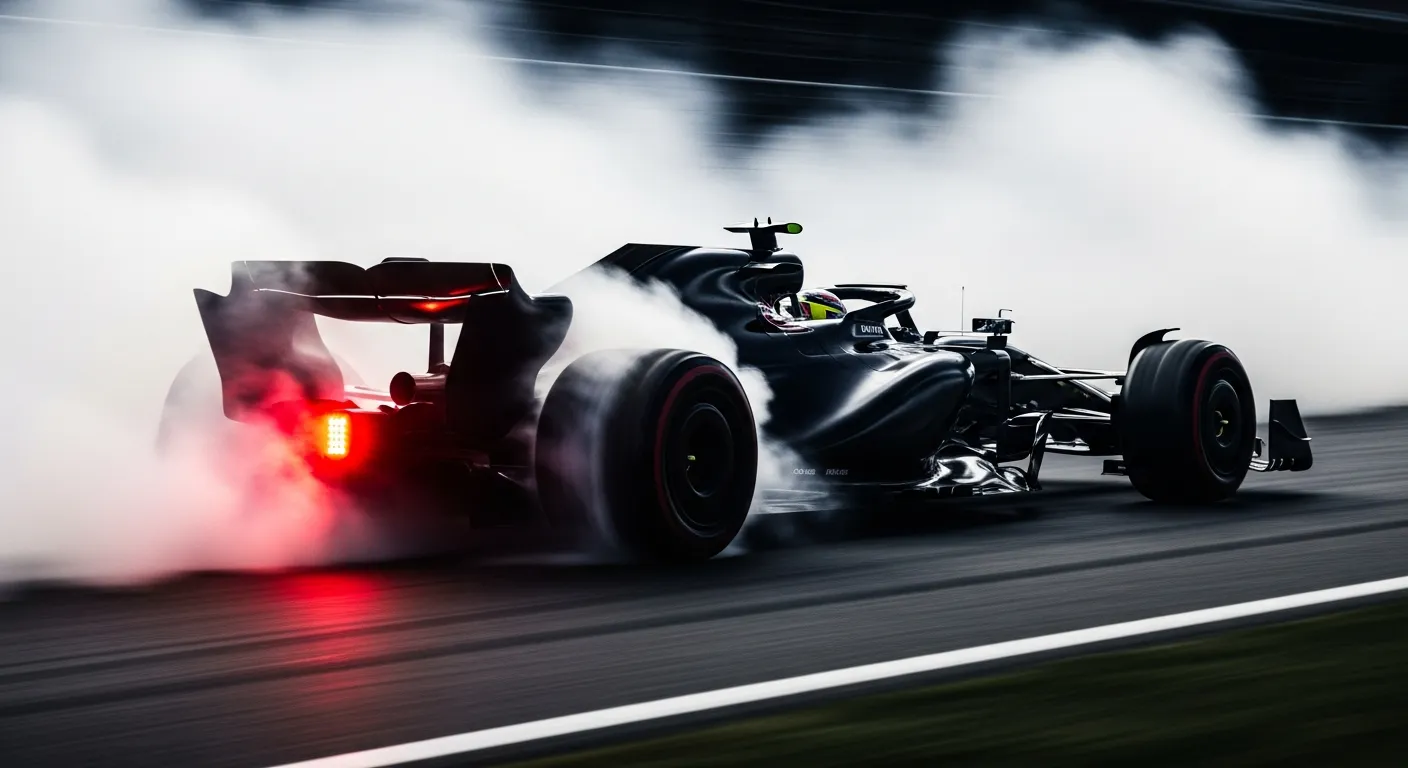
Fernando Alonso's drive at the 2014 Austrian Grand Prix on June 22 delivered a consistent, if constrained, performance for Ferrari in a season increasingly defined by Mercedes' hybrid-era dominance. Starting from fourth on the grid, Alonso navigated the 71-lap race at the newly re-established [Red Bull Ring](https://www.formula1.com/en/latest/circuit-guides/austria/red-bull-ring.html) to cross the finish line in fifth, accumulating ten points for his championship campaign. This result placed him just over eighteen seconds behind race winner Nico Rosberg, and notably, less than a second adrift of Felipe Massa's Williams, who secured fourth. The Ferrari F14 T, while a step forward in some areas, was fundamentally challenged by the new power unit regulations, making any top-five finish a testament to Alonso's relentless driving. His fastest lap of 1:12.595, recorded on lap 58, ranked him fifth overall, demonstrating that the car possessed competitive bursts, but lacked the consistent outright pace to challenge the dominant Mercedes W05s or the resurgent Williams FW36s that had locked out the front row. The strategic battles throughout the race saw Alonso maintain a strong position, fending off challenges and maximizing the car's potential on a circuit known for its elevation changes and high-speed sections.
The competitive landscape of the 2014 [Formula 1 season](https://www.formula1.com/en) saw Ferrari grappling with the complexities of the new V6 turbo-hybrid regulations, a significant technical shift for all teams, as detailed in the [FIA F1 World Championship](https://www.fia.com/events/fia-formula-one-world-championship) technical regulations. While Alonso secured a solid points haul, his teammate Kimi Räikkönen finished tenth, nearly half a minute further back with a time difference of +47.777, highlighting Alonso's consistent ability to extract maximum performance from the package. This performance was critical for Ferrari, as they aimed to consolidate points amidst intense competition from other constructors. For context, other drivers like [Carlos Sainz at the 2025 Azerbaijan Grand Prix](/results/2025-baku-carlos-sainz) would later face similar pressures to perform under varying team circumstances, just as [Alexander Albon at the 2025 Azerbaijan Grand Prix](/results/2025-baku-alex-albon) would contend with his own machinery and team objectives. The detailed [2014 season data](https://api.jolpi.ca/ergast/f1/2026.json) confirms the performance gaps across the field, with Force India's Sergio Pérez notably setting the fastest lap of the race, 1:12.142, from a fifteenth-place grid start, showcasing the potential for individual brilliance even in less competitive machinery. Alonso's consistent driving, a hallmark of his career, allowed him to capitalize on opportunities, even if the Ferrari lacked the outright speed to contend for regular podiums in 2014. Insights into the broader history of the sport and its technological evolution can be found on [Wikipedia: Formula One](https://en.wikipedia.org/wiki/Formula_One), providing context for such competitive eras. The race further underscored the ongoing development battle, a constant in [Formula 1 engineering](https://www.formula1.com/en/latest/technical.html), where every tenth of a second is crucial. Even a strong driver like [Yuki Tsunoda at the 2025 Azerbaijan Grand Prix](/results/2025-baku-yuki-tsunoda) will find himself in the thick of such development battles, emphasizing the driver's role in optimizing the car's capabilities.
Verified race record · Ergast
Grid
P4
Finish
P5
Points
10
Laps
71
Constructor
Scuderia Ferrari
Status
Finished
Teammate that weekend
Kimi Räikkönen
Grid P8 · Finish P10 · 1 pts
Championship · before vs after
Before round 8
P469 pts
After round 8
P479 pts