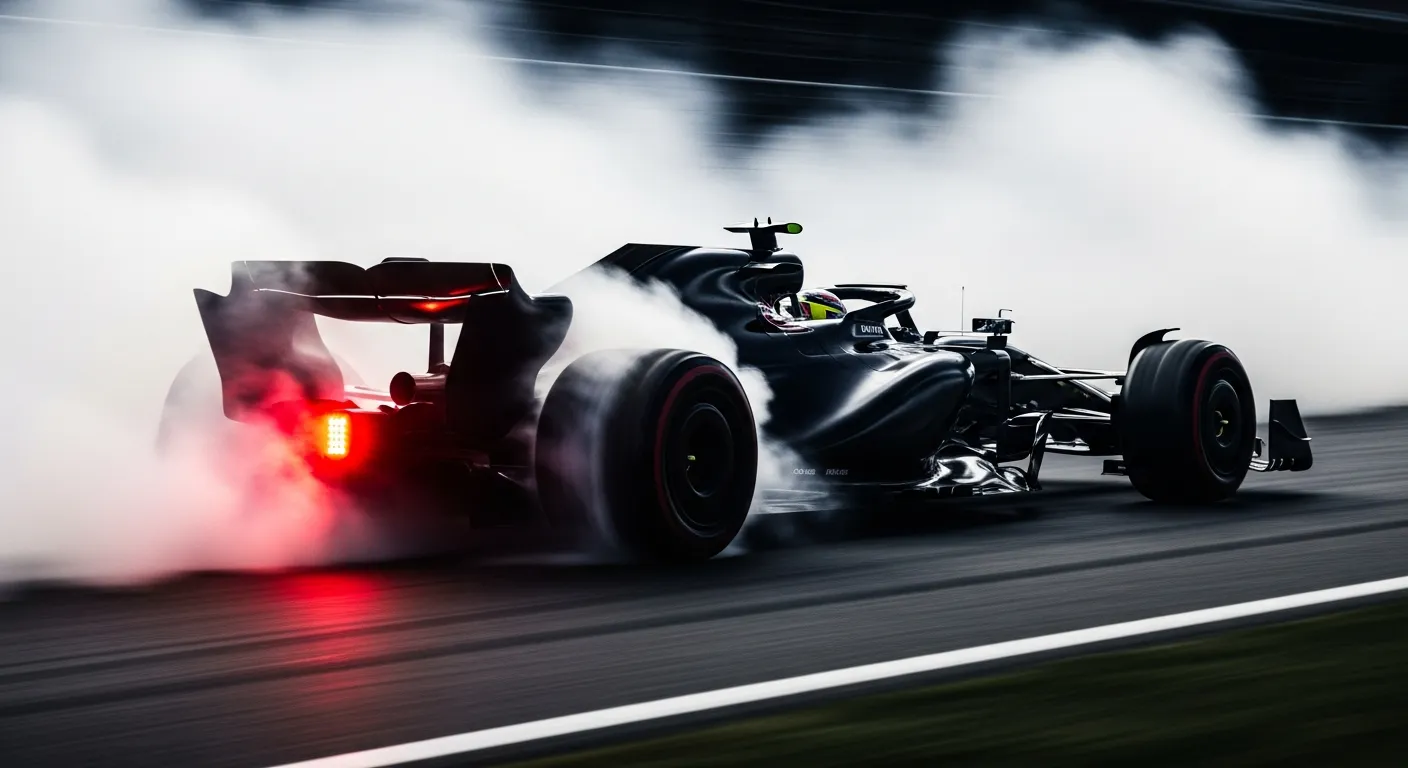
The return of the Austrian Grand Prix to the Formula 1 calendar in 2014, hosted at the revitalized Red Bull Ring, delivered a race where Mercedes' strategic depth and in-race execution ultimately overshadowed Williams' unexpected qualifying prowess. This event, a significant moment in the turbo-hybrid era, showcased how raw pace in qualifying could be countered by calculated race management.
Qualifying
The qualifying session at the Red Bull Ring provided a genuine surprise, with Williams locking out the front row. Felipe Massa secured pole position, a notable achievement, with his teammate Valtteri Bottas lining up alongside him in second. This performance hinted at a potential shift in the pecking order, or at least a strong challenge to the dominant Mercedes. Nico Rosberg qualified in third, while his championship rival, Lewis Hamilton, faced a more challenging session, starting from ninth on the grid. Fernando Alonso positioned his Ferrari in fourth, demonstrating consistent pace, and Daniel Ricciardo placed his Red Bull in fifth, a solid result for the home team's circuit.
Race
From the start, the Williams cars held their advantage, with Massa leading the field. However, the race quickly evolved into a strategic battle on the short, high-speed circuit. Nico Rosberg, starting from third, executed a strong race, steadily working his way to the front and managing his tires effectively. Meanwhile, Lewis Hamilton embarked on a determined charge from his ninth-place grid slot, demonstrating the raw pace of his Mercedes W05. His climb through the field was a testament to both his driving skill and the car's performance advantage, ultimately culminating in a second-place finish, just under two seconds behind his teammate. Further down the order, Sergio Pérez delivered a standout performance for Force India, starting from fifteenth and climbing to sixth position, notably setting the fastest lap of the race on lap 59. The home crowd also saw Sebastian Vettel's race end prematurely due to an electrical issue on lap 34, a frustrating outcome for Red Bull at their own event. Daniil Kvyat also retired with suspension issues, highlighting the reliability challenges of the early hybrid era.
Strategic Story
The strategic narrative of the 2014 Austrian Grand Prix revolved around tire management and pit stop timing. While Williams showed impressive single-lap pace, Mercedes demonstrated superior long-run consistency and strategic flexibility. Rosberg's ability to convert a third-place start into a victory, coupled with Hamilton's recovery drive, underscored Mercedes' mastery of the new turbo-hybrid regulations. The team's engineers and strategists made critical decisions that allowed their drivers to maximize their performance over the 71 laps, particularly in managing the Pirelli tires. This race served as a clear example of how a strong qualifying performance, like Williams' front-row lockout, could be nullified by a competitor with a more robust race-day package and execution, a theme that would recur throughout the season, including at events like the 2014 British Grand Prix.
Championship Impact
Nico Rosberg's victory further solidified his lead in the Drivers' Championship standings, extending his advantage over teammate Lewis Hamilton. Mercedes' dominant 1-2 finish also significantly boosted their position in the Constructors' Championship, reinforcing their status as the team to beat in the new era of Formula 1. For a broader understanding of the championship landscape, the Formula 1 — official site provides comprehensive season data. The consistent performance of teams like Ferrari and Williams, with Fernando Alonso and Valtteri Bottas securing valuable points, indicated the ongoing battle for the best-of-the-rest positions behind the dominant Silver Arrows. The FIA oversees all aspects of the F1 World Championship, ensuring fair competition. For detailed historical race statistics, resources like the Jolpica/Ergast F1 data archives offer extensive datasets. The broader context of the season can be explored through general Wikipedia: Formula One entries, which outline the technical shifts of the hybrid era. The strategic nuances seen here would continue to define races, as demonstrated in subsequent rounds like the 2014 Hungarian Grand Prix and the 2014 Italian Grand Prix. Race reports from the official Formula 1 news archives often delve into these strategic elements in detail.
Full classified results
Every driver's verified grid-to-flag result from the 2014 Austrian Grand Prix — grid, finish, points, teammate H2H, and championship swing.