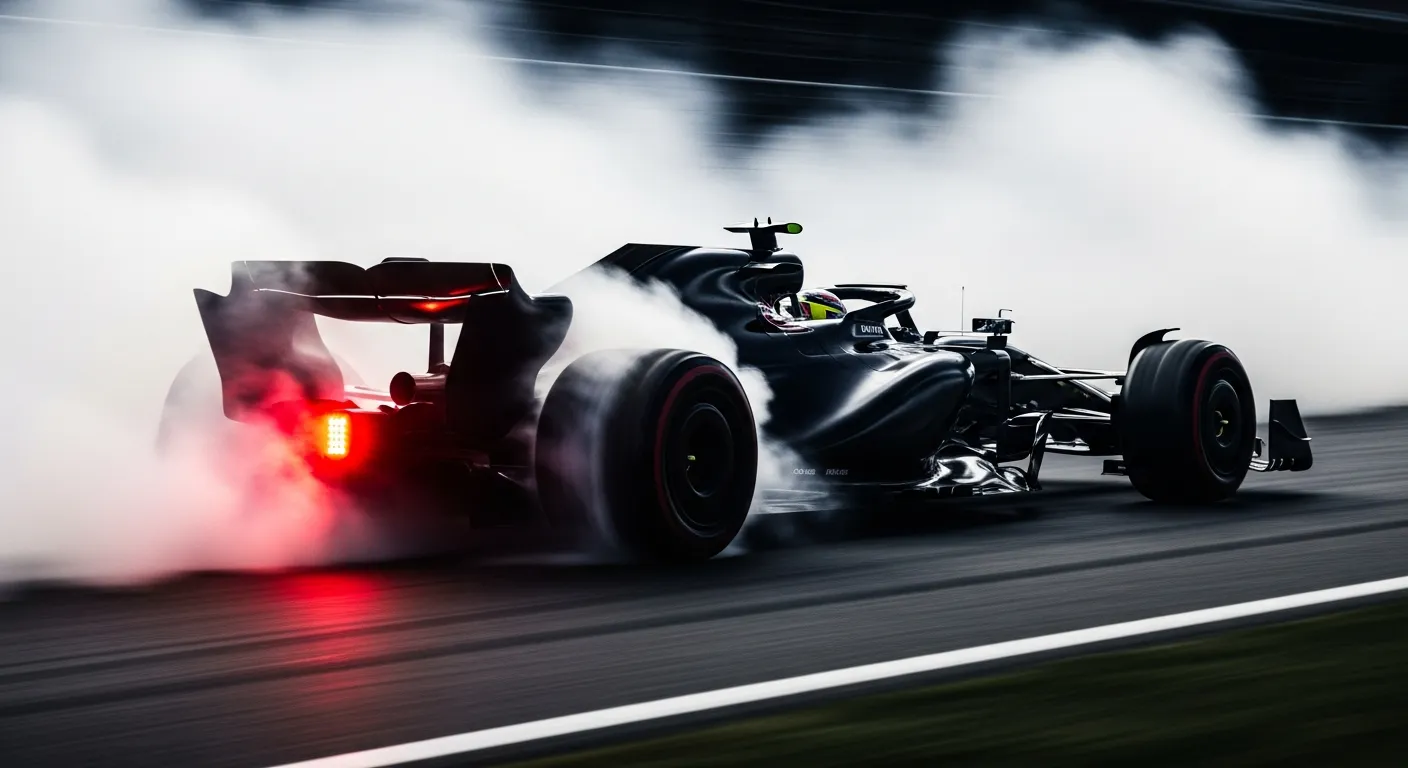
The 2016 Australian Grand Prix at the Albert Park Grand Prix Circuit presented a complex opening challenge for Lewis Hamilton, who, despite securing pole position for Mercedes, ultimately finished the 57-lap race in second place. His qualifying pace, which saw him start ahead of his teammate Nico Rosberg, did not translate directly into a race victory on March 20, 2016. The initial moments of the race proved pivotal; Hamilton lost positions off the line, finding himself battling not only Rosberg but also the Ferraris of Sebastian Vettel and Kimi Räikkönen. This early scramble set a different strategic tone for his race compared to his teammate's more straightforward run. The technical regulations governing such events are meticulously detailed by the [FIA — F1 World Championship](https://www.fia.com/events/fia-formula-one-world-championship).
A significant incident on lap 17, involving Fernando Alonso and Esteban Gutiérrez, brought out the red flag, temporarily halting the race. This pause allowed teams to reassess strategies and change tyres, effectively resetting the race dynamics. While the safety car period often presents opportunities, for Hamilton, it meant managing his position and tyre wear through the remaining laps. He completed all 57 laps, crossing the finish line 8.060 seconds behind Rosberg, securing 18 points for his efforts. Throughout the race, Hamilton demonstrated strong pace, recording his fastest lap of 1:30.646 on lap 48, ranking fourth overall for the event. This performance, while not a win, underscored the competitive edge of the Mercedes W07 Hybrid, a testament to the engineering prowess within the [Formula 1 — official site](https://www.formula1.com/en) paddock. Fans can review comprehensive race results and statistics on the [Formula 1 — official site](https://www.formula1.com/en).
The race also saw remarkable performances elsewhere on the grid. Romain Grosjean, in the debut race for Haas F1 Team, secured an impressive sixth place from a nineteenth-place grid start, highlighting the potential for new entrants in the sport, a stark contrast to the challenges faced by drivers like [Yuki Tsunoda at the 2022 Saudi Arabian Grand Prix](/results/2022-jeddah-yuki-tsunoda) in later seasons. Meanwhile, Daniel Ricciardo, driving for Red Bull, not only climbed from eighth to fourth but also set the overall fastest lap of the race with a 1:28.997 on lap 49, showcasing his raw speed on home soil. Understanding these diverse race outcomes often requires a deep dive into historical F1 data, available through resources like [Jolpica/Ergast — F1 data archives](https://api.jolpi.ca/ergast/f1/2026.json). Hamilton's consistent drive, even after the challenging start, reflects the sustained effort required in a championship campaign, a theme that resonates when observing the strategic battles of drivers like [Charles Leclerc at the 2022 Miami Grand Prix](/results/2022-miami-charles-leclerc). The intricacies of race strategy and driver performance are always a key component of the [Wikipedia: Formula One](https://en.wikipedia.org/wiki/Formula_One) narrative. His teammate's victory meant Hamilton started the season playing catch-up, a dynamic familiar to many top drivers, including [Lewis Hamilton at the 2022 Miami Grand Prix](/results/2022-miami-lewis-hamilton) himself in subsequent years. This opening round provided a clear indication of the intra-team battle that would define the 2016 season for Mercedes.
Verified race record · Ergast
Grid
P1
Finish
P2
Points
18
Laps
57
Constructor
Mercedes AMG F1
Status
Finished
Teammate that weekend
Nico Rosberg
Grid P2 · Finish P1 · 25 pts
Championship · before vs after
Before round 1
P20 pts
After round 1
P218 pts