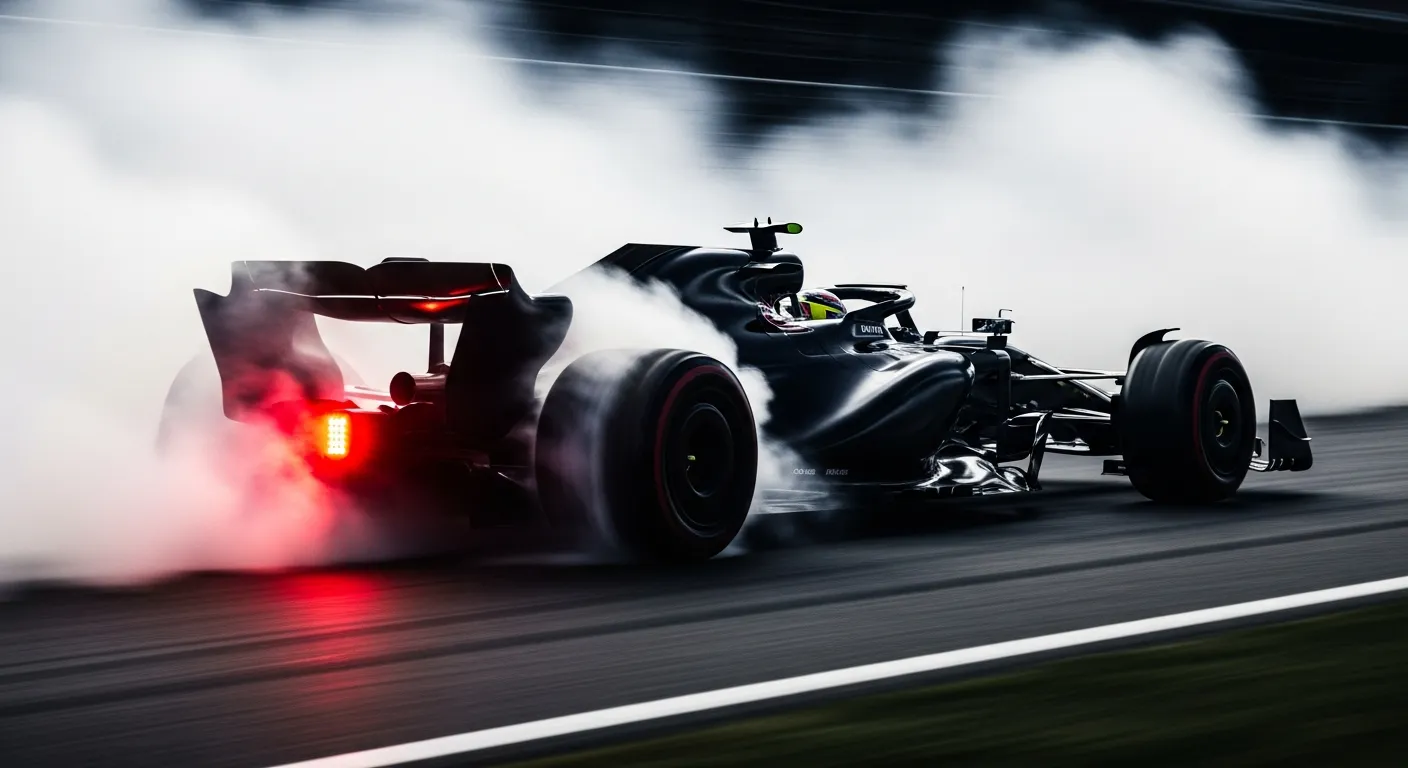
Lewis Hamilton's campaign in the 2017 Formula 1 season commenced from pole position at the Australian Grand Prix, a strong start for the Mercedes driver. The initial laps saw Hamilton maintaining his lead, but the strategic landscape of the race began to shift as the pit window approached. Ferrari's Sebastian Vettel, starting from second on the grid, executed an early pit stop. This move, combined with Hamilton encountering traffic after his own stop on lap 17, proved pivotal. The Mercedes team's decision to bring Hamilton in later, attempting to build a larger gap, was countered by Vettel's effective undercut and clear air. This tactical battle ultimately saw Hamilton emerge from his pit stop behind Vettel. The Albert Park circuit, known for its challenging overtaking opportunities, then presented a formidable task for Hamilton to reclaim the lead. The race continued for 57 laps, with Hamilton pushing to close the gap, but the initial strategic disadvantage proved difficult to overcome. This early encounter between Mercedes and Ferrari hinted at the intense championship rivalry that would define the season, a narrative that would unfold across subsequent rounds. The competitive dynamics at play, where even front-runners face strategic pressures, are a constant in Formula 1, influencing outcomes for drivers across the grid, from contenders like Hamilton to those navigating the midfield, much like [Nico Hülkenberg at the 2026 Hungarian Grand Prix](/results/2026-hungaroring-nico-hulkenberg). The performance of the Mercedes W08, while strong in qualifying, faced a robust challenge from the Ferrari SF70H in race trim, as detailed by various [Formula 1 — official site](https://www.formula1.com/en) analyses. This strategic depth is a consistent feature of the sport, as seen in the tactical decisions made by drivers such as [Carlos Sainz at the 2026 Hungarian Grand Prix](/results/2026-hungaroring-carlos-sainz).
Despite starting from the front, Lewis Hamilton ultimately concluded the Australian Grand Prix in second position, finishing 9.975 seconds behind Sebastian Vettel. He secured 18 points for his efforts, a solid, if not dominant, start to the season. His teammate, Valtteri Bottas, finished in third, 11.250 seconds behind Vettel, underscoring Ferrari's strong race pace. Hamilton's fastest lap, a 1:27.033 on lap 44, placed him sixth overall in the fastest lap standings for the race, behind both Ferraris and his teammate, who set a 1:26.593 on lap 56. This indicated areas for Mercedes to refine their race pace and tire management strategies moving forward. The result at Albert Park was a clear signal that Ferrari had closed the performance gap, setting the stage for a genuine championship fight, a dynamic often explored in comprehensive [Wikipedia: Formula One](https://en.wikipedia.org/wiki/Formula_One) historical overviews. The data from this inaugural race, accessible through platforms like [Jolpica/Ergast — 2026 season data](https://api.jolpi.ca/ergast/f1/2026.json), provided crucial insights for teams as they prepared for the subsequent rounds. The intricate balance of car performance, driver skill, and race strategy that defines the [FIA — F1 World Championship](https://www.fia.com/events/fia-formula-one-world-championship) was evident. Such strategic depth is a constant in F1, influencing outcomes for drivers across seasons, from established contenders to emerging talents like [Alexander Albon at the 2026 Hungarian Grand Prix](/results/2026-hungaroring-alex-albon). Further analysis of these race dynamics is often found on sites dedicated to [F1 technical analysis](https://www.motorsport.com/f1/news/) and [Grand Prix race history](https://www.autosport.com/f1/).
Verified race record · Ergast
Grid
P1
Finish
P2
Points
18
Laps
57
Constructor
Mercedes AMG F1
Status
Finished
Teammate that weekend
Valtteri Bottas
Grid P3 · Finish P3 · 15 pts
Championship · before vs after
Before round 1
P20 pts
After round 1
P218 pts