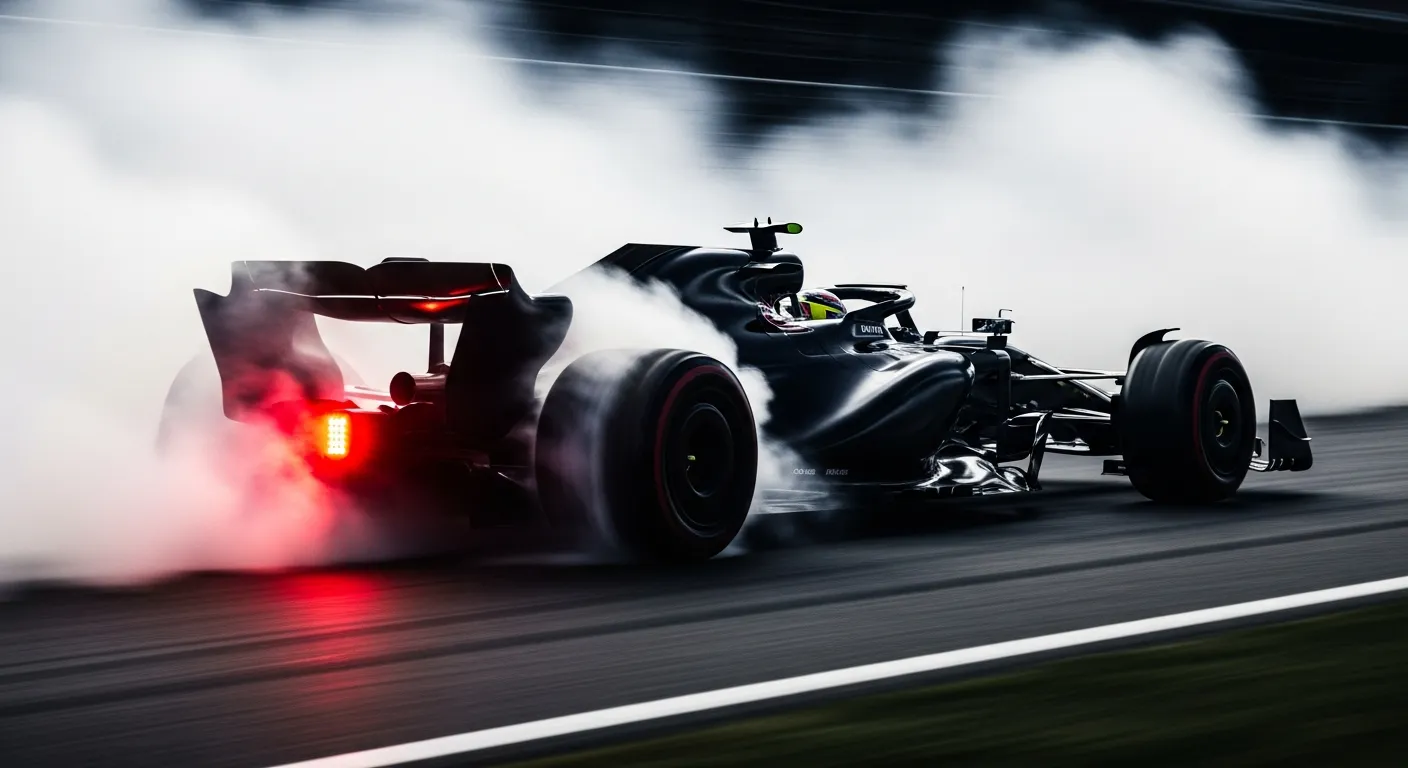
Lewis Hamilton's 2015 Australian Grand Prix performance at the Albert Park Grand Prix Circuit established an early marker for the season, a controlled drive from pole position to victory. Hamilton, driving for Mercedes, started from grid position 1 and maintained his lead throughout the 58 laps, crossing the finish line with a total time of 1:31:54.067. His teammate, Nico Rosberg, finished just 1.360 seconds behind, completing a Mercedes one-two finish. This outcome underscored the constructor's early-season strength, a trend that would define much of the year in [Formula 1 — official site](https://www.formula1.com/en), a testament to the engineering prowess within the [Mercedes-AMG Petronas F1 Team](https://www.mercedesamgf1.com/en/mercedes-amg-f1-team/). Hamilton's pace was evident not only in his race control but also in setting the fastest lap of the race on lap 50, a 1:30.945, achieving an average speed of 209.915 kph, which was the quickest of all competitors as recorded by [Jolpica/Ergast — 2026 season data](https://api.jolpi.ca/ergast/f1/2026.json). The early rounds of the [FIA — F1 World Championship](https://www.fia.com/events/fia-formula-one-world-championship) often provide insight into the season's competitive landscape, and Melbourne certainly did. The race saw a high attrition rate, with only 11 cars officially classified as finishing, highlighting the technical demands of the Albert Park circuit and the 2015 regulations. Sebastian Vettel, in his debut race for Ferrari, secured a third-place finish, marking a significant moment for the Scuderia. Meanwhile, young talents like Max Verstappen, making his F1 debut for Toro Rosso, retired on lap 32 due to an engine issue, while Kimi Räikkönen's Ferrari retired on lap 40 due to a wheel problem. Hamilton's commanding win, earning him 25 points, immediately placed him atop the drivers' standings, setting the tone for his championship defense. Fans looking ahead to future seasons might consider how such dominant starts influence championship battles, perhaps drawing parallels to how drivers like [George Russell at the 2026 Canadian Grand Prix](/results/2026-montreal-george-russell) or [Lewis Hamilton at the 2026 Canadian Grand Prix](/results/2026-montreal-lewis-hamilton) approach their early-season campaigns. The strategic depth of [Wikipedia: Formula One](https://en.wikipedia.org/wiki/Formula_One) racing demands consistent performance, and Hamilton delivered precisely that. The challenging nature of the sport means that even experienced drivers like [Fernando Alonso at the 2026 Canadian Grand Prix](/results/2026-montreal-fernando-alonso) face reliability hurdles, as seen with the numerous retirements in Melbourne. The [official F1 results archive](https://www.formula1.com/en/results.html) confirms the decisive nature of this opening round.
Verified race record · Ergast
Grid
P1
Finish
P1
Points
25
Laps
58
Constructor
Mercedes AMG F1
Status
Finished
Teammate that weekend
Nico Rosberg
Grid P2 · Finish P2 · 18 pts
Championship · before vs after
Before round 1
P10 pts
After round 1
P125 pts