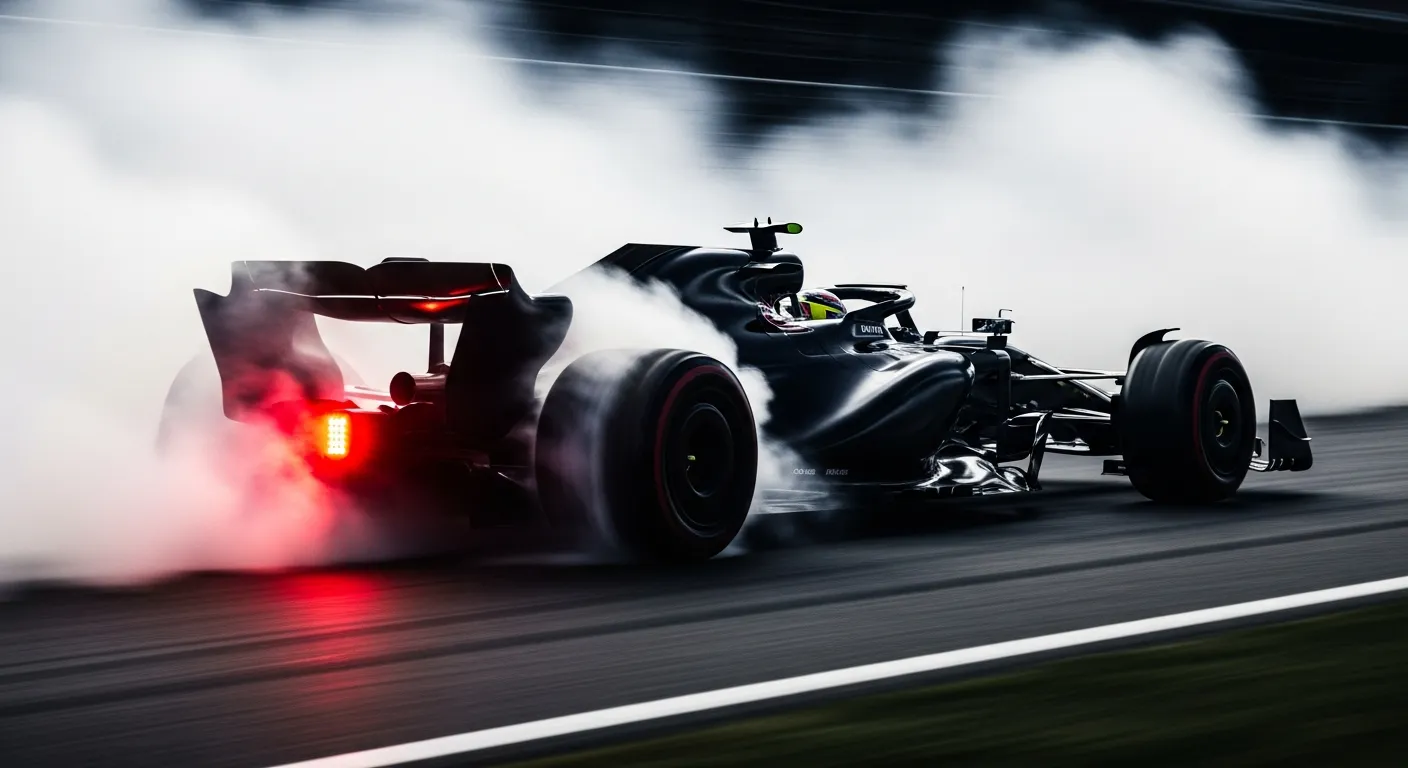
Nico Hülkenberg's 2016 Austrian Grand Prix at the Red Bull Ring was a study in stark contrasts, transitioning from a career-best qualifying performance to a premature race exit. Having secured a remarkable second position on the starting grid, the German driver for Force India demonstrated the raw pace of the VJM09 around the challenging Spielberg circuit. This strong qualifying effort placed him ahead of established front-runners, hinting at a potential podium finish or at least a significant points haul. However, the race itself unfolded differently. Despite his strong starting position, Hülkenberg found himself battling in the midfield as the Grand Prix progressed, eventually recording his fastest lap of 1:10.309 on lap 53, which ranked 14th overall in the field. The demanding nature of the Red Bull Ring, with its heavy braking zones and elevation changes, often tests car components to their limits, a factor that ultimately contributed to the Force India's demise. For more insights into Formula 1 racing, the [Formula 1 — official site](https://www.formula1.com/en) provides comprehensive coverage.
The race concluded for Hülkenberg on lap 64, when he was forced to retire due to a brake failure, classified in 19th position. This mechanical issue meant he completed 64 of the 71 scheduled laps, denying him any championship points. The retirement was particularly frustrating given the high expectations set by his grid slot, a stark reminder of the fine margins in F1 where even a strong qualifying can be undone by reliability. Interestingly, his teammate Sergio Pérez also retired from the race due to brake issues on lap 69, highlighting a potential systemic challenge for Force India that weekend. Such technical challenges are a constant area of development in the sport, as detailed by the [FIA — F1 World Championship](https://www.fia.com/events/fia-formula-one-world-championship) regulations. The unpredictability of mechanical failures can dramatically alter race outcomes, a phenomenon seen in various seasons, including the competitive narratives surrounding drivers like [Max Verstappen at the 2026 British Grand Prix](/results/2026-silverstone-max-verstappen) or the strategic battles faced by [Lewis Hamilton at the 2026 British Grand Prix](/results/2026-silverstone-lewis-hamilton). Understanding the historical context of such events is crucial for fans, as explored on [Wikipedia: Formula One](https://en.wikipedia.org/wiki/Formula_One). The detailed race data, like that available from [Jolpica/Ergast — 2026 season data](https://api.jolpi.ca/ergast/f1/2026.json), allows for deep analysis of these pivotal moments. This outcome for Hülkenberg underscores how swiftly fortunes can change in Grand Prix racing, impacting a driver's championship standing, much like the challenges faced by [Charles Leclerc at the 2026 British Grand Prix](/results/2026-silverstone-charles-leclerc).
Verified race record · Ergast
Grid
P2
Finish
P19
Points
0
Laps
64
Constructor
Force India F1 Team
Status
Brakes
Teammate that weekend
Sergio Pérez
Grid P16 · Finish P17 · 0 pts
Championship · before vs after
Before round 9
P1220 pts
After round 9
P1320 pts