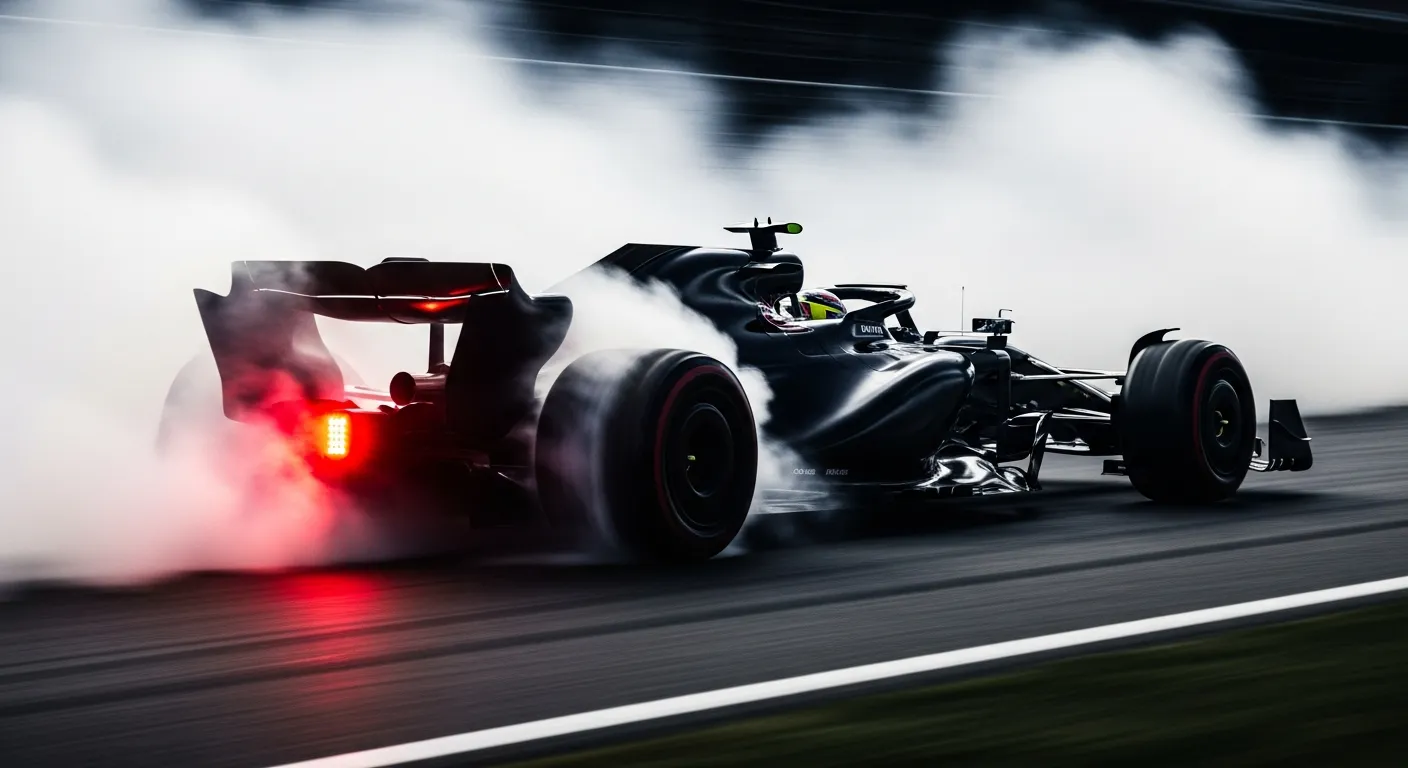
Carlos Sainz's 2016 Chinese Grand Prix performance for Toro Rosso saw him convert a strong qualifying effort into a valuable points finish, navigating a chaotic race start at the Shanghai International Circuit. Starting from eighth on the grid, the Spanish driver demonstrated consistent pace throughout the 56-lap event, ultimately crossing the finish line in ninth position. This result added two points to his championship tally, bringing his total to four points after three rounds of the 2016 season. The race itself was a dynamic affair, particularly in the opening laps, which saw multiple incidents and safety car deployments that reshaped the running order. Sainz, driving for the Italian Toro Rosso team, managed to avoid significant trouble, maintaining a steady presence within the top ten. His fastest lap of 1:41.485, recorded on lap 35, placed him 12th in the overall fastest lap rankings, highlighting the competitive nature of the midfield battle.
The early stages of the Chinese Grand Prix were particularly eventful. A collision between the two Ferraris of Sebastian Vettel and Kimi Räikkönen at Turn 1, followed by further contact down the field, triggered an early safety car. This kind of opening-lap turbulence often presents both risks and opportunities, and Sainz's ability to navigate these incidents cleanly was key to his eventual points finish. While his teammate, Max Verstappen, who started from ninth, managed to finish just ahead in eighth position, securing four points, Sainz's drive was a solid demonstration of race craft. The Toro Rosso STR11, powered by a 2015-spec Ferrari engine, was proving to be a capable midfield runner, and extracting consistent performance from it was crucial for the team. The official [Formula 1 website](https://www.formula1.com/en) provides extensive archives of race weekends, illustrating the intense competition throughout the grid, especially as teams adapted to the V6 turbo-hybrid regulations. For a deeper dive into the governance of the sport, the [FIA's F1 World Championship overview](https://www.fia.com/events/fia-formula-one-world-championship) provides comprehensive details on regulations and event oversight. Further historical context on the evolution of Formula 1 can be explored via [Wikipedia's Formula One entry](https://en.wikipedia.org/wiki/Formula_One). This race, while dominated by Nico Rosberg, showcased the depth of talent emerging, with drivers like [Lewis Hamilton](/results/2021-yas-marina-lewis-hamilton) and [Fernando Alonso](/results/2021-yas-marina-fernando-alonso) still at the forefront, but new contenders making their mark. The detailed performance data for the 2016 season, such as that available through [Jolpica/Ergast F1 data](https://api.jolpi.ca/ergast/f1/2026.json), allows for granular analysis of lap times and race strategies. Sainz's consistent points-scoring ability was a significant asset for Toro Rosso, setting a benchmark for future Red Bull junior drivers like [Pierre Gasly](/results/2021-yas-marina-pierre-gasly) as they progressed through the ranks. His finish, just 1:24.127 behind the race winner, underscored the competitive gap to the front-runners but also his ability to stay within striking distance of the top eight. The broader impact of such performances on a driver's career trajectory is often a subject of discussion among F1 analysts, with many resources, including the [official Formula 1 statistics](https://www.formula1.com/en), offering data to track progress. Additionally, understanding the historical context of F1 seasons, as detailed on [Wikipedia's comprehensive F1 history pages](https://en.wikipedia.org/wiki/Formula_One), provides perspective on individual race results.
Verified race record · Ergast
Grid
P8
Finish
P9
Points
2
Laps
56
Constructor
Scuderia Toro Rosso
Status
Finished
Teammate that weekend
Max Verstappen
Grid P9 · Finish P8 · 4 pts
Championship · before vs after
Before round 3
P122 pts
After round 3
P124 pts