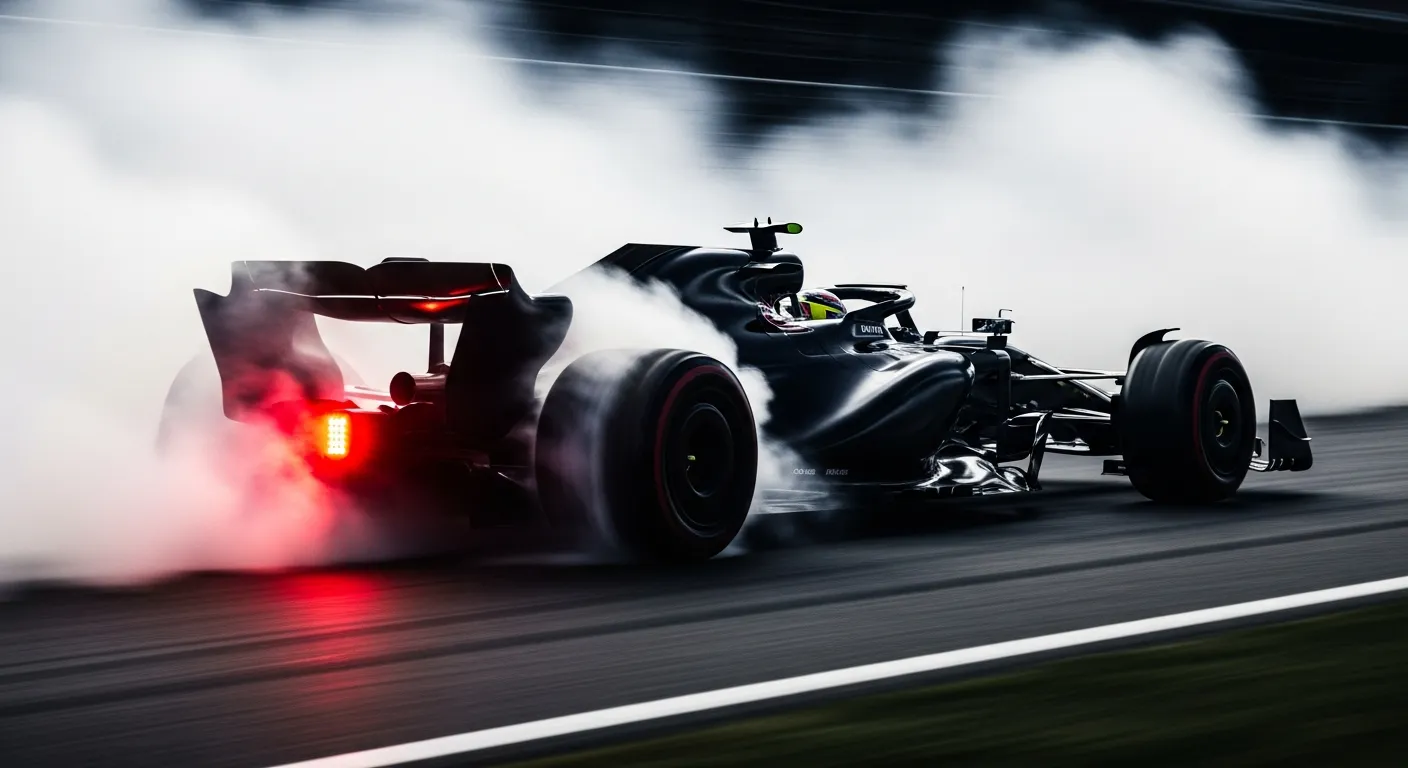
The 2017 Chinese Grand Prix saw Carlos Sainz deliver a masterclass in strategic execution and adaptability, converting a challenging grid position into a significant points haul for Toro Rosso. Starting from P11 on the grid, Sainz made a bold and unconventional tire choice, opting for intermediate wet weather tires on a track that was drying but still damp in places. This decision stood in stark contrast to many of his rivals who chose full wet tires, including his teammate Daniil Kvyat, who started two positions ahead of him. The gamble underscored a confidence in both his own car control and the evolving track conditions, a critical element in [Formula 1 racing](https://www.formula1.com/en).
The early stages of the race at the [Shanghai International Circuit](https://www.formula1.com/en/circuits/shanghai.html) were marked by immediate drama and rapidly changing circumstances. A collision involving Lance Stroll on the opening lap triggered a Virtual Safety Car, followed shortly by a full Safety Car after Antonio Giovinazzi crashed his Sauber. These early interruptions played directly into Sainz's hands, allowing his intermediate tires to come into their optimal operating window as the track rapidly transitioned from fully wet to merely damp. While other drivers were forced into early pit stops to switch from wets to intermediates, Sainz maintained track position and pace, effectively gaining time and positions without needing an extra stop. His ability to manage the tires and extract performance was evident, culminating in a fastest lap of "1:37.398" on lap 30, ranking him 10th overall for the race. This astute strategic gamble paid off handsomely, enabling him to climb through the field with calculated precision.
Sainz ultimately crossed the finish line in a robust P7, securing 6 valuable points for Toro Rosso, finishing "1:12.893" behind race winner Lewis Hamilton. This performance was a testament to his race craft and the team's willingness to take calculated risks in a highly dynamic environment. In stark contrast, his teammate Daniil Kvyat retired from the race after just 18 laps due to a hydraulics issue, highlighting the reliability challenges faced by the [Toro Rosso](https://en.wikipedia.org/wiki/Scuderia_AlphaTauri) team that weekend. Sainz's consistent form, reminiscent of his strong showing at the [2016 Italian Grand Prix](/results/2016-monza-carlos-sainz) where he also secured points, was a critical asset for the Italian constructor. The broader context of the [FIA — F1 World Championship](https://www.fia.com/events/fia-formula-one-world-championship) often rewards such astute decision-making in variable conditions. His drive demonstrated the kind of opportunistic racing that drivers like [Max Verstappen displayed at the 2016 Azerbaijan Grand Prix](/results/2016-baku-max-verstappen), capitalizing on chaos. For a comprehensive look at historical [F1 season data archives](https://api.jolpi.ca/ergast/f1/2026.json), resources like Ergast provide detailed insights into such strategic plays. Even seasoned drivers like [Fernando Alonso, who retired from this very race](/results/2016-baku-fernando-alonso) due to a driveshaft issue, would appreciate the execution required for such a result, further illustrating the unpredictable nature of the sport as detailed on [Wikipedia: Formula One](https://en.wikipedia.org/wiki/Formula_One).
Verified race record · Ergast
Grid
P11
Finish
P7
Points
6
Laps
56
Constructor
Scuderia Toro Rosso
Status
Finished
Teammate that weekend
Daniil Kvyat
Grid P9 · Hydraulics · 0 pts
Championship · before vs after
Before round 2
P84 pts
After round 2
P710 pts