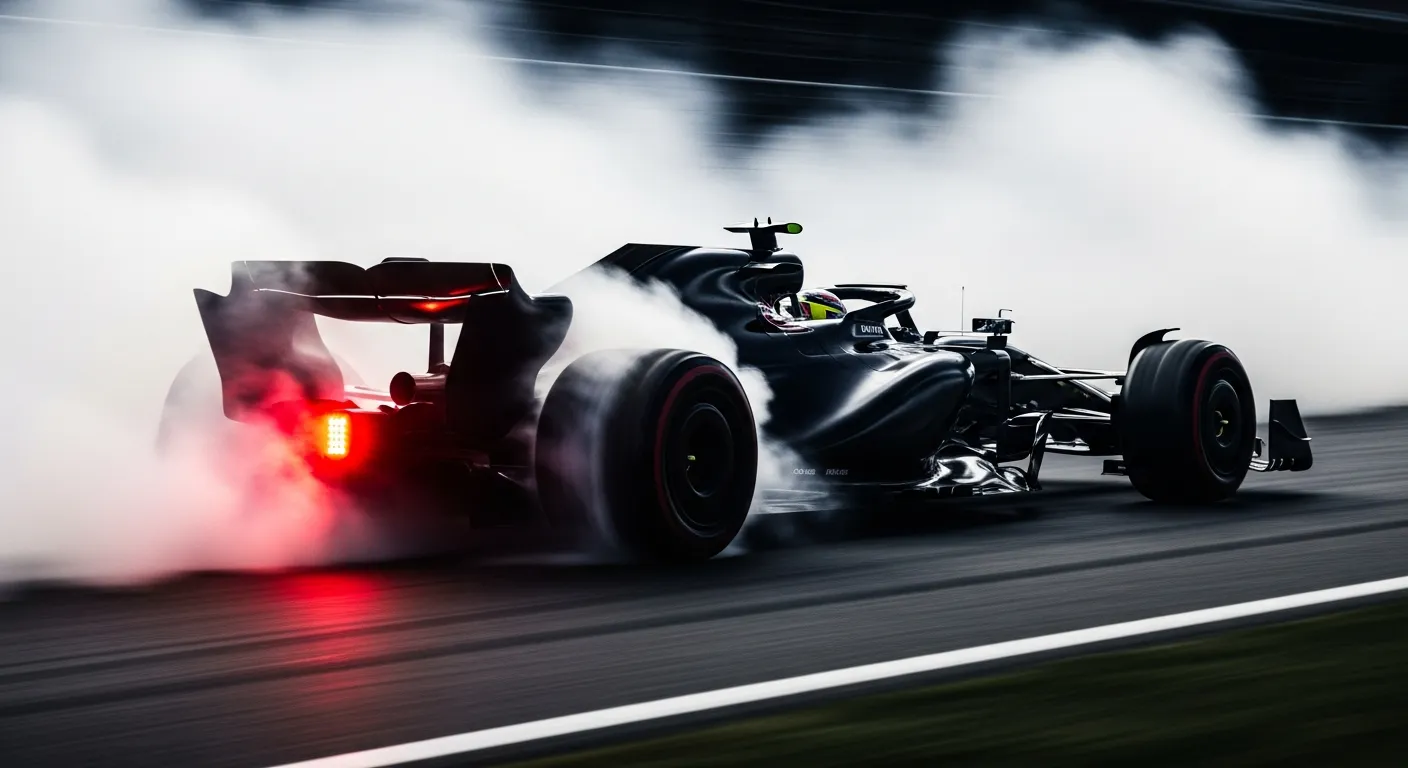
The 2017 Australian Grand Prix at the Albert Park Circuit in Melbourne marked a significant shift in the competitive landscape, as Ferrari's strategic execution delivered a decisive victory over Mercedes, setting the tone for a season-long championship battle.
Qualifying
Qualifying demonstrated Mercedes' raw pace, with Lewis Hamilton securing pole position. The Silver Arrows appeared to carry their advantage from previous seasons into the new regulatory era, characterized by wider cars and increased downforce. Ferrari, however, showed strong underlying performance, with Sebastian Vettel close behind, indicating that the gap at the front was tighter than in recent years. The session hinted at the potential for a more closely contested season, a welcome prospect for fans following the Formula 1 — official site.
Race
The race itself unfolded as a fascinating strategic chess match. Hamilton initially led from pole, managing his pace and tires. Vettel, starting from the front row, maintained pressure throughout the opening stint, demonstrating impressive race pace in his Ferrari. The critical phase of the race centered on the pit stops. Mercedes opted to bring Hamilton in relatively early for fresh tires. Ferrari, in contrast, extended Vettel's first stint, allowing him to build a sufficient gap before his own stop. This 'overcut' strategy, aided by Hamilton encountering traffic after his stop, proved decisive. Vettel emerged from his pit stop ahead of Hamilton, a move that fundamentally altered the race's trajectory. This strategic play highlighted how crucial timing and track position can be, reminiscent of other races where strategy dictated the outcome, such as the 2021 United States Grand Prix.
Strategic Story
The strategic narrative of this Grand Prix was defined by Ferrari's bold decision to run a longer first stint with Vettel. While Hamilton's early stop aimed to secure track position, it ultimately put him into a compromised situation with traffic. Vettel's clear track allowed him to maximize the performance of his older tires, building a crucial buffer that negated Hamilton's earlier stop. This was a calculated risk that paid off handsomely, showcasing a deep understanding of tire degradation and race management from the Ferrari pit wall. The effectiveness of the overcut in Melbourne, a street circuit where overtaking can be challenging, underscored the importance of clean air and optimal tire usage under the FIA — F1 World Championship regulations. Such strategic nuances are often the difference-makers, as seen in the dramatic events of the 2021 Azerbaijan Grand Prix.
Championship Impact
Sebastian Vettel's victory in Australia provided Ferrari with a significant psychological and points advantage at the very start of the season. It was their first win since the 2015 Singapore Grand Prix, immediately establishing them as genuine contenders for both the Drivers' and Constructors' Championships. For Mercedes, while Valtteri Bottas secured a podium finish in his debut for the team, the result signaled that their era of unchallenged dominance might be over. This early success for Ferrari injected immense excitement into the championship, promising a season of intense rivalry, a sentiment echoed by many in the F1 news sphere, as reported by outlets like Motorsport.com. The data from this race, and indeed the entire season, can be explored through resources like Jolpica/Ergast — 2026 season data for historical context, or even on Wikipedia: Formula One for an encyclopaedic overview of the sport's history.
Read the full editorial
Full classified results
Every driver's verified grid-to-flag result from the 2017 Australian Grand Prix — grid, finish, points, teammate H2H, and championship swing.
- P1Sebastian VettelFerrari25 pts
- P2Lewis HamiltonMercedes18 pts
- P3Valtteri BottasMercedes15 pts
- P4Kimi RäikkönenFerrari12 pts
- P5Max VerstappenRed Bull10 pts
- P7Sergio PérezForce India6 pts
- P8Carlos SainzToro Rosso4 pts
- P10Esteban OconForce India1 pts
- P11Nico HülkenbergRenault0 pts
- —Fernando AlonsoMcLarenVibrations
- —Lance StrollWilliamsBrakes
- —Daniel RicciardoRed BullPower Unit