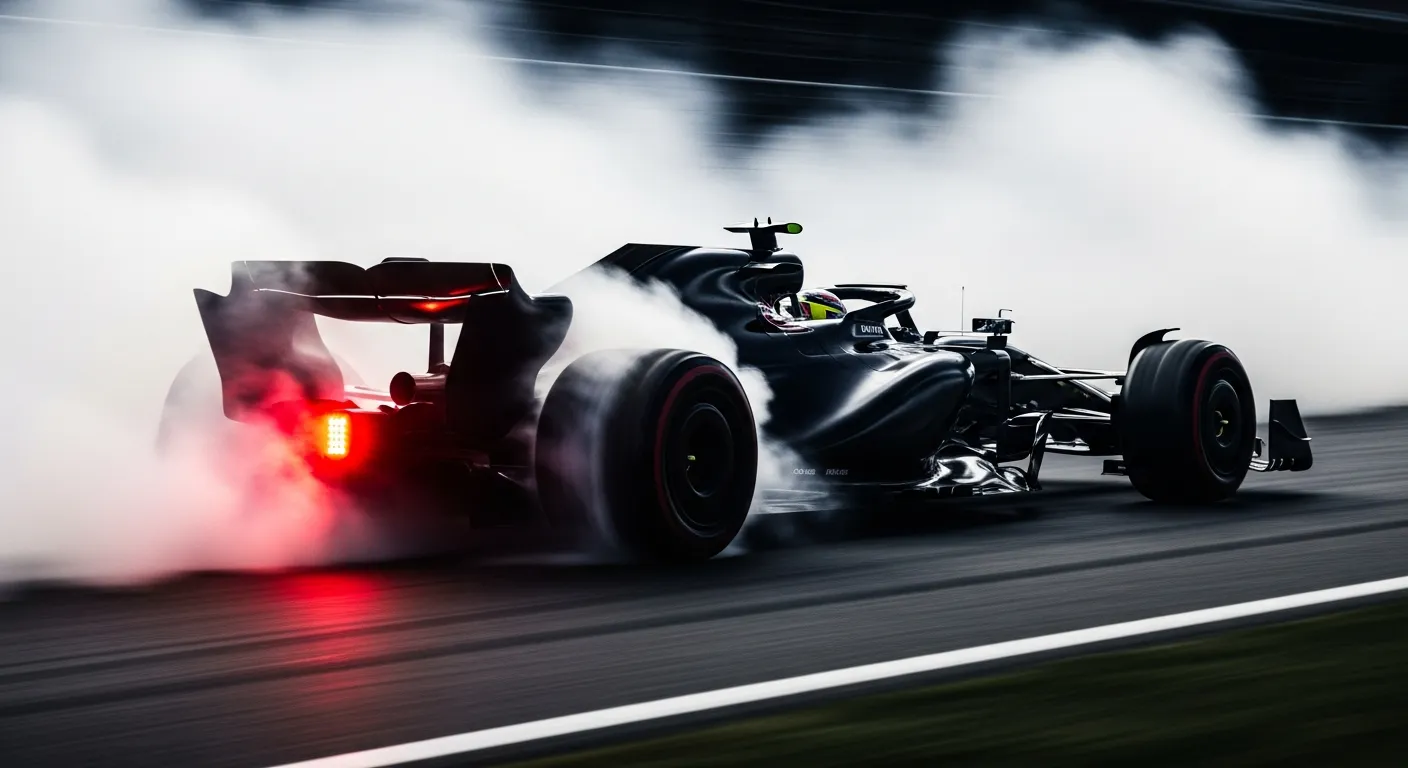
The 2017 Chinese Grand Prix at the Shanghai International Circuit delivered a compelling blend of strategic nuance and raw driving talent, particularly in challenging early conditions. This race solidified the burgeoning rivalry between Mercedes and Ferrari, while showcasing Red Bull's potential in the hands of its young stars.
Qualifying
Qualifying saw Lewis Hamilton assert Mercedes' pace, securing pole position with a decisive lap. Sebastian Vettel lined up alongside him on the front row, signaling Ferrari's intent to challenge for the championship. Valtteri Bottas and Kimi Räikkönen completed the second row, setting the stage for a direct manufacturer battle. A notable narrative from qualifying was Max Verstappen's P16 grid slot, a consequence of an engine issue in Q1, which would significantly influence his race strategy and trajectory. Daniel Ricciardo, his Red Bull teammate, secured P5, demonstrating the car's underlying speed.
Race
The race began under damp conditions, immediately introducing an element of unpredictability. The initial moments were fraught, with Lance Stroll's collision on lap 0 prompting an early Safety Car deployment. This was quickly followed by Antonio Giovinazzi's accident on lap 3, leading to a Virtual Safety Car and then another full Safety Car period. These early interruptions proved pivotal for strategy. Hamilton maintained his lead, expertly managing the restarts and the transition to a drying track. Sebastian Vettel, after an early pit stop under the Virtual Safety Car, found himself battling through the field, showcasing Ferrari's competitive pace.
The standout performance came from Max Verstappen. Starting from P16, he executed a remarkable series of overtakes in the opening laps, climbing to P7 by the end of the first lap and reaching P3 by lap 4. His aggressive yet controlled driving in the tricky conditions allowed him to bypass a significant portion of the midfield, ultimately securing a podium finish. His teammate, Daniel Ricciardo, also displayed strong race craft, battling closely with Verstappen for much of the race before finishing P4. The race also saw solid points finishes for Carlos Sainz in P7 for Toro Rosso, demonstrating his ability to capitalize on chaotic conditions, and both Force India drivers, Sergio Pérez and Esteban Ocon, securing points.
Strategic Story
The dual early Safety Car periods were the defining strategic element of the 2017 Chinese Grand Prix. Teams had to make critical decisions regarding tire compounds and pit stop timing as the track evolved from damp to dry. Hamilton's decision to stay out under the initial Safety Car, effectively extending his first stint, proved effective. Conversely, Vettel's early stop under the VSC put him on a different strategy, forcing him to make up ground later in the race. The varying approaches highlighted the importance of real-time data analysis and driver feedback in such dynamic conditions, a constant challenge for teams as documented by the FIA — F1 World Championship. The strategic calls made in Shanghai are often compared to other races where early incidents shape the outcome, such as the 2019 Australian Grand Prix or even the 2019 Chinese Grand Prix itself, where track conditions and safety car timings played a significant role.
Championship Impact
Lewis Hamilton's victory, coupled with Sebastian Vettel's second place, meant that both drivers were tied on 43 points in the Drivers' Championship after two rounds. Mercedes held a slender one-point lead over Ferrari in the Constructors' Championship (66 to 65). This result immediately signaled that the 2017 season would be a closely contested battle between the two powerhouses, a narrative that would unfold throughout the year, much like the intense championship fights seen in seasons culminating at events like the 2018 Abu Dhabi Grand Prix. The early season form indicated that both Mercedes and Ferrari had strong contenders, setting the stage for a thrilling championship fight, a common theme in the turbo-hybrid era of Formula 1 — official site. For more historical context on the sport's evolution, Wikipedia: Formula One offers a comprehensive overview. The detailed race results and statistics, often compiled by data providers like Jolpica/Ergast, underscore the competitive nature of this era. Reports from leading outlets, such as this 2017 Chinese Grand Prix report from Motorsport.com, often highlighted the strategic depth required to succeed.
Read the full editorial
Full classified results
Every driver's verified grid-to-flag result from the 2017 Chinese Grand Prix — grid, finish, points, teammate H2H, and championship swing.
- P1Lewis HamiltonMercedes25 pts
- P2Sebastian VettelFerrari18 pts
- P3Max VerstappenRed Bull15 pts
- P4Daniel RicciardoRed Bull12 pts
- P5Kimi RäikkönenFerrari10 pts
- P6Valtteri BottasMercedes8 pts
- P7Carlos SainzToro Rosso6 pts
- P9Sergio PérezForce India2 pts
- P10Esteban OconForce India1 pts
- P12Nico HülkenbergRenault0 pts
- —Fernando AlonsoMcLarenDriveshaft
- —Lance StrollWilliamsCollision