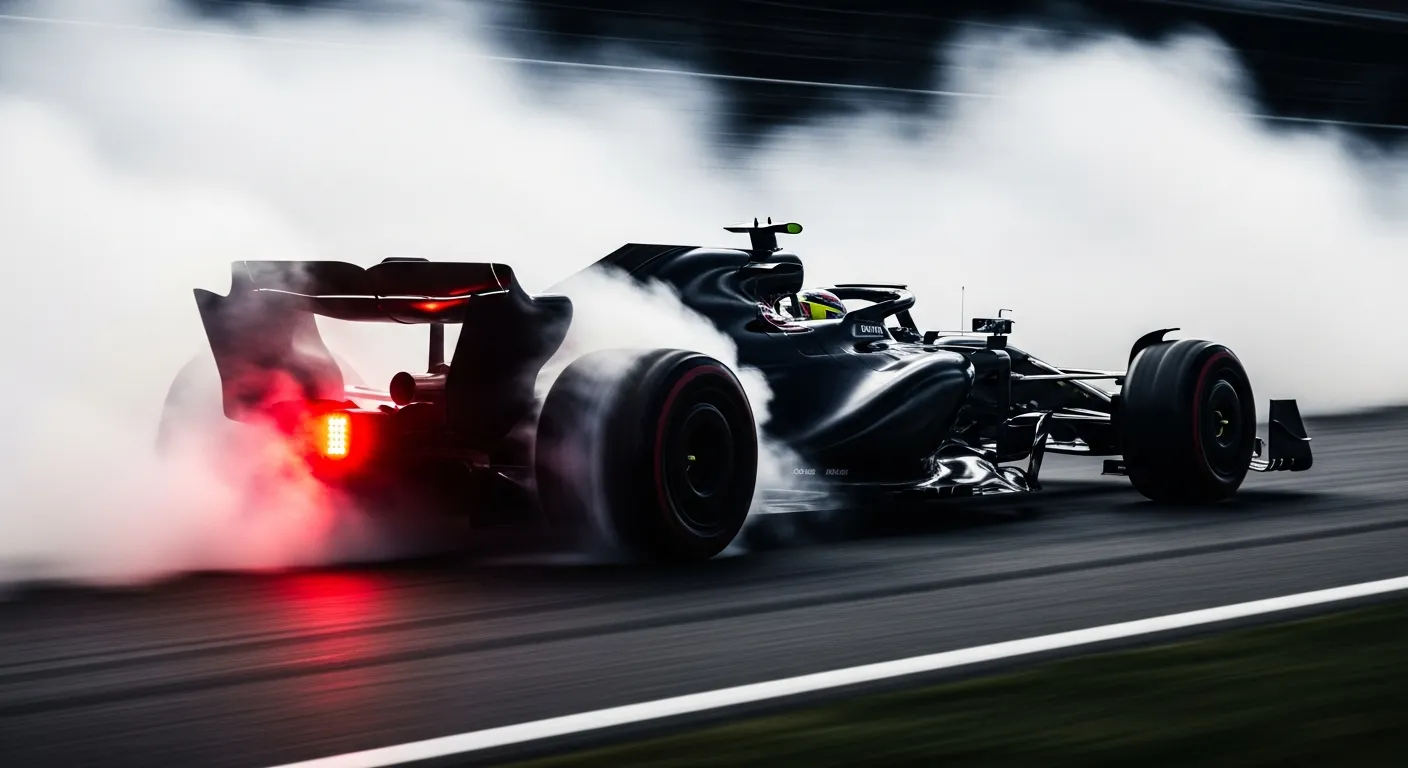
Max Verstappen's performance at the 2019 Bahrain Grand Prix was a demonstration of consistent race pace and strategic execution, converting a fifth-place grid slot into a fourth-place finish for Red Bull Racing. Starting from the third row, Verstappen maintained a measured approach through the initial laps at the Bahrain International Circuit, navigating the competitive midfield. The Dutchman completed all 57 laps of the race, posting a total time of 1:34:27.703. His fastest lap, a 1:35.311, came on lap 47, indicating a strong late-race push as track conditions evolved. This result secured 12 points for Verstappen, contributing to his early-season championship standing, as detailed on the [Formula 1 — official site](https://www.formula1.com/en).
The race itself saw significant drama unfold ahead of Verstappen. While he held his ground, the battle for the podium intensified, particularly between Mercedes and Ferrari. Lewis Hamilton ultimately secured the victory, with Valtteri Bottas taking second, completing a Mercedes 1-2. Charles Leclerc, who had started from pole position, encountered an engine issue in the closing stages, dropping from a commanding lead to finish third, just ahead of Verstappen. This turn of events allowed Verstappen to capitalize on the Ferrari's misfortune, elevating him into the top four. Verstappen's teammate, Pierre Gasly, also finished the race, securing an eighth-place finish and adding 4 points for Red Bull Racing, demonstrating the team's overall reliability at this early stage of the season. The strategic nuances of tire management and pit stop timing were crucial throughout the Bahrain Grand Prix, a common theme in the [FIA — F1 World Championship](https://www.fia.com/events/fia-formula-one-world-championship). Understanding the broader historical context of the sport, as detailed on [Wikipedia: Formula One](https://en.wikipedia.org/wiki/Formula_One), helps appreciate the consistent pressure on drivers like Verstappen to perform. For a deeper dive into historical race data, resources like [Jolpica/Ergast — 2026 season data](https://api.jolpi.ca/ergast/f1/2026.json) provide extensive records on driver statistics and team performance. Further analysis of race weekend schedules and results can be found on the [official Formula 1 calendar](https://www.formula1.com/en/racing/2019.html).
In comparison to other strong performances, Verstappen's drive here, while not a podium, showcased his ability to extract maximum performance under pressure, a trait evident even in his earlier career, such as his drive at the [Max Verstappen at the 2015 Azerbaijan Grand Prix](/results/2015-baku-max-verstappen). The 2019 Bahrain Grand Prix also highlighted the evolving competitive landscape, with Ferrari showing strong pace but ultimately faltering, allowing Mercedes to secure a dominant result. This contrasted with races where Mercedes faced stiffer challenges, as seen with [Lewis Hamilton at the 2015 Italian Grand Prix](/results/2015-monza-lewis-hamilton). The consistent points finishes were vital for Red Bull Racing as they aimed to challenge the front-runners. Even drivers like [Nico Hülkenberg at the 2015 Italian Grand Prix](/results/2015-monza-nico-hulkenberg) faced similar high-stakes environments, where every position gained or lost could significantly impact championship aspirations. The 2019 season was a period of intense development, and securing a solid fourth place was a valuable return for the team, contributing significantly to Red Bull's standing in the [F1 Constructors' Championship](https://www.formula1.com/en/results.html/2019/team.html).
Verified race record · Ergast
Grid
P5
Finish
P4
Points
12
Laps
57
Constructor
Red Bull Racing
Status
Finished
Teammate that weekend
Pierre Gasly
Grid P13 · Finish P8 · 4 pts
Championship · before vs after
Before round 2
P315 pts
After round 2
P327 pts