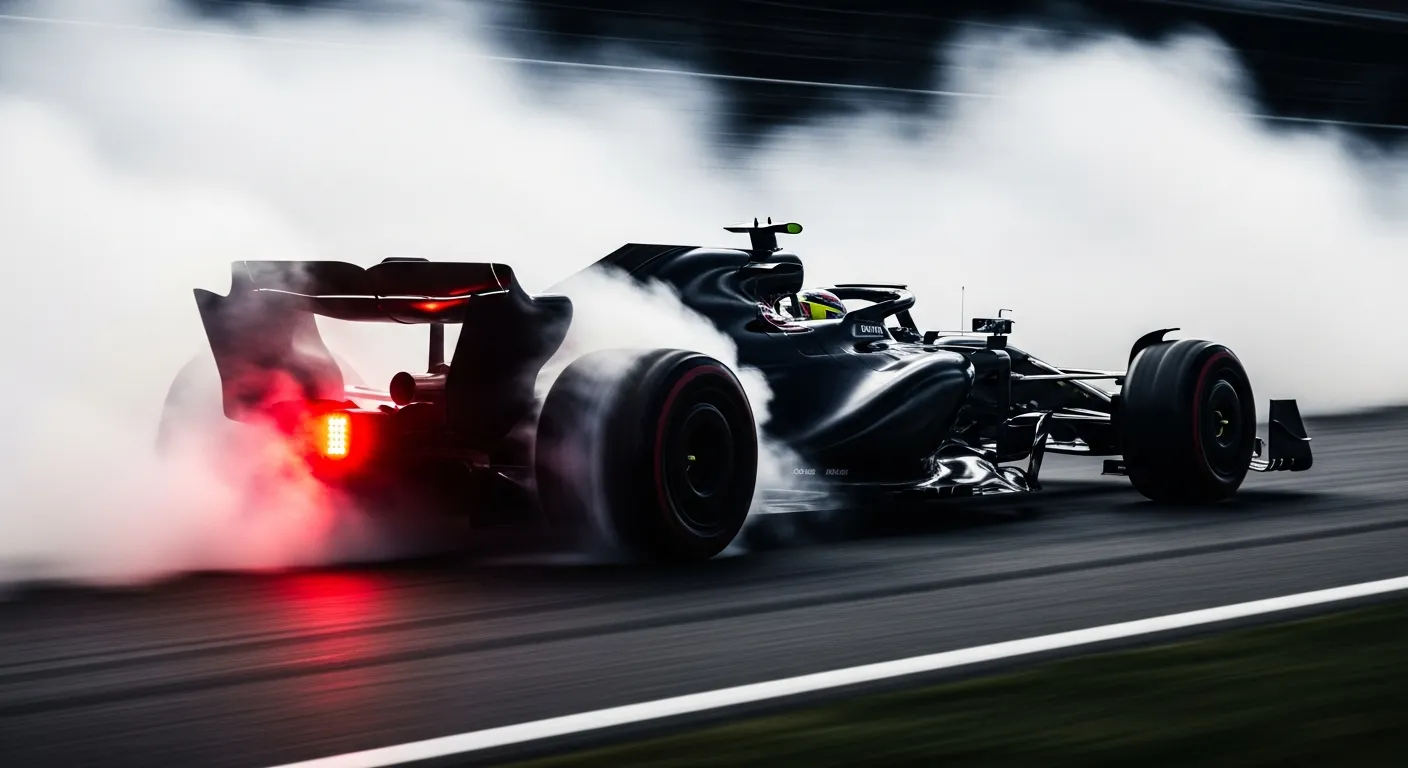
Lewis Hamilton's performance at the 2019 Spanish Grand Prix was a demonstration of strategic execution and outright pace, converting a P2 grid start into a commanding victory at the Circuit de Barcelona-Catalunya. From the moment the lights went out on May 12, 2019, Hamilton immediately seized the lead from his pole-sitting teammate Valtteri Bottas, establishing a rhythm that would define the entire 66-lap race. Driving for Mercedes AMG F1, Hamilton meticulously managed his pace and tire degradation, extending his advantage over the field. The race unfolded largely under his control, reflecting the dominant form of the Mercedes W10 chassis that season. His final race time of 1:35:50.443 underscored the precision of his drive, securing 25 points for the win.
The British driver further solidified his performance by setting the fastest lap of the race on lap 54, clocking a 1:18.492, which earned him an additional championship point, bringing his total for the weekend to 26. This display of pace was crucial, especially as a safety car period was triggered on lap 44 following a collision between [Lando Norris](/results/2021-red-bull-ring-lando-norris) and [Lance Stroll](/results/2021-red-bull-ring-lance-stroll). Hamilton expertly navigated the restart, maintaining his lead and quickly rebuilding his gap to Bottas, who finished second, completing a Mercedes 1-2. This outcome at the [Circuit de Barcelona-Catalunya](https://www.formula1.com/en/circuits/spain/Circuit_de_Barcelona-Catalunya.html), a track often considered a benchmark for car performance due to its mix of high-speed and technical sections, provided a clear indication of Mercedes' formidable package. Max Verstappen secured the final podium spot for Red Bull Racing, while Ferrari drivers Sebastian Vettel and Charles Leclerc finished P4 and P5 respectively, highlighting the competitive gap to Mercedes. Even a driver like [Pierre Gasly](/results/2021-red-bull-ring-pierre-gasly), who would later experience a different challenge at the 2021 Austrian Grand Prix, found himself further down the order in P6, underscoring the competitive landscape Hamilton navigated. The strategic depth and technical prowess required to consistently perform at this level are detailed by the [FIA — F1 World Championship](https://www.fia.com/events/fia-formula-one-world-championship) regulations. For a comprehensive overview of Formula 1's history and technical evolution, resources like [Wikipedia: Formula One](https://en.wikipedia.org/wiki/Formula_One) offer valuable context. Race results and detailed statistics for the 2019 season, and indeed future seasons like the [Jolpica/Ergast — 2026 season data](https://api.jolpi.ca/ergast/f1/2026.json), provide the raw data that underpins such analyses. The consistent performance demonstrated by Hamilton and Mercedes is a recurring theme in top-tier motorsport, often analyzed on the [Formula 1 — official site](https://www.formula1.com/en). This race was a testament to Hamilton's ability to extract maximum performance, even under pressure, a characteristic that defines many top-tier drivers, including those who may not have had the same machinery, as seen with [George Russell at the 2021 Austrian Grand Prix](/results/2021-red-bull-ring-george-russell) in a different era. The intricate details of race strategy and car development are continuously refined, as documented by various sources on the [Formula 1 — official site](https://www.formula1.com/en).
Verified race record · Ergast
Grid
P2
Finish
P1
Points
26
Laps
66
Constructor
Mercedes AMG F1
Status
Finished
Teammate that weekend
Valtteri Bottas
Grid P1 · Finish P2 · 18 pts
Championship · before vs after
Before round 5
P286 pts
After round 5
P1112 pts