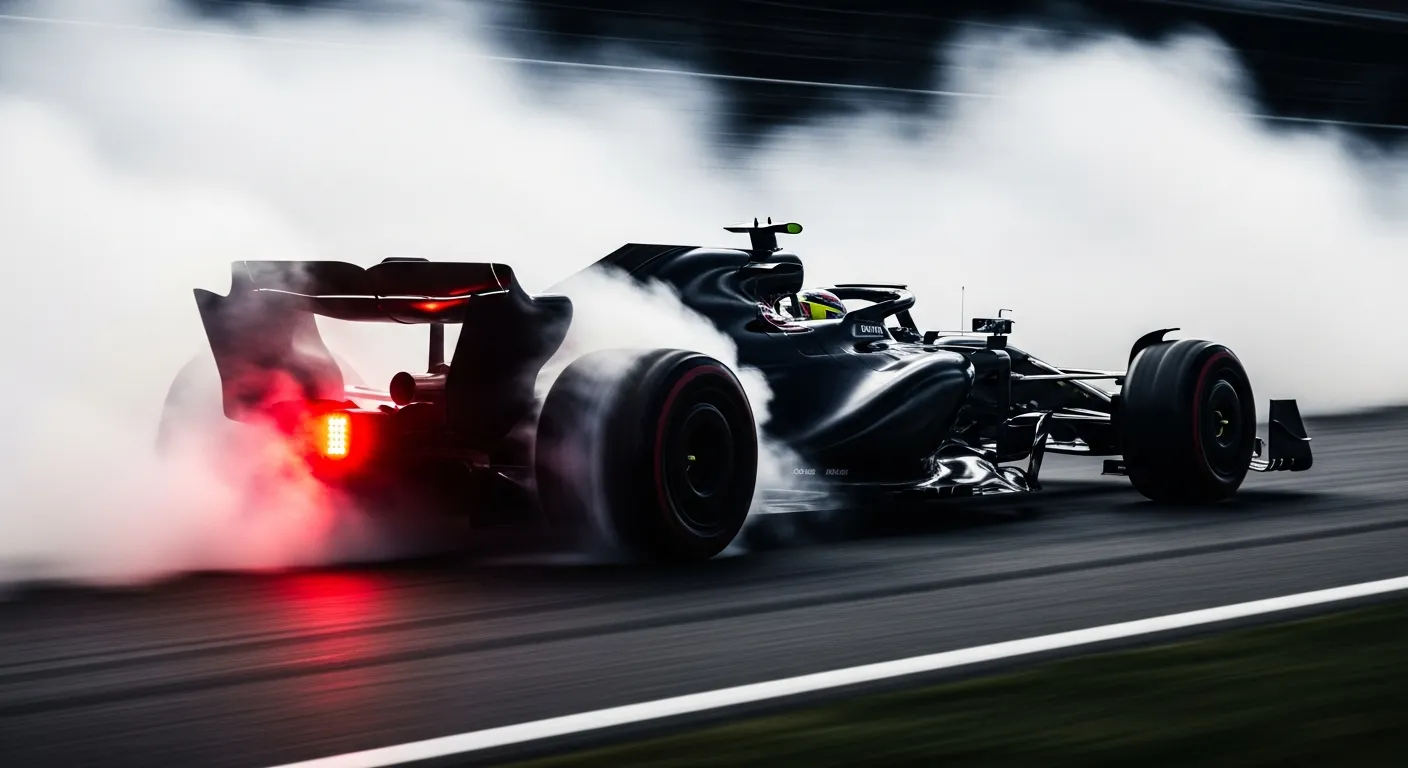
The 2021 Spanish Grand Prix at the Circuit de Barcelona-Catalunya saw Lewis Hamilton execute a masterclass in strategic racing, converting his pole position into a decisive victory against a determined Max Verstappen. Starting from the front of the grid, Hamilton initially lost the lead to Verstappen into Turn 1, setting the stage for a tactical battle between the Mercedes AMG F1 W12 and the Red Bull RB16B. The early phase of the race saw Verstappen maintain a narrow advantage, with both drivers managing their tires on the demanding [Circuit de Barcelona-Catalunya](https://www.formula1.com/en/racing/2021/Spain/Circuit.html) layout. The close proximity between the championship rivals underscored the intensity of the 2021 season, a theme that would persist throughout the year.
As the race progressed, Mercedes opted for an aggressive two-stop strategy for Hamilton. This decision proved pivotal. After his second pit stop on lap 42 for fresh medium compound tires, Hamilton rejoined the track behind both Verstappen and his Mercedes teammate, Valtteri Bottas, who ultimately secured a third-place finish. The fresh rubber allowed Hamilton to unleash a relentless pace, rapidly closing the gap to the leaders. This strategic gambit, a hallmark of top-tier [Formula 1](https://en.wikipedia.org/wiki/Formula_One) racing, showcased Mercedes' willingness to take calculated risks in their pursuit of victory. The subsequent drive to catch Verstappen was a demonstration of both raw speed and precise [tire management](https://www.formula1.com/en/latest/article.formula-1-tyres-explained-everything-you-need-to-know-about-the-pirelli-p-zeros.4t7qI47s0t3S3132qQ001.html), reminiscent of the strategic depth seen in races like [George Russell at the 2022 Austrian Grand Prix](/results/2022-red-bull-ring-george-russell). Hamilton's fastest lap of 1:20.665 on lap 54, though not the fastest of the race (that honor went to Verstappen with a 1:18.149 on lap 62), was crucial in enabling his pursuit. He ultimately made the decisive overtake on Verstappen on lap 60, reclaiming the lead and demonstrating the potent combination of car performance and driver skill. This strategic depth is often analyzed in comprehensive [F1 race data](https://api.jolpi.ca/ergast/f1/2026.json) reviews, highlighting the fine margins that define success in the sport.
Hamilton then managed the remaining laps to cross the finish line after 66 laps with a total time of 1:33:07.680, securing all 25 points for the win. The race was a clear indicator of the intensifying championship battle, with Red Bull Racing pushing Mercedes AMG F1 at every turn. The pressure was constant, from the initial start where Hamilton was challenged for grid position 1, through to the final laps. The [FIA's F1 World Championship](https://www.fia.com/events/fia-formula-one-world-championship) rules allow for such strategic diversity, making each Grand Prix a unique challenge. Veteran drivers like [Fernando Alonso at the 2022 Austrian Grand Prix](/results/2022-red-bull-ring-fernando-alonso) also understand the importance of adapting strategies mid-race, a skill Hamilton displayed expertly. The performance underlined Hamilton's ability to adapt and execute under pressure, a trait that has defined much of his career. Even drivers like [Pierre Gasly at the 2022 Austrian Grand Prix](/results/2022-red-bull-ring-pierre-gasly) face similar strategic dilemmas, albeit often further down the field, emphasizing the universal nature of race strategy. The execution of the two-stop plan, coupled with Hamilton's pace, allowed Mercedes to dictate the race's conclusion despite losing the initial advantage. This victory was not just about speed, but about the intricate dance between driver, team, and data, a constant in modern [Formula 1 racing](https://www.formula1.com/en).
Verified race record · Ergast
Grid
P1
Finish
P1
Points
25
Laps
66
Constructor
Mercedes AMG F1
Status
Finished
Teammate that weekend
Valtteri Bottas
Grid P3 · Finish P3 · 15 pts
Championship · before vs after
Before round 4
P169 pts
After round 4
P194 pts