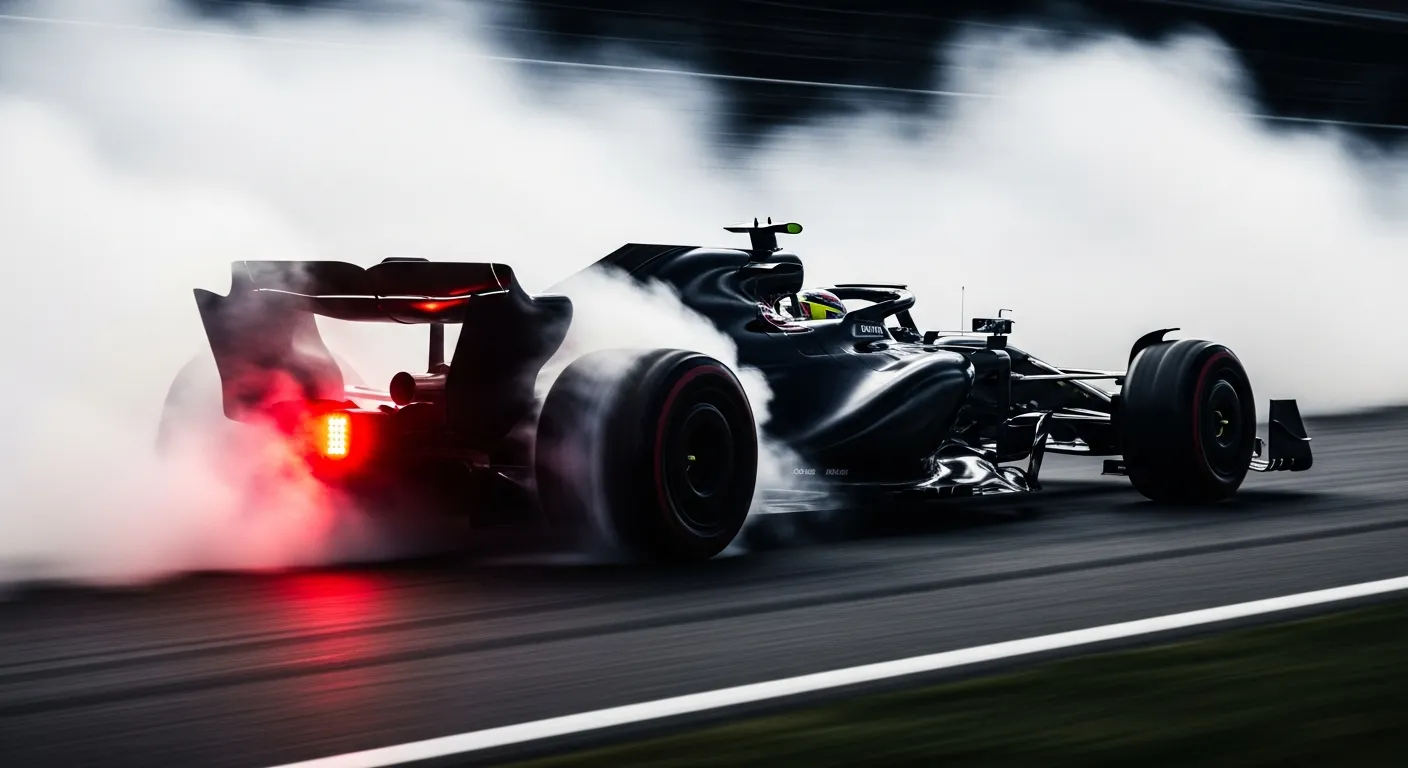
George Russell's drive at the 2019 São Paulo Grand Prix was a demonstration of consistent race completion for Williams Grand Prix Engineering, improving six positions from his starting grid slot amidst a race punctuated by multiple safety cars and high-profile incidents. Starting from 18th on the grid, Russell navigated the challenging Autódromo José Carlos Pace circuit, ultimately crossing the finish line in 12th place after completing all 71 laps. This performance, while not yielding points, marked a significant improvement over his teammate Robert Kubica, who finished 16th and a lap down, highlighting Russell's ability to extract the maximum from the FW42 chassis even in its challenging configuration. The young British driver's fastest lap of 1:13.752 on lap 57, ranking 19th overall, reflected the car's inherent limitations but also his consistent pace management throughout the Grand Prix.
The race itself was a chaotic affair, providing ample opportunity for drivers to gain positions through attrition and strategic calls. Max Verstappen secured the victory, with an unexpected podium featuring Pierre Gasly in second and Carlos Sainz Jr. in third, the latter having started from 20th after a grid penalty. Incidents throughout the race, including a collision between the two Ferrari drivers, Sebastian Vettel and Charles Leclerc, which led to both retiring on lap 65, and a late-race penalty for Lewis Hamilton, reshaped the final standings. Russell's ability to maintain a clean race and bring the car home in 12th, particularly given the car's inherent pace limitations, underscored his developing race craft. For a deeper understanding of the sport's technical regulations and sporting codes, the [FIA — F1 World Championship](https://www.fia.com/events/fia-formula-one-world-championship) provides comprehensive details. Analyzing historical race data, such as that available from [Jolpica/Ergast — 2026 season data](https://api.jolpi.ca/ergast/f1/2026.json), helps illustrate these performance nuances. Russell's consistent finish contrasted with the misfortunes of others, including Valtteri Bottas, who retired due to oil pressure on lap 51, and Lance Stroll, whose race ended prematurely with a suspension issue. This race provided valuable experience for Russell, a consistent theme in his rookie year, much like the challenging scenarios faced by [Max Verstappen at the 2021 Chinese Grand Prix](/results/2021-shanghai-max-verstappen) or the strategic battles involving [Charles Leclerc at the 2021 Chinese Grand Prix](/results/2021-shanghai-charles-leclerc). His measured approach allowed him to capitalize on the unfolding drama, moving up the order as competitors faltered. The overall landscape of Formula 1, as documented on [Wikipedia: Formula One](https://en.wikipedia.org/wiki/Formula_One), often sees such races become pivotal learning experiences for emerging talents. Further details on the 2019 season can be explored on the [Formula 1 — official site](https://www.formula1.com/en), providing context for individual driver performances. This particular event, held at the historic [Autódromo José Carlos Pace](https://www.formula1.com/en/circuits/brazil/interlagos.html) circuit, often delivers unpredictable outcomes, a characteristic well-documented by [Formula 1's official archives](https://www.formula1.com/en/latest/all). Even established drivers like [Lewis Hamilton at the 2021 Chinese Grand Prix](/results/2021-shanghai-lewis-hamilton) have faced similar race-day challenges and unpredictable results.
Verified race record · Ergast
Grid
P18
Finish
P12
Points
0
Laps
71
Constructor
Williams Grand Prix Engineering
Status
Finished
Teammate that weekend
Robert Kubica
Grid P19 · Finish P16 · 0 pts
Championship · before vs after
Before round 20
P200 pts
After round 20
P200 pts