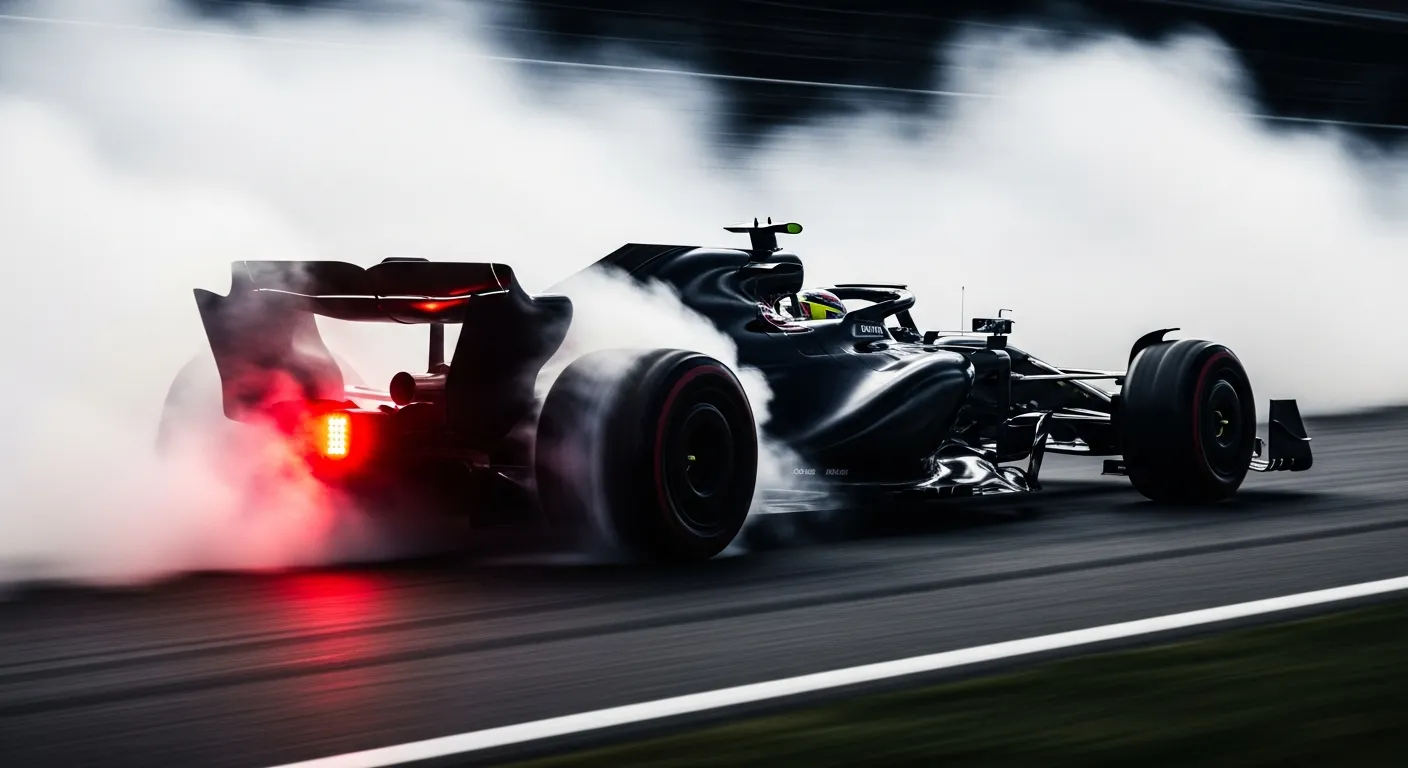
Pierre Gasly's 2022 São Paulo Grand Prix campaign for Scuderia AlphaTauri saw him navigate the Autódromo José Carlos Pace to a 14th-place finish, a four-position drop from his grid slot. Starting from P10, a respectable position earned in qualifying, the French driver aimed to convert this into points, a task that proved increasingly difficult for the Italian outfit as the 2022 season progressed. The Interlagos circuit, known for its undulating nature and unpredictable weather, often presents opportunities for strategic gains or losses, and on this occasion, the race unfolded in a manner that saw Gasly unable to hold his initial advantage. The AT03 chassis, while capable of flashes of pace, struggled with consistency in race trim, a pattern observed throughout [Scuderia AlphaTauri's 2022 season](https://www.formula1.com/en/teams/AlphaTauri/2022.html).
Over the 71 laps of the Grand Prix, Gasly maintained a steady but ultimately unrewarding pace. His fastest lap, a 1:15.327 on lap 64, positioned him 12th quickest overall, indicating that the car had moments of performance, particularly towards the end of stints when fuel loads were lighter. However, the overall race pace was insufficient to challenge the cars ahead, particularly those from the midfield rivals who demonstrated stronger Sunday form. This outcome contrasted with his earlier career performances, such as his strong showing at the [2019 British Grand Prix](/results/2019-silverstone-pierre-gasly), where he secured a fourth-place finish for the same team, albeit under its previous Toro Rosso guise. The complexities of [Formula 1 — official site](https://www.formula1.com/en) regulations and car development cycles often mean that a team's competitiveness can fluctuate significantly year-on-year, and 2022 was a testament to this for AlphaTauri. Further down the order, his teammate Yuki Tsunoda finished 17th, one lap down, underscoring the team's collective struggle at this penultimate round of the championship. The performance at the [Autódromo José Carlos Pace](https://www.formula1.com/en/racing/2022/Brazil/Circuit.html) was a stark reminder of the competitive landscape, where even minor performance deficits can lead to significant drops in position over a full race distance. Gasly, a driver with a proven track record, including a memorable win at Monza in 2020, found himself battling in a congested midfield. For context, drivers like [Alexander Albon at the 2019 British Grand Prix](/results/2019-silverstone-alex-albon) also experienced the challenge of converting qualifying pace into race results in a competitive field. Understanding the nuances of F1 racing requires a deep dive into [FIA — F1 World Championship](https://www.fia.com/events/fia-formula-one-world-championship) rules and technical directives, which dictate everything from car design to race procedures. The data from races, such as that provided by [Jolpica/Ergast — 2026 season data](https://api.jolpi.ca/ergast/f1/2026.json), allows analysts to track these performance shifts. Looking back, drivers like [Carlos Sainz at the 2019 British Grand Prix](/results/2019-silverstone-carlos-sainz) have demonstrated how strategic decisions and consistent driving can yield strong results even when not starting from the very front. The strategic choices made by teams, particularly concerning tire management and pit stop timings, are critical, as outlined in historical analyses available on [Wikipedia: Formula One](https://en.wikipedia.org/wiki/Formula_One). The São Paulo Grand Prix served as a data point in a season that saw AlphaTauri unable to consistently replicate its earlier successes.
Verified race record · Ergast
Grid
P10
Finish
P14
Points
0
Laps
71
Constructor
Scuderia AlphaTauri
Status
Finished
Teammate that weekend
Yuki Tsunoda
Grid P0 · Finish P17 · 0 pts
Championship · before vs after
Before round 21
P1423 pts
After round 21
P1423 pts