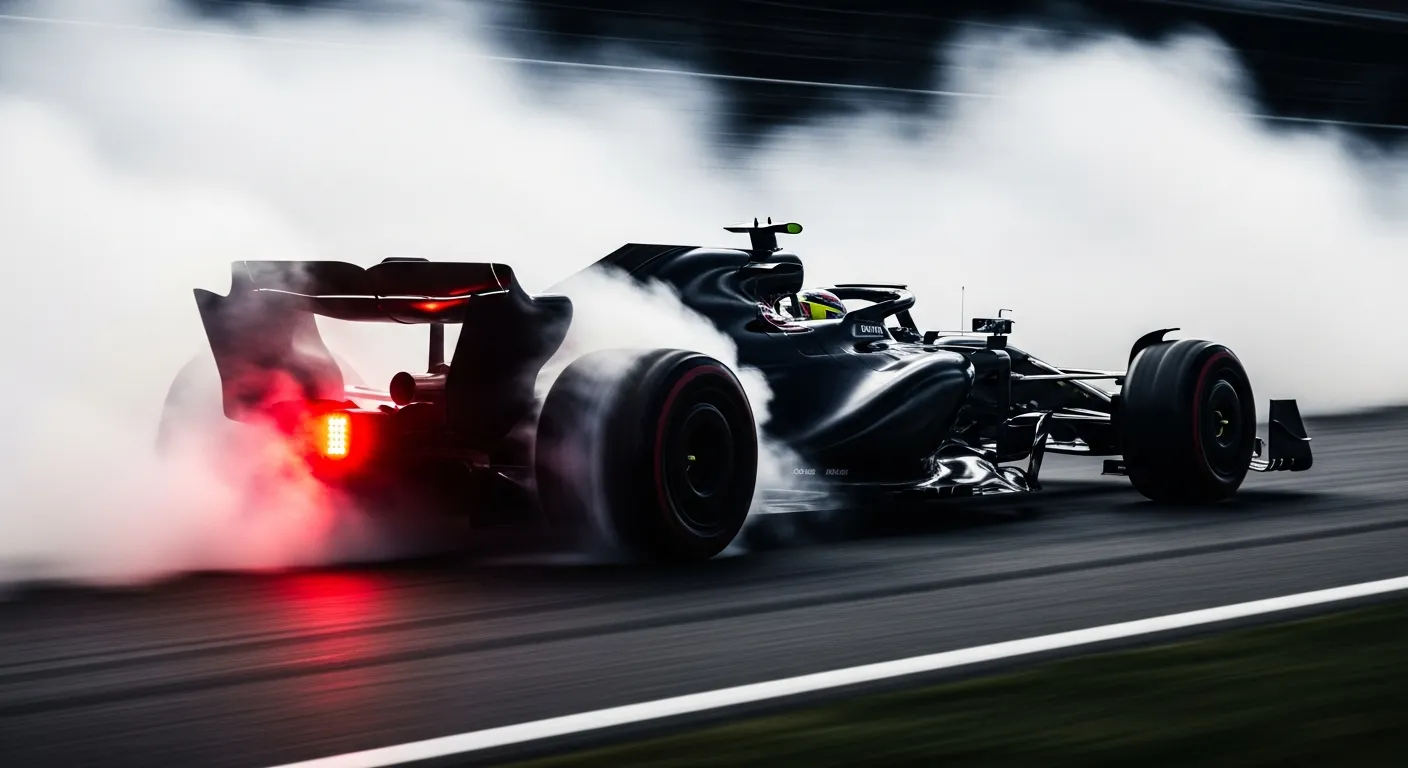
Pierre Gasly's drive at the 2024 São Paulo Grand Prix on November 3 was a masterclass in strategic execution and consistent pace, culminating in a third-place finish that anchored Alpine's impressive double podium. Starting from 13th on the grid at the Autódromo José Carlos Pace, Gasly navigated the challenging Interlagos circuit with precision, completing all 69 laps of the race. His ascent through the field, gaining ten positions, was a testament to both his individual skill and the Alpine F1 Team's operational efficiency. He crossed the finish line in a time of 2:07:16.962, a performance that underscored the team's upward trajectory and the effectiveness of their car package on a circuit known for its elevation changes and demanding corners.
The race unfolded as a particularly significant event for the French constructor. Gasly's teammate, Esteban Ocon, also delivered an exceptional performance, securing a second-place finish. This double podium marked a formidable collective effort for Alpine, a team that has often sought to establish itself consistently among the front-runners. Achieving such a result at a venue like Interlagos, which frequently produces unpredictable races, speaks volumes about their strategic acumen and execution. Gasly demonstrated strong late-race pace, recording his fastest lap, a 1:21.645, on lap 66. This time ranked as the fifth quickest of the entire Grand Prix, indicating his ability to manage tires and extract maximum performance when it mattered most. Such consistent speed in the closing stages is a critical component of modern [Formula 1 — official site](https://www.formula1.com/en) racing, often distinguishing podium contenders from the rest of the field. The strategic depth required to achieve such a result, particularly from a mid-grid start, echoes the determined drives seen from experienced competitors like [Fernando Alonso at the 2015 Mexico City Grand Prix](/results/2015-mexico-city-fernando-alonso), who consistently maximizes his machinery under pressure. The São Paulo Grand Prix provided a compelling example of how a driver can significantly improve their starting position, a feat that recalls the early career breakthroughs of drivers such as [Max Verstappen at the 2015 Mexico City Grand Prix](/results/2015-mexico-city-max-verstappen), who also demonstrated a knack for recovery drives from challenging grid slots. Gasly's impressive climb from 13th to a podium spot underscores the dynamic and unpredictable nature of F1, where every decision and every lap can alter the outcome, a principle deeply embedded in the sport's [Wikipedia: Formula One](https://en.wikipedia.org/wiki/Formula_One) history, which details the evolution of race strategy. The comprehensive data sets that track F1 performance, including those used by [Jolpica/Ergast — 2026 season data](https://api.jolpi.ca/ergast/f1/2026.json) for future season analysis, would undoubtedly highlight the efficiency of Gasly's tire management, overtake strategy, and overall race craft throughout this event. This strong result for Alpine, with both cars on the podium, provides a significant boost for the team as the season progresses, a scenario that top teams like Mercedes AMG F1, with drivers such as [Lewis Hamilton at the 2015 Mexico City Grand Prix](/results/2015-mexico-city-lewis-hamilton), have historically strived to achieve for championship contention and constructor dominance.
Verified race record · Ergast
Grid
P13
Finish
P3
Points
15
Laps
69
Constructor
Alpine F1 Team
Status
Finished
Teammate that weekend
Esteban Ocon
Grid P4 · Finish P2 · 18 pts
Championship · before vs after
Before round 21
P169 pts
After round 21
P1226 pts