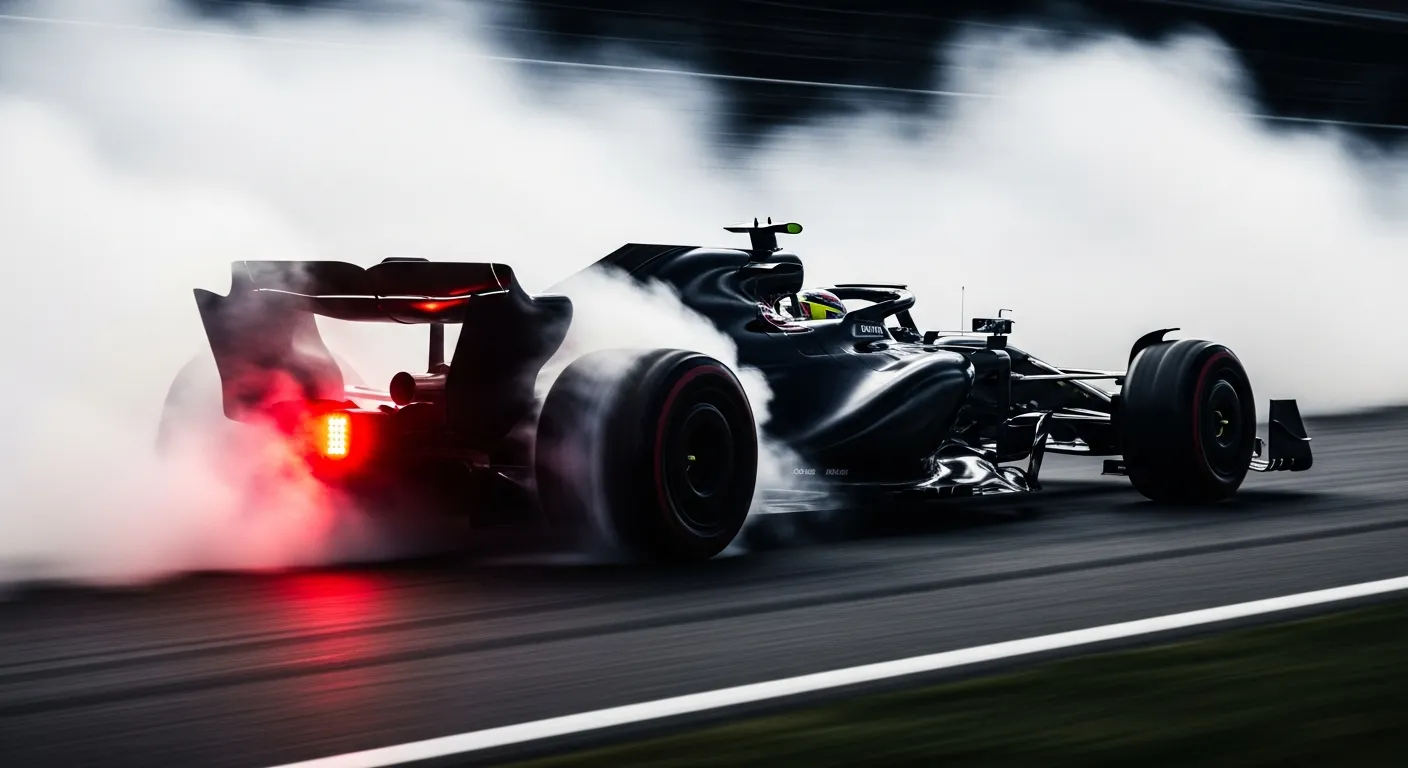
Pierre Gasly's performance at the 2023 São Paulo Grand Prix was a calculated ascent through the field, converting a P15 grid slot into a P7 finish for Alpine, a significant points haul at a crucial juncture in the season. The race at the iconic [Autódromo José Carlos Pace](https://www.formula1.com/en/circuits/brazil/interlagos.html) on November 5, 2023, began with immediate drama. A multi-car incident on the opening lap, involving Kevin Magnussen and Alexander Albon, quickly brought out the red flag, effectively resetting the race and offering early opportunities for those who could navigate the chaos. Charles Leclerc also retired before completing a lap due to hydraulics. Gasly, starting from the middle of the pack in 15th, demonstrated robust race craft to avoid the initial incidents, positioning himself for a strong recovery once the race resumed. The early stoppage meant a strategic reset for all teams, providing a clean slate for Alpine to recalibrate their approach for the remaining 71 laps.
Upon the restart, Gasly systematically worked his way forward, showcasing consistent pace and effective tire management over the full race distance. His Alpine A523 proved capable of sustained performance, allowing him to climb eight positions from his initial grid slot to cross the finish line in 7th, securing 6 valuable points for the French constructor. This result was a clear highlight for Gasly, especially when contrasted with his teammate, Esteban Ocon, who started P14 and finished P10, a lap down on the leaders, collecting a single point. Gasly's fastest lap of 1:14.521 on lap 48, though ranked 11th overall, underscored his consistent effort and ability to extract performance when needed, particularly in the latter stages of the race. His total race time of 1:57:44.987 placed him ahead of Lewis Hamilton, who finished 8th, and just behind Carlos Sainz Jr. in 6th, illustrating the intense competition in the midfield. The strategic decisions made by the Alpine pit wall, combined with Gasly's precise execution, were instrumental in this strong result, particularly considering the challenging nature of Interlagos and the competitive density of the field. The ability to manage tire degradation and maintain focus throughout such a dynamic race was key to his successful points finish, a testament to the comprehensive approach required in modern [Formula One](https://en.wikipedia.org/wiki/Formula_One) racing. For a broader perspective on driver performances across different circuits, one might look at results like [Lando Norris at the 2024 Qatar Grand Prix](/results/2024-lusail-lando-norris) or [Fernando Alonso at the 2024 Qatar Grand Prix](/results/2024-lusail-fernando-alonso), both of whom also demonstrated strong racecraft in challenging conditions. Detailed analysis of such performances often relies on comprehensive race data, which can be explored via resources like [Jolpica/Ergast — 2026 season data](https://api.jolpi.ca/ergast/f1/2026.json). Another strong drive that weekend was from [Lance Stroll at the 2024 Qatar Grand Prix](/results/2024-lusail-lance-stroll), showcasing how different drivers adapt to varying race demands.
Verified race record · Ergast
Grid
P15
Finish
P7
Points
6
Laps
71
Constructor
Alpine F1 Team
Status
Finished
Teammate that weekend
Esteban Ocon
Grid P14 · Finish P10 · 1 pts
Championship · before vs after
Before round 20
P1056 pts
After round 20
P1162 pts