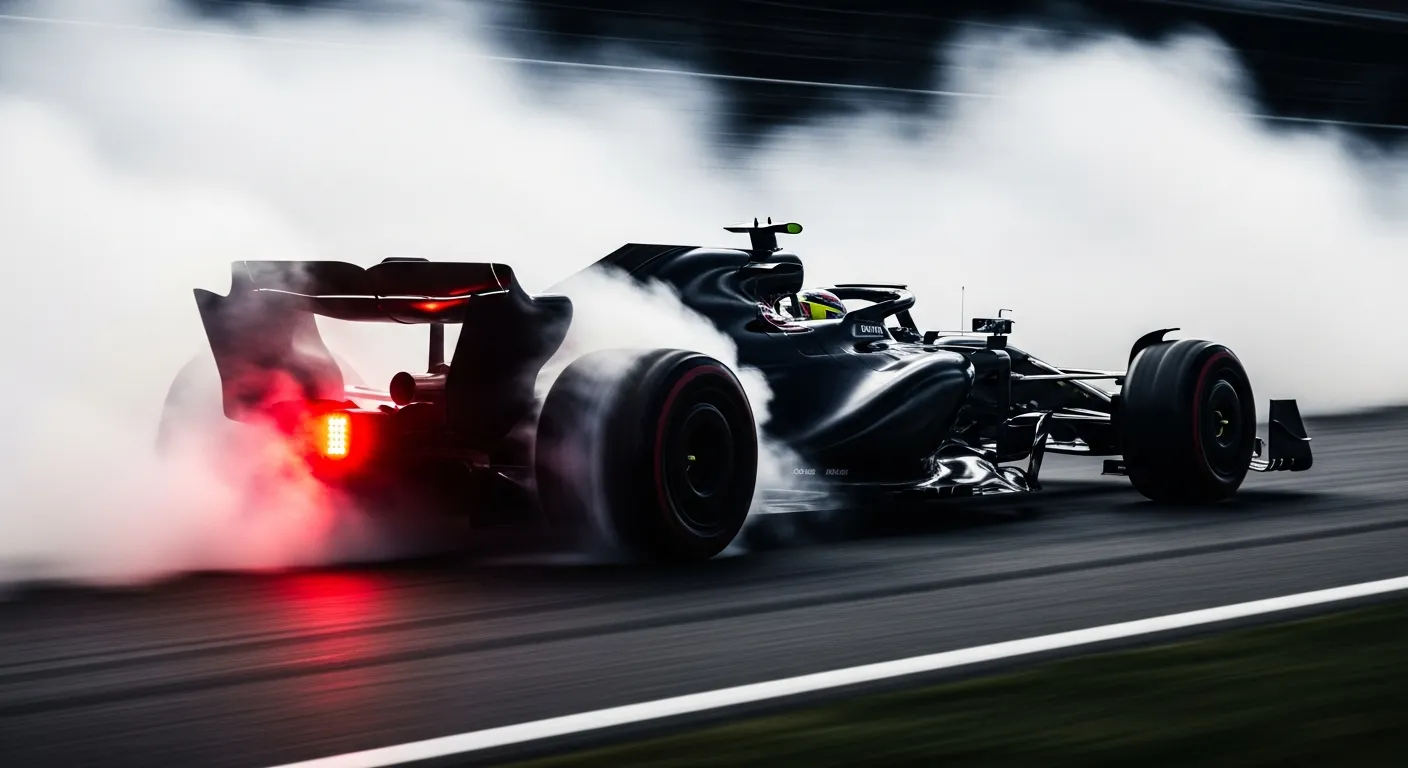
Lewis Hamilton's performance at the 2022 Monaco Grand Prix was a testament to managing the unpredictable conditions of the street circuit, as he maintained his starting grid position through a race marked by delays and strategic calls. Starting from the eighth spot on the grid, the Mercedes AMG F1 driver completed all 64 laps of the rain-affected event, finishing in the same eighth position and securing 4 points for the team. The race itself was a complex affair, initially delayed due to heavy rain, which significantly influenced tire strategy and track conditions, testing the adaptability of every competitor on the narrow Monte Carlo streets. Hamilton's extensive experience on circuits like Monaco, where precision and patience are paramount, was evident as he navigated the tight confines and evolving grip levels.
Throughout the race, Hamilton engaged in battles for track position, notably with Fernando Alonso, who finished just ahead in seventh. The Mercedes W13, still grappling with the new ground effect regulations of the 2022 season, showed glimpses of pace, particularly with Hamilton's fastest lap of 1:17.203 on lap 51, which placed him ninth overall in fastest lap rankings for the event. This result contrasted with his teammate, George Russell, who started P6 and managed to climb to P5, scoring 10 points for Mercedes. The differing outcomes highlighted the fine margins and strategic gambles inherent in Monaco's unique environment. Hamilton's drive, while not a podium finish, contributed to Mercedes' constructor points tally in a season where the team was diligently working to unlock the W13's full potential. Fans can find comprehensive details on the race and championship standings on the [Formula 1 — official site](https://www.formula1.com/en). The FIA's critical role in overseeing such events, including the implementation of sporting regulations, is detailed on the [FIA — F1 World Championship](https://www.fia.com/events/fia-formula-one-world-championship) page.
The strategic nuances of Monaco often draw comparisons to other demanding circuits where driver skill and team strategy converge. For instance, the tactical battles seen here share similarities with races like the [Fernando Alonso at the 2017 Hungarian Grand Prix](/results/2017-hungaroring-fernando-alonso), where managing track position and tire wear proved critical on a tight layout. Hamilton's drive was a consistent effort, avoiding the significant incidents that befell others on the day, such as Mick Schumacher's substantial accident which brought out a red flag. The detailed race data, including results for all drivers and lap times, is typically compiled by authoritative bodies like Ergast, which provides extensive historical [Jolpica/Ergast — 2026 season data](https://api.jolpi.ca/ergast/f1/2026.json) for in-depth analysis of past seasons. Understanding the broader context of Formula 1's evolution, including its technical and sporting frameworks, can be explored through resources like [Wikipedia: Formula One](https://en.wikipedia.org/wiki/Formula_One), offering a foundational overview of the sport. The challenges of Monaco often mean that drivers like [Carlos Sainz at the 2017 Hungarian Grand Prix](/results/2017-hungaroring-carlos-sainz), who achieved a strong second place in this Monaco race, must execute near-perfect strategies to maximize their potential. Even drivers further down the field, such as [Esteban Ocon at the 2017 Hungarian Grand Prix](/results/2017-hungaroring-esteban-ocon), face immense pressure to extract every ounce of performance and avoid errors. Analyzing individual race performances provides crucial insight into the season's broader narrative, a constant theme in the sport. Further information regarding the technical specifications of F1 cars and race procedures can be found on the [Formula 1 — official site](https://www.formula1.com/en). The governance and rules for the F1 World Championship are consistently updated and enforced by the [FIA — F1 World Championship](https://www.fia.com/events/fia-formula-one-world-championship), ensuring fair competition across all events.
Verified race record · Ergast
Grid
P8
Finish
P8
Points
4
Laps
64
Constructor
Mercedes AMG F1
Status
Finished
Teammate that weekend
George Russell
Grid P6 · Finish P5 · 10 pts
Championship · before vs after
Before round 7
P646 pts
After round 7
P650 pts