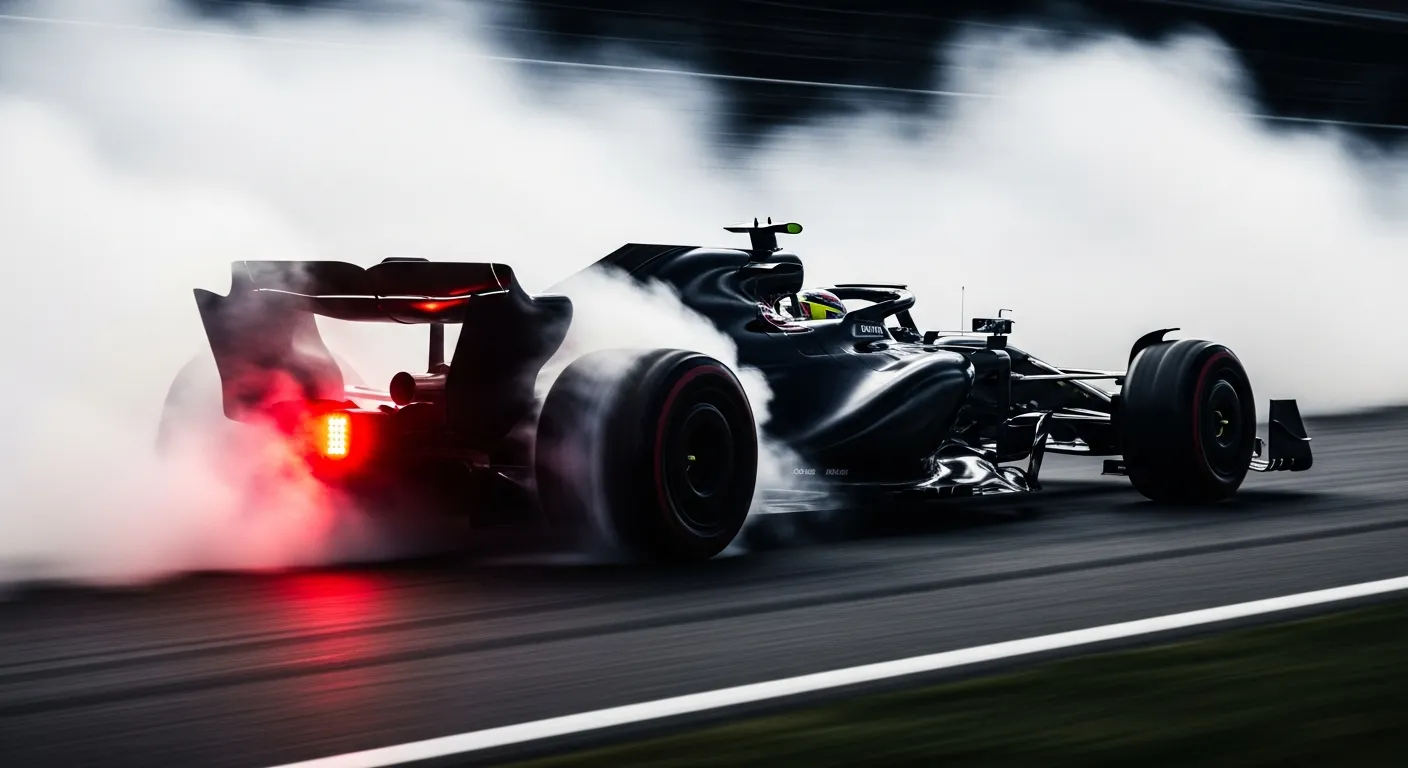
George Russell's performance at the 2023 Austrian Grand Prix underscored the dynamic nature of midfield battles on a sprint weekend, culminating in a P7 finish for Mercedes AMG F1 after starting from the 11th position on the grid. The British driver executed a strategic race at the Red Bull Ring, navigating the demanding circuit over 71 laps. His final race time of 1:26:22.010 secured 6 points, a valuable contribution to the constructor's championship. This result saw Russell outmaneuver his teammate, Lewis Hamilton, who finished in P8, highlighting Russell's ability to extract performance even when starting further back. The Mercedes W14, while showing flashes of pace, required a nuanced approach to tire management throughout the race, a common challenge at the high-energy Red Bull Ring. For a deeper dive into the technical aspects of Formula 1 racing, the [Formula 1 — official site](https://www.formula1.com/en) offers comprehensive analysis of car development and performance.
The progression from an 11th-place grid slot to a P7 finish was a testament to Russell's racecraft and the team's strategic calls, particularly given the tight competition. His fastest lap of 1:09.283 on lap 49, ranking 10th overall, indicated periods where the W14 was able to demonstrate competitive speed. The Austrian Grand Prix, a fixture on the [FIA — F1 World Championship](https://www.fia.com/events/fia-formula-one-world-championship) calendar, often presents unique challenges due to its elevation changes and short lap times, making overtakes crucial and strategic pit windows paramount. Compared to competitors like Ferrari and McLaren, Russell’s race showcased the tight margins in the midfield, where even minor errors can significantly alter outcomes. For instance, the intense midfield battles seen at circuits like Baku, as demonstrated by [Alexander Albon at the 2024 Azerbaijan Grand Prix](/results/2024-baku-alex-albon) or [Esteban Ocon at the 2024 Azerbaijan Grand Prix](/results/2024-baku-esteban-ocon), often hinge on similar strategic nuances and driver execution. The extensive data from such events, including detailed lap times and sector analysis, is meticulously recorded, much like the [Jolpica/Ergast — 2026 season data](https://api.jolpi.ca/ergast/f1/2026.json) provides a historical record of race performances. Understanding the broader context of [Wikipedia: Formula One](https://en.wikipedia.org/wiki/Formula_One) history reveals how critical consistent points finishes are for a driver's championship aspirations. Russell's drive was a methodical effort to maximize the car's potential on a weekend where Mercedes faced stiff competition, particularly from the resurgent McLaren of Lando Norris, who finished P4, and Ferrari's Charles Leclerc and Carlos Sainz Jr., who took P2 and P6 respectively. The detailed race results are always available on the [official Formula 1 results page](https://www.formula1.com/en/results.html) for specific seasons. The strategic considerations involved in a Grand Prix weekend, particularly concerning tire compounds and pit stop windows, are pivotal. The performance of drivers like [Carlos Sainz at the 2024 Azerbaijan Grand Prix](/results/2024-baku-carlos-sainz) further illustrates the fine margins at play in the upper midfield, emphasizing the continuous development cycle that teams undergo, as detailed in various [F1 technical regulations](https://www.fia.com/regulation/category/110) documents.
Verified race record · Ergast
Grid
P11
Finish
P7
Points
6
Laps
71
Constructor
Mercedes AMG F1
Status
Finished
Teammate that weekend
Lewis Hamilton
Grid P5 · Finish P8 · 4 pts
Championship · before vs after
Before round 9
P665 pts
After round 9
P772 pts