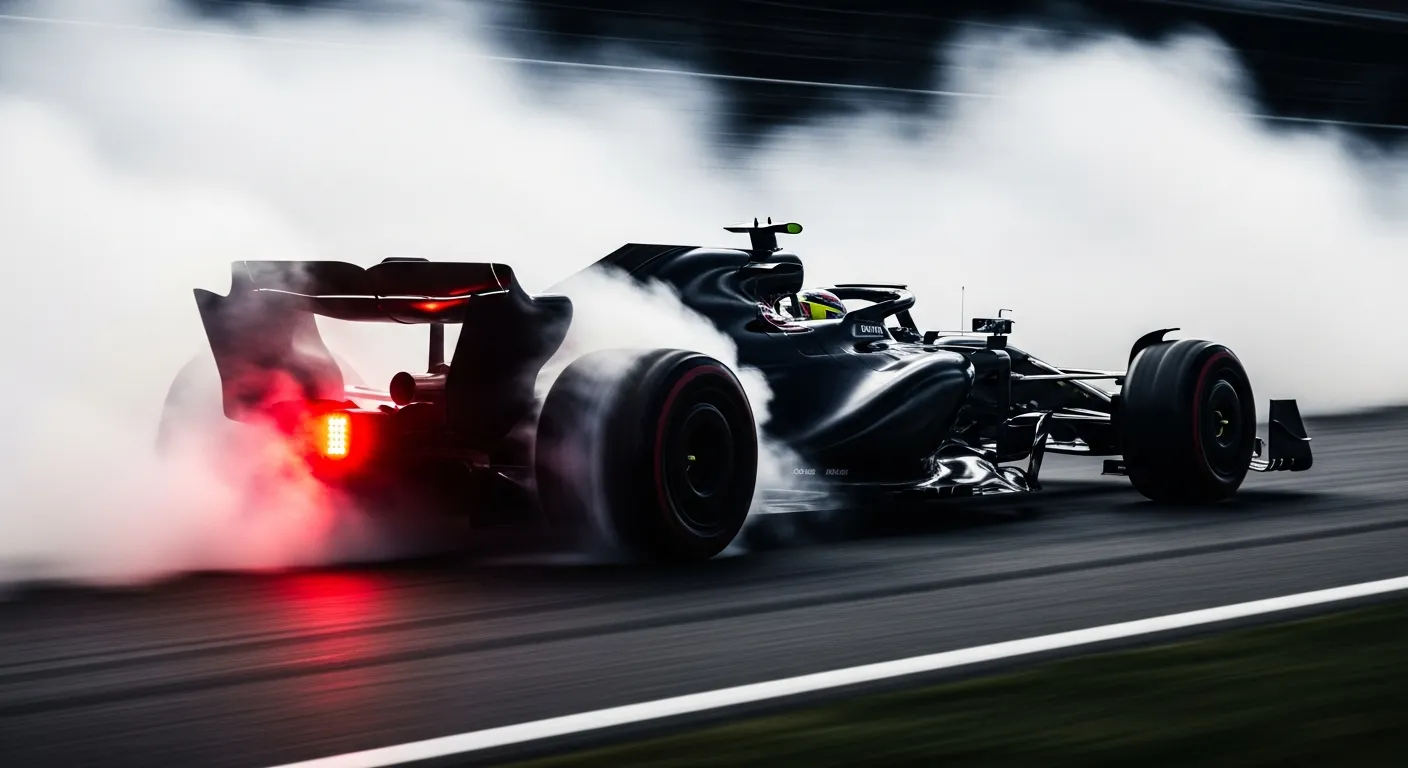
Charles Leclerc's performance at the 2023 Saudi Arabian Grand Prix was a measured recovery drive, mitigating the impact of a grid penalty and extracting valuable points for Scuderia Ferrari on the demanding Jeddah Corniche Circuit. Starting from P12, the Monégasque driver executed a strategic race, steadily making progress through the field over 50 laps. His final race time of 1:21:58.056 secured him a P7 finish, adding 6 points to his championship tally. This result, while not a podium, represented a solid effort to maximize the outcome after a challenging qualifying session that saw him start outside the top ten due to a control electronics penalty. The Jeddah Corniche Circuit, known for its high-speed sections and tight corners, demands precision, and Leclerc demonstrated consistent pace, recording his fastest lap of 1:33.056 on lap 47, which ranked as the seventh quickest overall in the race. This demonstrated an ability to manage tire degradation while still pushing for lap time in the latter stages of the event, a crucial aspect of [Formula 1 — official site](https://www.formula1.com/en) competition.
The race unfolded with Ferrari's strategy aiming to optimize their package, particularly given the grid positions. Leclerc's teammate, Carlos Sainz Jr., started from P4 and finished P6, just ahead of Leclerc, securing 8 points. This close proximity in finishing positions, despite differing starting points, indicated a consistent performance bracket for the Scuderia at this event. The combined effort saw Ferrari secure a double points finish, a crucial outcome in the early stages of the season, especially when considering the competitive landscape. For a deeper dive into the broader championship picture and the intricacies of team strategies, the [Formula 1 — official site](https://www.formula1.com/en) offers comprehensive standings and race reports. Leclerc's drive in Jeddah contrasted with the dominant pace shown by Red Bull, as evidenced by the race winner Sergio Pérez and his teammate Max Verstappen's charge from P15 to P2. Understanding the technical regulations that govern such performances can be found on the [FIA — F1 World Championship](https://www.fia.com/events/fia-formula-one-world-championship) page, which details the framework all teams operate within. Leclerc’s ability to climb five positions from his starting grid slot underscores his race craft and strategic awareness, a consistent trait seen in drivers like [Charles Leclerc at the 2025 Australian Grand Prix](/results/2025-albert-park-charles-leclerc) in future seasons, where consistent point scoring is vital. Analyzing historical race data, such as that provided by [Jolpica/Ergast — 2026 season data](https://api.jolpi.ca/ergast/f1/2026.json), often highlights these strategic battles and driver performances across different circuits. The nuances of Formula 1 racing, from car development to track-specific setups, are complex, as explored in detail on [Wikipedia: Formula One](https://en.wikipedia.org/wiki/Formula_One). Further historical context on the sport's evolution is also available on [Wikipedia: Formula One](https://en.wikipedia.org/wiki/Formula_One). Comparing this performance to other top drivers, such as [Max Verstappen at the 2025 Australian Grand Prix](/results/2025-albert-park-max-verstappen) or [Lewis Hamilton at the 2025 Australian Grand Prix](/results/2025-albert-park-lewis-hamilton), provides context on the competitive landscape and the relative performance of the Ferrari SF-23. The team’s focus remains on refining the car to consistently challenge for higher positions, a task that requires continuous development and strategic execution throughout the season, as detailed on the [Formula 1 — official site](https://www.formula1.com/en).
Verified race record · Ergast
Grid
P12
Finish
P7
Points
6
Laps
50
Constructor
Scuderia Ferrari
Status
Finished
Teammate that weekend
Carlos Sainz Jr.
Grid P4 · Finish P6 · 8 pts
Championship · before vs after
Before round 2
P80 pts
After round 2
P86 pts