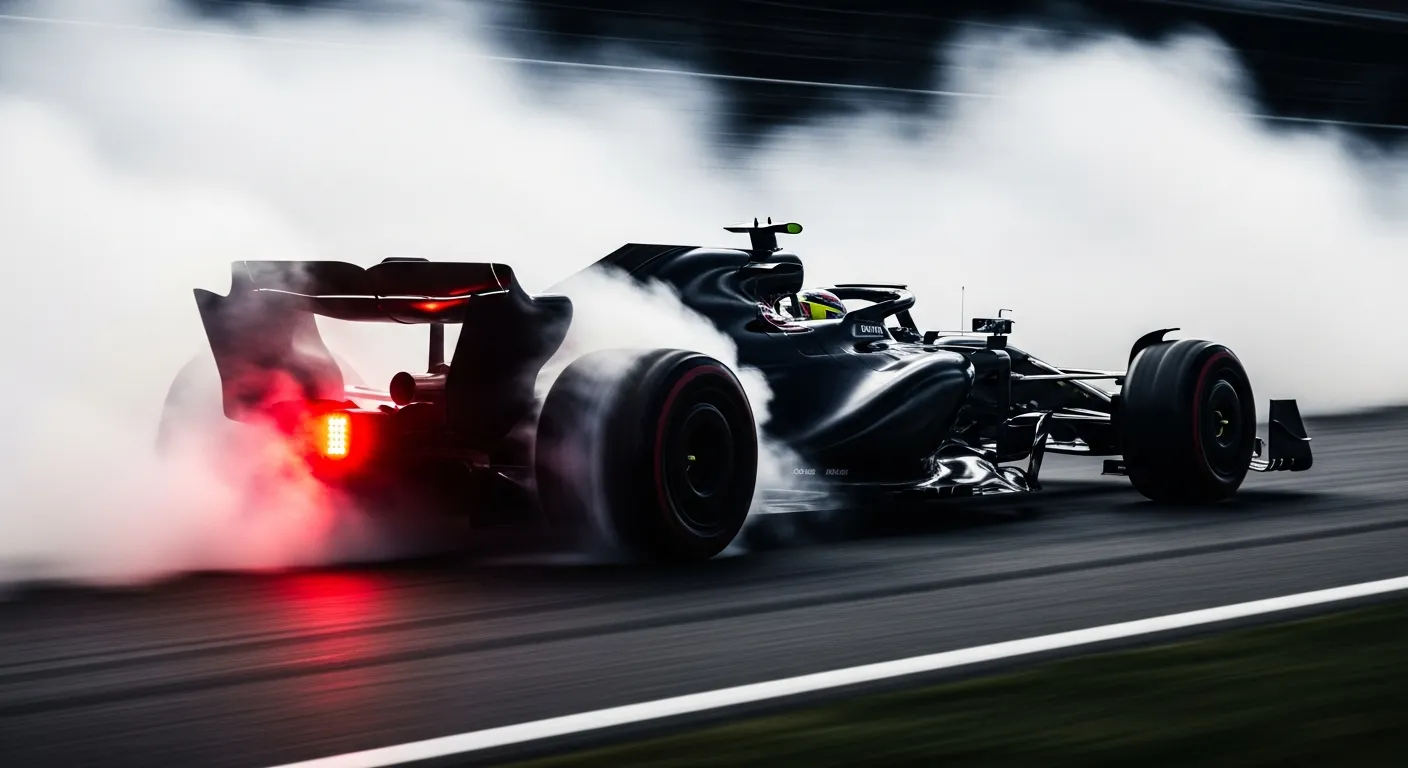
George Russell's drive at the 2023 Japanese Grand Prix saw him navigate a challenging race at Suzuka, converting his P8 grid start into a P7 finish for Mercedes AMG F1, a result that, while securing points, underscored the team's ongoing battle for consistent front-running pace.
Russell began the 2023 Japanese Grand Prix from the eighth position on the grid, just one spot behind his Mercedes AMG F1 teammate, Lewis Hamilton. The initial phase of the race at the demanding [Suzuka Circuit](https://www.formula1.com/en/circuits/japan/suzuka-circuit.html) required precise execution to avoid the early-lap incidents that often characterize the tight opening sectors. Russell managed to hold his ground, focusing on tire management on the medium-speed corners where the Mercedes W14's performance was a critical factor. His strategy involved a two-stop approach, common among the front-runners. Russell's fastest lap of the race, a 1:37.653, was recorded on lap 27, placing him 11th overall in terms of individual fastest laps for the event. This specific data point indicates moments where Russell was able to extract significant performance, even if not consistently throughout his stints. The race pace demonstrated by Mercedes was a point of discussion, especially when contrasted with the strong showing from McLaren. Such performances often draw comparisons to drivers like [Fernando Alonso at the 2021 Singapore Grand Prix](/results/2021-marina-bay-fernando-alonso), who frequently maximized his car's potential under varied conditions.
As the 53-lap race progressed, maintaining tire integrity and executing pit stops efficiently became paramount for Mercedes AMG F1. Russell completed the full race distance in a total time of 1:31:56.080, securing 6 valuable points for the constructor. His teammate, Lewis Hamilton, finished two positions ahead in P5, illustrating the varying strategic outcomes and race execution within the same team. The detailed performance data for the 2023 season, meticulously compiled and available through resources like [Jolpica/Ergast F1 data](https://api.jolpi.ca/ergast/f1/2026.json), often provides deeper insights into these intra-team dynamics and the nuances of race-day performance. Russell's ability to finish all laps and navigate the challenging Suzuka layout without incident demonstrated the car's reliability and his consistent driving. The event itself was conducted under the stringent [FIA technical regulations for the Formula 1 World Championship](https://www.fia.com/events/fia-formula-one-world-championship), which dictate everything from car design to race procedures. This race, like many at Suzuka, became a test of endurance and strategic foresight. For a broader understanding of how these races fit into the sport's history, the [Wikipedia page on Formula One](https://en.wikipedia.org/wiki/Formula_One) offers comprehensive context. The competitive landscape at Suzuka also saw drivers like [Pierre Gasly at the 2021 Singapore Grand Prix](/results/2021-marina-bay-pierre-gasly) and [Esteban Ocon at the 2021 Singapore Grand Prix](/results/2021-marina-bay-esteban-ocon) battling fiercely for similar midfield positions, underscoring the tight margins and intense competition that define modern F1. The official [Formula 1 website](https://www.formula1.com/en) provides further analysis of the race weekend, detailing the strategic choices and their impact across the grid. Ultimately, Russell's P7 finish contributed to Mercedes' constructor points, a crucial element in their ongoing championship campaign for the [2023 Formula 1 season](https://www.formula1.com/en/racing/2023.html).
Verified race record · Ergast
Grid
P8
Finish
P7
Points
6
Laps
53
Constructor
Mercedes AMG F1
Status
Finished
Teammate that weekend
Lewis Hamilton
Grid P7 · Finish P5 · 10 pts
Championship · before vs after
Before round 16
P7109 pts
After round 16
P8115 pts