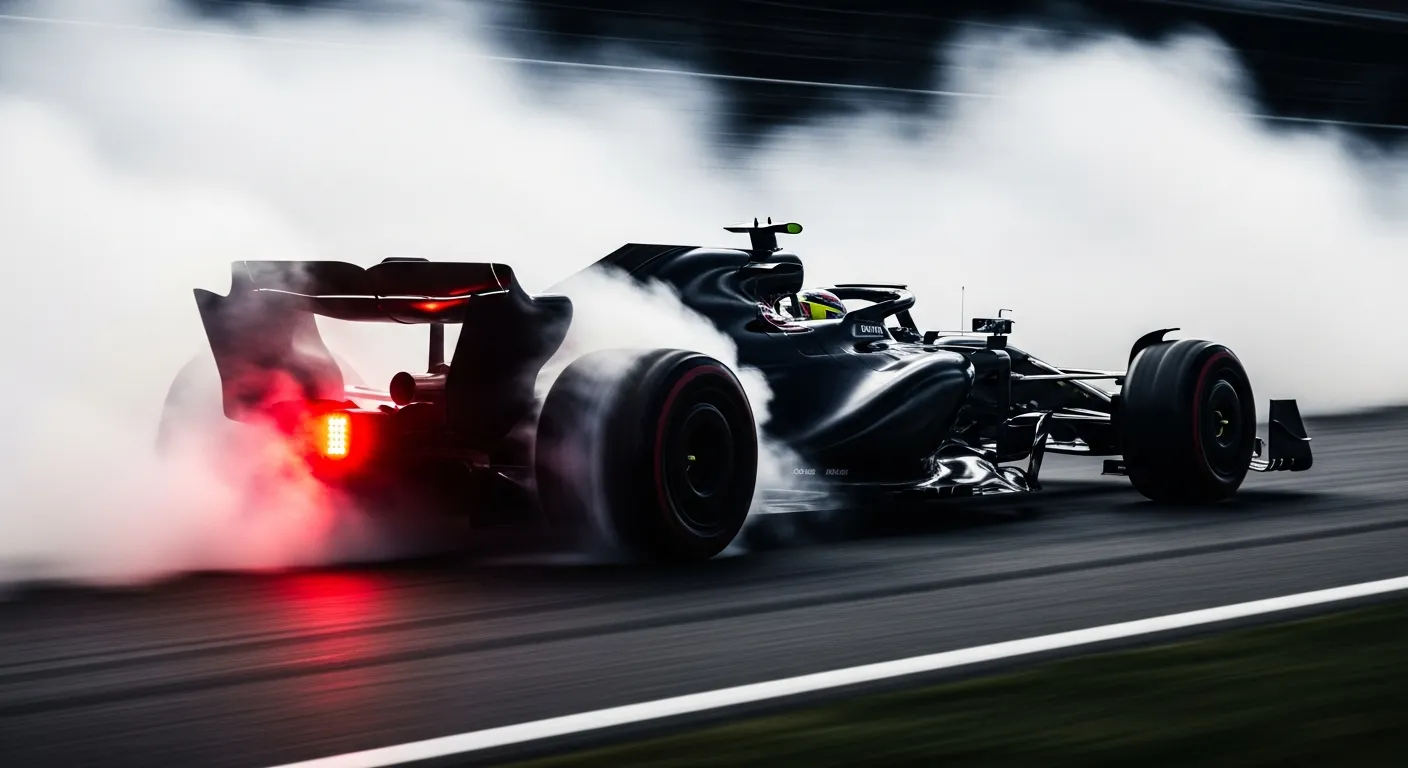
George Russell's 2023 Dutch Grand Prix at Circuit Park Zandvoort was a stark illustration of how quickly fortunes can turn in Formula 1, transforming a promising third-place grid start into a challenging P17 finish. The Mercedes AMG F1 driver began the race from P3, a strong qualifying performance that hinted at a potential podium challenge. However, the capricious Zandvoort weather, which brought heavy rain early in the race, immediately complicated strategies. Russell, like many, navigated the chaotic opening laps, but a series of tactical decisions and on-track events saw him lose ground. His teammate, Lewis Hamilton, starting from P13, managed to climb to a P6 finish, highlighting the divergent paths the Mercedes drivers experienced. The dynamic nature of the race, punctuated by safety cars and red flags, further shuffled the order, making it difficult to recover once momentum was lost. This mirrors the unpredictable conditions seen in races like the [2020 Emilia Romagna Grand Prix, where Alexander Albon faced similar challenges](/results/2020-imola-alex-albon).
As the race progressed, Russell completed all 72 laps, recording his fastest lap on lap 54 with a time of 1:15.124, ranking 14th overall for fastest laps. Despite his efforts, a late-race incident, specifically contact with Lando Norris, resulted in a puncture, forcing Russell to pit for fresh soft tyres. This unscheduled stop dropped him further down the order, ultimately culminating in a P17 classification without scoring any points. The outcome at Zandvoort underscores the razor-thin margins in F1, where a strong starting position can be undone by unforeseen circumstances and strategic missteps. Such contrasts in team performance within a single race are not uncommon, as seen with [Max Verstappen at the 2020 Monaco Grand Prix](/results/2020-monaco-max-verstappen) who also experienced a challenging outing. For a deeper dive into F1 racing, the [Formula 1 official site](https://www.formula1.com/en) offers comprehensive insights into race events and regulations. The strategic considerations are often complex, a topic explored broadly on [Wikipedia: Formula One](https://en.wikipedia.org/wiki/Formula_One). Analyzing historical performance data, such as that found on [Jolpica/Ergast F1 season data](https://api.jolpi.ca/ergast/f1/2026.json), helps illustrate these patterns. For instance, [Carlos Sainz at the 2020 Emilia Romagna Grand Prix](/results/2020-imola-carlos-sainz) also navigated a race where strategy played a pivotal role in his final standing.
Verified race record · Ergast
Grid
P3
Finish
P17
Points
0
Laps
72
Constructor
Mercedes AMG F1
Status
Finished
Teammate that weekend
Lewis Hamilton
Grid P13 · Finish P6 · 8 pts
Championship · before vs after
Before round 13
P699 pts
After round 13
P799 pts