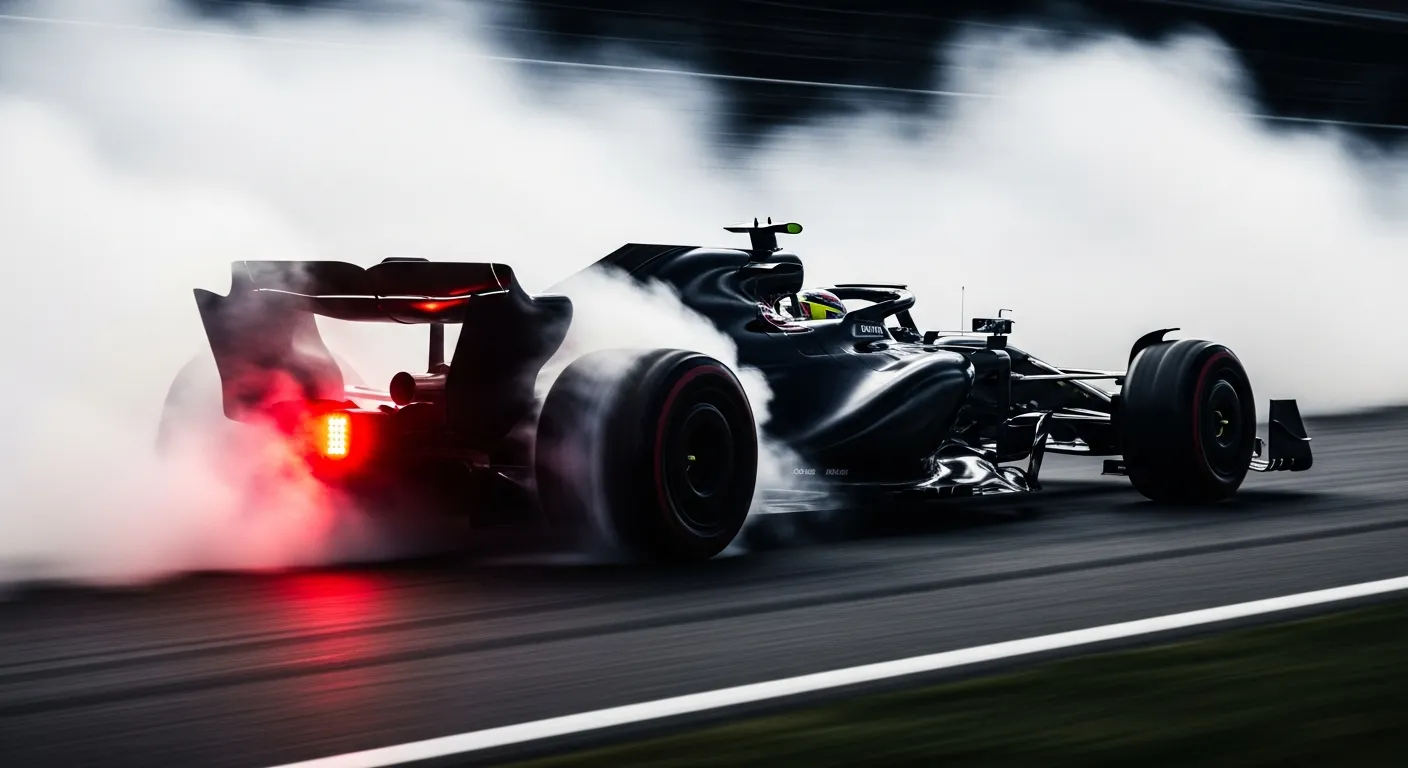
George Russell delivered a composed performance at the 2025 Dutch Grand Prix, navigating the challenging Circuit Park Zandvoort to finish fourth for Mercedes AMG F1. Starting from fifth on the grid, Russell maintained a strong race pace over the 72 laps, completing the race in 1:38:35.503. This result positioned him ahead of Alexander Albon, who made a remarkable climb from 15th to fifth, and behind Isack Hadjar, who secured a podium for Racing Bulls. The race saw significant attrition among front-runners, with both Ferrari drivers, Charles Leclerc and [Lewis Hamilton](/results/2019-silverstone-lewis-hamilton), retiring due to a collision and an accident respectively, while [Lando Norris](/results/2019-silverstone-lando-norris) also failed to finish due to a chassis issue. Russell's ability to capitalize on these events, combined with consistent lap times, underscored his race management capabilities, a trait often highlighted in detailed analyses of [Formula 1 strategy](https://www.formula1.com/en/latest/all-news). The Mercedes team's pit stop execution and strategic calls throughout the race played a vital role in ensuring Russell could convert his qualifying position into a strong points finish, demonstrating the synergy between driver and team that is critical in modern [Grand Prix racing](https://en.wikipedia.org/wiki/Formula_One). Such consistent results are foundational for any championship aspiration, reflecting a deep understanding of race dynamics and car limitations.
Russell's drive was marked by a steady progression, avoiding the incidents that impacted others. His fastest lap, a 1:13.728 on lap 70, ranked ninth overall, indicating a strong late-race push for maximum performance. This was a critical element in securing his position, especially given the competitive field at Zandvoort. In contrast, his teammate Kimi Antonelli, starting 11th, finished 16th, demonstrating the varied challenges faced by drivers within the same constructor, even when equipped with identical machinery. Antonelli's fastest lap, a 1:13.480 on lap 70, was notably quicker than Russell's, ranking sixth overall, suggesting that while Russell prioritized race position and points, Antonelli was pushing for individual lap time. This performance secured 12 points for Mercedes, contributing to their constructors' championship standing, which is meticulously tracked by official bodies like the [FIA — F1 World Championship](https://www.fia.com/events/fia-formula-one-world-championship). The demanding nature of Zandvoort, with its high-speed banking and tight sections, often requires a delicate balance of aggression and preservation, a dynamic well-documented by the [FIA's technical regulations](https://www.fia.com/events/fia-formula-one-world-championship). Russell’s consistent execution here reflects a mature approach, reminiscent of how drivers adapt to unique circuit characteristics, a key aspect of [Formula 1](https://www.formula1.com/en). Examining historical data, such as [Jolpica/Ergast's 2026 season data](https://api.jolpi.ca/ergast/f1/2026.json), provides context for how these individual race outcomes contribute to long-term championship narratives. For a deeper dive into the complexities of driver performance across seasons, one might review results like [George Russell at the 2019 British Grand Prix](/results/2019-silverstone-george-russell), offering a comparative look at his career trajectory and development within the sport. This fourth-place finish, therefore, represents a valuable contribution to Mercedes' campaign, showcasing Russell's ability to perform under pressure and secure points when opportunities arise, solidifying his position as a key asset for the German constructor.
Verified race record · Ergast
Grid
P5
Finish
P4
Points
12
Laps
72
Constructor
Mercedes AMG F1
Status
Finished
Teammate that weekend
Kimi Antonelli
Grid P11 · Finish P16 · 0 pts
Championship · before vs after
Before round 15
P4172 pts
After round 15
P4184 pts