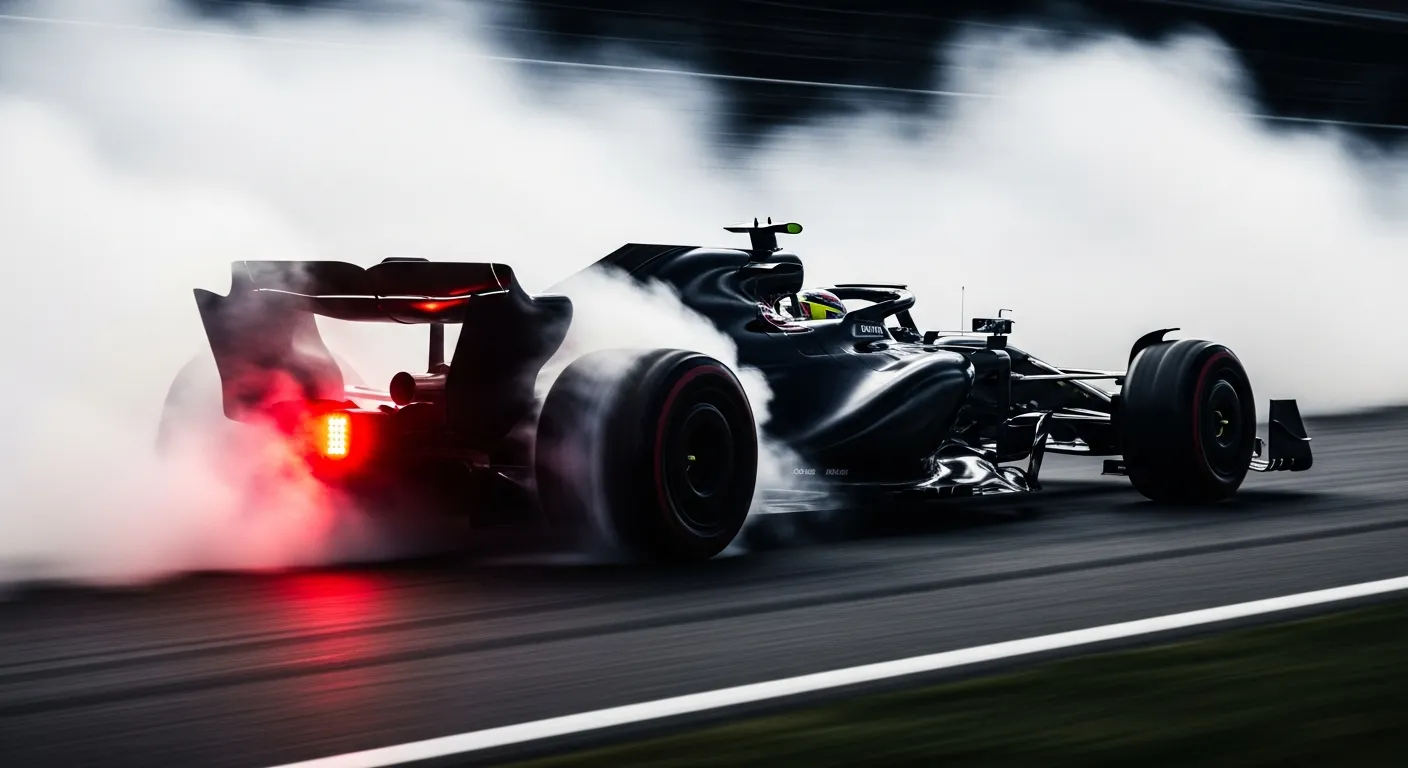
George Russell's drive at the 2022 Dutch Grand Prix stands as a definitive example of strategic execution and adaptive racecraft, transforming a sixth-place grid start into a second-place finish for Mercedes AMG F1. On September 4, 2022, at the demanding Circuit Park Zandvoort, Russell navigated the 72-lap race with a final time of 1:36:46.844, securing 18 points. This result positioned him just 4.071 seconds behind the race winner, Max Verstappen, a testament to the team's ability to extract performance under pressure. The performance underscored Mercedes' competitive resurgence in specific track conditions during the 2022 season, a dynamic closely followed by the broader [Formula 1 — official site](https://www.formula1.com/en) community.
The race unfolded with critical strategic decisions, particularly during late-race safety car interventions. Russell's choice to pit for soft tyres while his teammate, Lewis Hamilton, remained out on mediums, proved decisive. This tactical divergence allowed Russell to capitalize on fresh rubber, enabling him to overtake Charles Leclerc for second place. His fastest lap of 1:13.671 on the final lap was the second quickest of the race, demonstrating the W13's underlying pace when optimized. Such strategic calls are a constant subject of analysis within [FIA technical regulations](https://www.fia.com/events/fia-formula-one-world-championship) discussions. The 2022 season marked a significant shift in technical regulations for [Wikipedia: Formula One](https://en.wikipedia.org/wiki/Formula_One), and Russell's consistent points hauls were crucial for Mercedes' constructors' championship aspirations, as reflected in the [official F1 season standings](https://www.formula1.com/en). This event, like others, contributes to the extensive [Jolpica/Ergast — 2026 season data](https://api.jolpi.ca/ergast/f1/2026.json) records, providing context for future analyses of driver and team performance. The competitive environment at Zandvoort often draws parallels to the strategic battles seen at other circuits, such as those that might unfold for [Carlos Sainz at the 2025 Hungarian Grand Prix](/results/2025-hungaroring-carlos-sainz) or [Alexander Albon at the 2025 Hungarian Grand Prix](/results/2025-hungaroring-alex-albon). The ability to adapt to changing race conditions, as Russell did, is a hallmark of top-tier driving, a skill also exemplified by drivers like [Esteban Ocon at the 2025 Hungarian Grand Prix](/results/2025-hungaroring-esteban-ocon) in their respective campaigns. The detailed race telemetry offers further insights into these performances, often contributing to the statistical datasets available for [F1 data analysis](https://api.jolpi.ca/ergast/f1/2026.json).
Verified race record · Ergast
Grid
P6
Finish
P2
Points
18
Laps
72
Constructor
Mercedes AMG F1
Status
Finished
Teammate that weekend
Lewis Hamilton
Grid P4 · Finish P4 · 12 pts
Championship · before vs after
Before round 15
P5170 pts
After round 15
P4188 pts